The manufacturing industry trends is moving through one of the most significant transformations in its history. Factories that once relied almost entirely on manual labor and fixed production lines are now adopting connected systems, intelligent automation, and sustainable practices at a pace that would have seemed unrealistic just a decade ago. For manufacturers, staying competitive no longer means simply producing goods efficiently. It means embracing digital tools, rethinking supply chains, and building a workforce that can operate alongside advanced technology.
This shift is being driven by a combination of factors including rising customer expectations, global supply disruptions, environmental pressures, and rapid advances in artificial intelligence. Understanding the major trends reshaping manufacturing today can help business leaders, plant managers, and industry professionals plan smarter strategies for the years ahead. Below, we explore the most important manufacturing industry trends currently influencing how products are designed, built, and delivered worldwide.
- The Rise of Smart Factories and Industrial IoT
- Artificial Intelligence and Predictive Maintenance
- Automation and Robotics on the Factory Floor
- Sustainability and Green Manufacturing
- Supply Chain Resilience and Reshoring
- Additive Manufacturing and 3D Printing
- Digital Twins and Simulation Technology
- Workforce Transformation and the Skills Gap
- Cybersecurity in Connected Factories
- Mass Customization and Personalized Production
- Conclusion
- FAQs
The Rise of Smart Factories and Industrial IoT
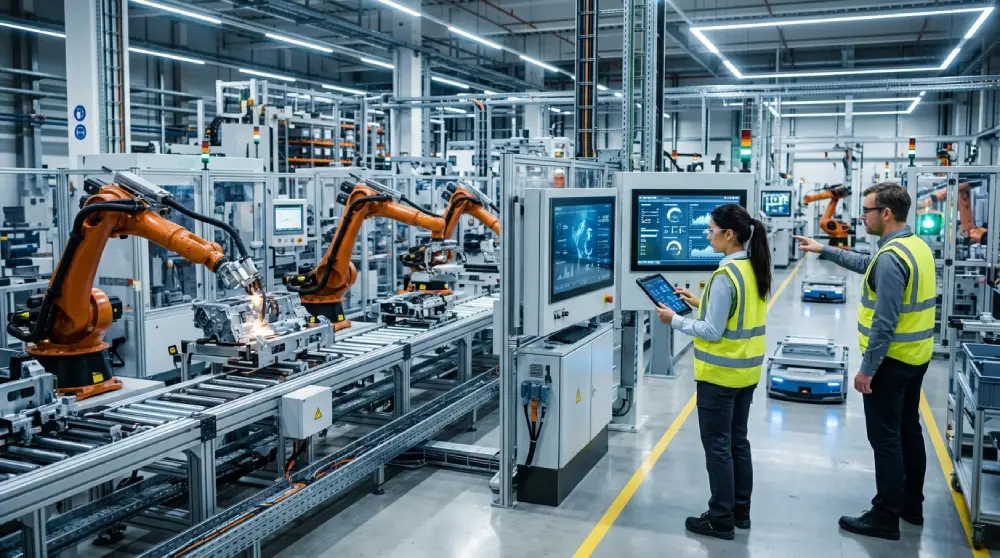
One of the most transformative trends in manufacturing is the growth of smart factories powered by the Industrial Internet of Things. Sensors embedded throughout production equipment now collect real time data on machine performance, temperature, vibration, and output quality. This constant stream of information allows manufacturers to monitor operations remotely and make adjustments instantly rather than waiting for scheduled inspections.
Connected machinery also enables better coordination across an entire facility. When equipment can communicate with each other, production lines become more synchronized, reducing bottlenecks and improving overall efficiency. As more manufacturers invest in connected infrastructure, the factory floor is becoming less of a physical space and more of a digital ecosystem where data drives every decision.
Artificial Intelligence and Predictive Maintenance
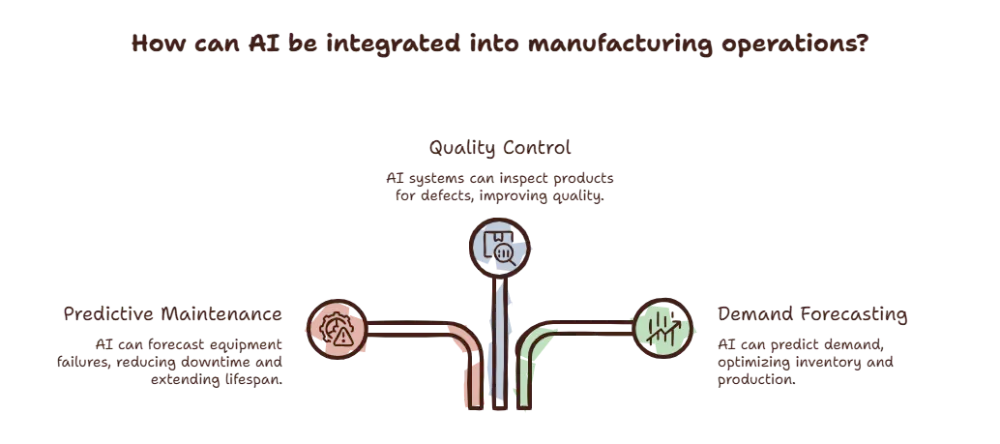
Artificial intelligence has moved beyond experimentation and is now a core part of manufacturing operations. One of its most valuable applications is predictive maintenance, where machine learning models analyze equipment data to forecast potential failures before they happen. Instead of repairing machinery only after it breaks down, manufacturers can schedule maintenance proactively, reducing unplanned downtime and extending the lifespan of expensive equipment.
AI is also being used to improve quality control. Computer vision systems can inspect products at high speed, identifying defects that might be missed by the human eye. Beyond the factory floor, AI tools are helping manufacturers forecast demand, optimize inventory levels, and streamline production planning, making operations more responsive to changing market conditions.
Automation and Robotics on the Factory Floor
Automation continues to be one of the defining forces in modern manufacturing. While industrial robots have been used for decades, today’s automation systems are more flexible, intelligent, and accessible than ever before. Collaborative robots, often called cobots, are designed to work safely alongside human employees rather than replacing them entirely. These machines handle repetitive or physically demanding tasks, freeing workers to focus on more complex, judgment based work.
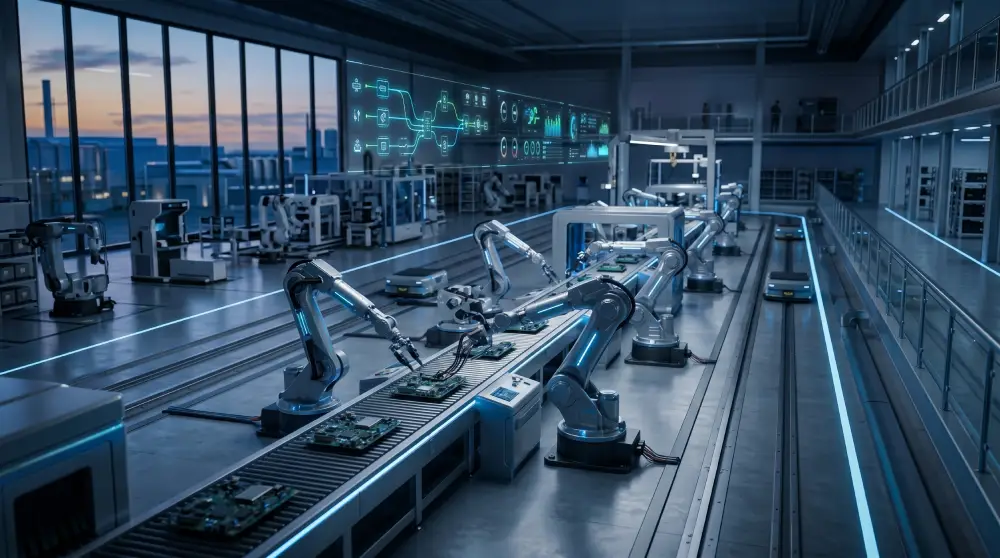
Automation is also expanding into areas beyond assembly lines, including packaging, material handling, and even quality inspection. As robotics technology becomes more adaptable, smaller manufacturers are finding it easier to integrate automation into their existing operations without needing a complete overhaul of their facilities.
Sustainability and Green Manufacturing
Environmental responsibility has become a central focus for manufacturers across nearly every sector. Rising energy costs, regulatory pressure, and growing consumer demand for environmentally responsible products are pushing companies to rethink how they design and produce goods. Many manufacturers are investing in energy efficient equipment, renewable power sources, and waste reduction programs to lower their environmental footprint.
Sustainable manufacturing also extends to product design itself. Companies are increasingly exploring circular production models, where materials are reused or recycled rather than discarded. This approach not only reduces environmental impact but can also improve resource efficiency throughout the entire production cycle. As sustainability expectations continue to rise, green manufacturing is shifting from an optional initiative to a core business strategy.
Supply Chain Resilience and Reshoring
Recent years have exposed significant vulnerabilities in global supply chains, prompting manufacturers to rethink how and where they source materials and components. Many companies are diversifying their supplier networks to avoid relying too heavily on a single region or vendor. Others are exploring reshoring or nearshoring strategies, moving production closer to their primary markets to reduce shipping delays and improve supply chain visibility.
Digital tools are playing a major role in this shift as well. Advanced analytics platforms allow manufacturers to track materials and components throughout the supply chain in real time, helping them anticipate disruptions and respond quickly when issues arise. Building a more resilient and transparent supply chain has become a top priority for manufacturers looking to protect production continuity.
Additive Manufacturing and 3D Printing
Additive manufacturing, commonly known as 3D printing, continues to expand its role in industrial production. What began as a tool primarily used for prototyping has evolved into a viable method for producing finished components, particularly for complex or customized parts. Industries such as aerospace, automotive, and medical device manufacturing are increasingly using additive manufacturing to create lightweight structures and intricate geometries that would be difficult or impossible to achieve with traditional methods.
This technology also supports more efficient production by reducing material waste and enabling on demand manufacturing. Rather than producing large batches of standardized parts, manufacturers can print components as needed, which is particularly valuable for low volume or highly specialized products.
Digital Twins and Simulation Technology
Digital twin technology is becoming an increasingly important tool for manufacturers seeking to optimize operations before committing physical resources. A digital twin is a virtual replica of a physical asset, process, or entire production line, built using real time data and simulation software. Engineers can test new product designs, evaluate equipment changes, or simulate production scenarios within this virtual environment, identifying potential issues long before they affect the actual factory floor.
This approach significantly reduces the risk and cost associated with trial and error testing on live equipment. Manufacturers can experiment with layout changes, workflow adjustments, and process improvements virtually, gaining valuable insights without disrupting ongoing production. As simulation tools become more sophisticated and accessible, digital twins are expected to play an even larger role in product development, facility planning, and continuous process improvement across the industry.
Workforce Transformation and the Skills Gap
As manufacturing becomes increasingly digital, the skills required to succeed in the industry are changing rapidly. Traditional manual labor roles are being supplemented, and in some cases replaced, by positions that require knowledge of automation systems, data analysis, and digital tools. This shift has created a noticeable skills gap, with many manufacturers struggling to find workers who have the technical expertise needed to operate modern equipment.
To address this challenge, companies are investing heavily in training and upskilling programs for existing employees. Partnerships with technical schools and vocational programs are also becoming more common as manufacturers work to build a pipeline of skilled talent. Attracting younger workers to the industry, often by highlighting the technology driven nature of modern manufacturing roles, has become an important long term strategy.
Cybersecurity in Connected Factories
As manufacturing facilities become more connected, they also become more vulnerable to cyber threats. Industrial control systems, once isolated from external networks, are now integrated with broader digital infrastructure, creating new entry points for potential attacks. A security breach in a manufacturing environment can disrupt production, compromise sensitive data, and in severe cases, pose safety risks to employees.
In response, manufacturers are placing greater emphasis on cybersecurity measures designed specifically for industrial environments. This includes network segmentation, continuous monitoring, and employee training focused on identifying potential threats. As digital transformation continues across the industry, cybersecurity is becoming as essential to manufacturing operations as physical safety protocols.
Mass Customization and Personalized Production
Consumer expectations have shifted significantly in recent years, with many customers seeking products tailored to their specific needs rather than standardized offerings. This demand has given rise to mass customization, where manufacturers use flexible production systems to create personalized products without sacrificing the efficiency of large scale manufacturing.
Technologies such as modular design, advanced robotics, and digital manufacturing platforms make it possible to adjust product specifications quickly without significant retooling. This trend is particularly visible in industries such as consumer electronics, automotive, and apparel, where customers increasingly expect options for personalization. As production technology continues to advance, mass customization is likely to become standard practice across an even wider range of industries.
Conclusion
The manufacturing industry is undergoing a period of rapid and meaningful change. From smart factories and artificial intelligence to sustainability initiatives and workforce transformation, these trends are reshaping how products are designed, produced, and delivered around the world. Manufacturers that embrace these developments thoughtfully, investing in technology while also supporting their workforce, will be better positioned to navigate an increasingly complex and competitive landscape.
Staying informed about these shifts is essential for any organization looking to remain relevant in the years ahead. As digital tools become more advanced and customer expectations continue to evolve, the manufacturers who adapt early will likely set the pace for the rest of the industry to follow.
FAQs
What are the biggest trends currently shaping the manufacturing industry?
The most significant trends include smart factories powered by the Industrial Internet of Things, artificial intelligence for predictive maintenance and quality control, advanced automation and robotics, sustainability driven production methods, and a growing focus on supply chain resilience.
How is artificial intelligence being used in manufacturing?
Manufacturers use AI to predict equipment failures before they occur, inspect products for defects through computer vision, forecast demand more accurately, and optimize production planning so operations can respond quickly to changing conditions.
Why is sustainability becoming such an important focus for manufacturers?
Rising energy costs, stricter environmental regulations, and growing customer demand for responsible production are pushing manufacturers to adopt energy efficient processes, reduce waste, and explore circular production models that reuse or recycle materials.
What is the skills gap in manufacturing and why does it matter?
As factories become more automated and data driven, many roles now require knowledge of digital systems, robotics, and analytics rather than purely manual skills. Many manufacturers struggle to find workers with this expertise, which is why training and upskilling programs have become a major priority.
How are manufacturers improving cybersecurity as factories become more connected?
With industrial equipment increasingly linked to digital networks, manufacturers are adopting measures such as network segmentation, continuous system monitoring, and employee training to identify threats and reduce the risk of disruptions or data breaches.