
Generative AI tools have completely changed the way people create content, solve problems, and run their daily work. From writing and designing to coding and video production, generative AI tools are now part of everyday workflows for individuals, freelancers, and businesses alike. If you have ever wondered how some people seem to produce more content, faster, with better quality, the answer is almost always that they are using generative AI tools to support their process.
In simple terms, generative AI tools are software systems trained on massive amounts of data that can generate new content based on a prompt or instruction. Instead of just analyzing information like traditional software, these tools actually create something new, whether that is text, an image, a piece of music, a video clip, or even working code. This ability to generate original output is what makes generative AI tools so different from earlier forms of automation.
What Are Generative AI Tools and Why They Matter
Generative AI tools rely on advanced machine learning models, often built using deep learning and neural networks, to understand patterns in language, images, sound, and data. When you give a generative AI tool a prompt, it does not simply search for an existing answer. It generates a fresh response based on everything it has learned during training. This is why two people can ask a generative AI tool the same question and get slightly different, yet equally valid, answers.
The importance of generative AI tools comes down to time and creativity. Tasks that once took hours, like drafting a blog post, designing a graphic, or writing a script, can now be done in minutes. This does not mean human input becomes unnecessary. Instead, generative AI tools act as a creative partner, helping people brainstorm, draft, refine, and finalize work much faster than before.
Some of the biggest benefits people experience when using generative AI tools include faster content production, reduced creative block, easier brainstorming, support for multiple languages, and the ability to repurpose content into different formats with minimal extra effort. Because of these advantages, generative AI tools have moved from being a niche technology to becoming a standard part of digital work.
How Generative AI Tools Actually Work
Understanding how generative AI tools work helps you use them more effectively. Most generative AI tools are built on what are known as large language models or diffusion models, depending on whether they generate text or visual content. These models are trained on enormous datasets containing text, images, or audio, allowing them to learn patterns, structures, grammar, style, and context.
When a user enters a prompt, the generative AI tool processes that input and predicts the most likely and relevant output based on its training. For text based tools, this means predicting words and sentences that make sense together. For image based tools, this means generating pixels and shapes that match the description provided. The quality of the output often depends on how clearly the prompt is written, which is why prompt writing has become an important skill on its own.
Generative AI tools also continue to improve through fine tuning and feedback. Many tools allow users to regenerate content, adjust tone, or refine details until the result matches their expectations. This interactive process is part of what makes generative AI tools feel less like static software and more like a collaborative assistant.
Common Use Cases for Generative AI Tools
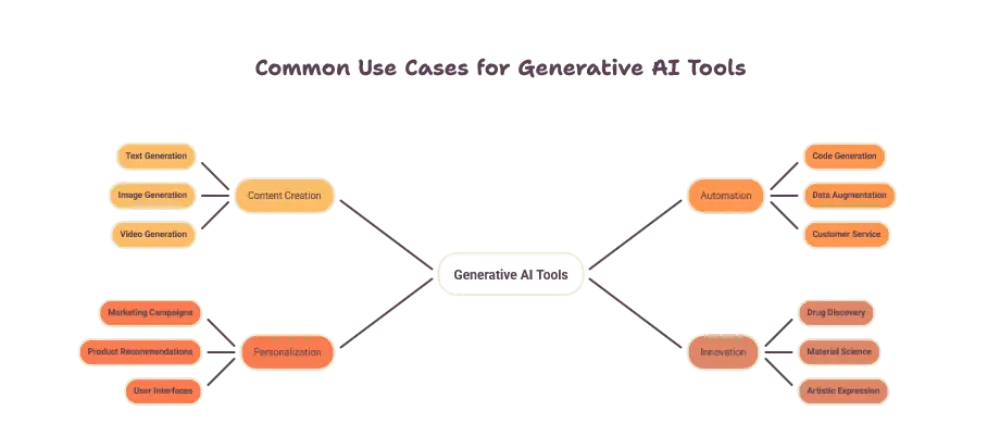
Generative AI tools are used across nearly every industry today. Content creators use generative AI tools to draft articles, generate social media captions, and brainstorm new ideas. Marketers use them to write ad copy, create email campaigns, and analyze customer messaging. Designers use generative AI tools to produce illustrations, mockups, and concept art without needing advanced design skills for every single task.
Some of the most common use cases for generative AI tools include the following key points.
Writing and content creation, where generative AI tools help draft blog posts, product descriptions, and scripts.
Visual content generation, where generative AI tools create images, illustrations, and design concepts from simple text prompts.
Coding assistance, where generative AI tools help write, explain, and debug code more efficiently.
Audio and video generation, where generative AI tools can produce voiceovers, background music, or short video clips.
Data summarization, where generative AI tools condense large reports or documents into clear, digestible summaries.
These use cases show how flexible generative AI tools have become. Instead of being limited to one type of content, generative AI tools now support multimedia workflows that combine text, visuals, and audio in a single creative process.
Choosing the Right Generative AI Tools for Your Needs
With so many generative AI tools available, choosing the right one depends on what you are trying to achieve. Some generative AI tools specialize in long form writing, while others are built specifically for image generation or code assistance. Before selecting a tool, it helps to think about your primary goal, whether that is content creation, design work, coding support, or general productivity.
Another important factor when evaluating generative AI tools is how well they integrate into your existing workflow. Many generative AI tools now offer browser extensions, mobile apps, or integrations with platforms you already use, such as documents, spreadsheets, or design software. This makes it easier to bring generative AI tools directly into your daily tasks instead of switching between multiple separate platforms.
It is also worth considering how customizable a generative AI tool is. Some tools allow you to set a specific tone, style, or format for the output, which is especially useful for businesses that want consistent branding across all generated content. The more control a generative AI tool gives you over the final result, the more useful it becomes for professional or large scale use.
Best Practices for Using Generative AI Tools Effectively
Getting the most out of generative AI tools often comes down to how you interact with them. Clear, specific prompts almost always produce better results than vague ones. Instead of asking a generative AI tool to write something general, providing context, tone, audience, and purpose helps the tool generate more accurate and useful output.
It is also helpful to treat the first response from generative AI tools as a starting point rather than a final answer. Most tools allow you to refine, edit, or regenerate content, and using this feature can significantly improve quality. Reviewing and editing AI generated content for accuracy, tone, and originality remains an important step, especially for professional or published work.
Combining generative AI tools with your own expertise tends to produce the best outcomes. Rather than relying entirely on automated output, using generative AI tools as a support system allows you to maintain a personal voice and unique perspective while still saving time during the creation process.
The Future of Generative AI Tools
The development of generative AI tools is moving quickly, with new capabilities being introduced on a regular basis. Multimodal generative AI tools, which can understand and generate text, images, audio, and video together, are becoming more common. This means future generative AI tools will likely offer even more seamless workflows, where a single prompt can produce a complete multimedia output instead of separate pieces created individually.
As generative AI tools continue to evolve, accessibility is also improving. More tools are becoming user friendly, requiring little to no technical background to operate effectively. This trend suggests that generative AI tools will continue to become a standard part of both personal and professional digital life, supporting creativity rather than replacing it.
Whether you are a content creator, business owner, student, or hobbyist, generative AI tools offer a practical way to enhance productivity and explore new creative possibilities. understanding how generative AI tools work and applying clear strategies for using them, you can integrate this technology into your workflow in a way that genuinely adds value.
Frequently Asked Questions
What exactly are generative AI tools used for?
Generative AI tools are used to create new content such as text, images, audio, video, and code based on prompts provided by a user, helping speed up creative and technical tasks.
Do generative AI tools require technical skills to use?
Most generative AI tools are designed to be user friendly, allowing people without technical backgrounds to generate content simply by typing clear instructions or prompts.
Can generative AI tools replace human creativity completely?
Generative AI tools are designed to support and enhance human creativity rather than fully replace it, working best when combined with personal input, editing, and expertise.
How accurate is the content produced by generative AI tools?
The accuracy of generative AI tools depends on the clarity of the prompt and the quality of the underlying model, so reviewing and editing generated content is always recommended.
Are generative AI tools useful for businesses of all sizes?
Yes, generative AI tools can benefit businesses of any size by streamlining content creation, supporting design work, and improving overall productivity across different departments.