AI in Education is no longer a futuristic concept. It has become a practical tool that schools, universities, and training organizations use every day to support students and teachers. From personalized lesson plans to automated grading, artificial intelligence is quietly changing how learning happens, making it more adaptive, efficient, and accessible for people of every age and background.
- Understanding AI in Education
- How AI in Education Is Transforming Classrooms
- Benefits of AI in Education for Students and Teachers
- Real World Applications Across Learning Levels
- Challenges and Considerations
- Best Practices for Implementing AI in Education
- The Future of AI in Education
- Conclusion
- Frequently Asked Questions
Understanding AI in Education
At its core, AI in education refers to the use of machine learning, natural language processing, and data driven tools to support teaching and learning. These tools analyze how students learn, identify gaps in understanding, and offer tailored support that would be difficult for a single teacher to provide to an entire classroom.
Rather than replacing teachers, most AI tools act as assistants. They handle repetitive tasks, surface insights about student progress, and free up educators to focus on mentorship, creativity, and emotional support, all things that technology still cannot replicate.
How AI in Education Is Transforming Classrooms
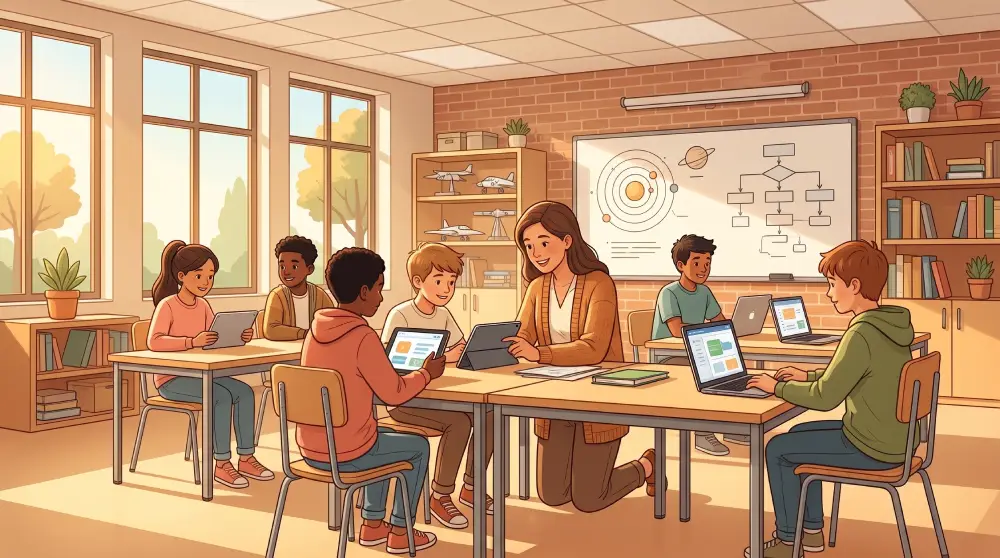
The classroom of today looks very different from the one many of us grew up in. Smart platforms now track engagement, recommend resources, and adjust content difficulty in real time based on how a student is performing.
Personalized Learning Paths
One of the most significant contributions of AI in education is personalization. Every student learns at a different pace and in a different style. AI powered platforms can assess a learner’s strengths and weaknesses and then build a custom pathway through the material.
This means a struggling student can receive extra practice on foundational concepts while a faster learner can move ahead without waiting for the rest of the class. Over time, this individualized approach helps reduce frustration and keeps students motivated.
Intelligent Tutoring Systems
Intelligent tutoring systems simulate one on one instruction by offering hints, explanations, and feedback as a student works through problems. These systems adapt in real time, much like a human tutor would, and are especially useful in subjects like mathematics and language learning where practice and immediate feedback matter most.
Automated Administrative Tasks
Teachers spend a considerable amount of time on grading, attendance, and paperwork. AI tools can automate much of this work, from grading multiple choice and short answer questions to generating progress reports. This gives educators more time to plan lessons and engage directly with students.
Benefits of AI in Education for Students and Teachers
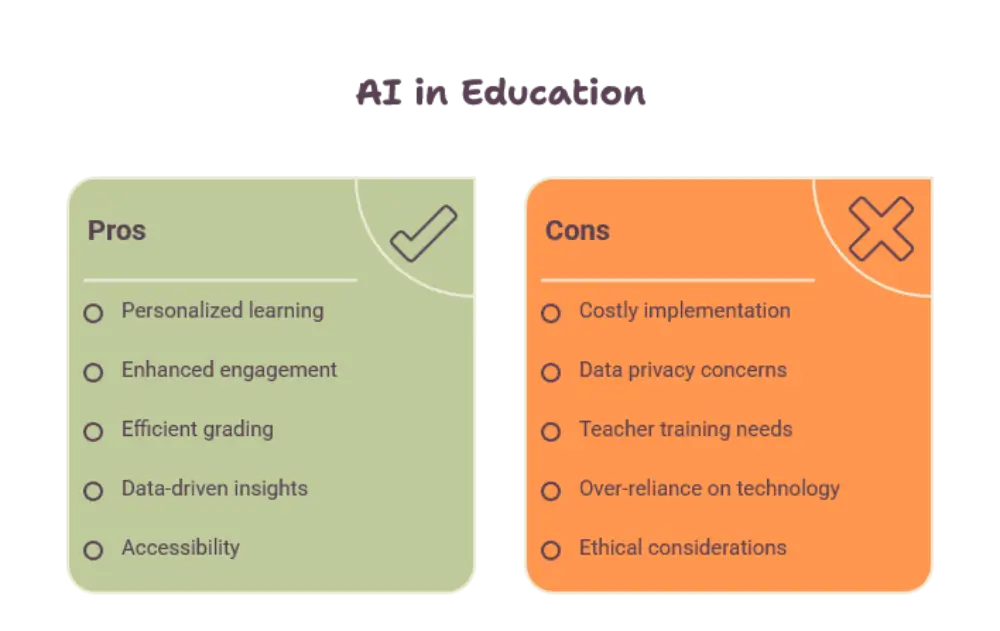
The advantages of AI in education extend to everyone involved in the learning process.
Students benefit from instant feedback, which helps them correct mistakes before those mistakes become habits. They also gain access to learning materials that adjust to their level, making education feel less overwhelming and more achievable.
Teachers benefit from data driven insights into how their class is performing as a whole and where individual students may need extra attention. This allows for more informed lesson planning and earlier intervention when a student begins to fall behind.
Institutions also benefit from AI in education through improved outcomes tracking. Administrators can identify trends across grades or subjects and make decisions based on real evidence rather than guesswork.
Real World Applications Across Learning Levels
AI in education is not limited to any single stage of learning. In primary and secondary schools, adaptive learning apps help children practice reading and arithmetic at their own pace. In higher education, AI assists with plagiarism detection, research support, and personalized study recommendations for exam preparation.
Corporate training programs also use AI driven platforms to help employees build new skills through customized learning modules. Language learning apps use AI to correct pronunciation and grammar in real time, giving learners immediate and consistent feedback that would be hard to replicate through traditional classroom instruction alone.
Challenges and Considerations
Despite its promise, AI in education comes with challenges that need thoughtful attention.
Data Privacy and Security
AI systems rely on collecting data about how students learn, which raises important questions about privacy. Schools and institutions must ensure that student data is stored securely and used responsibly.
The Human Connection
Education is not only about transferring information. It also involves mentorship, encouragement, and emotional support. There is a valid concern that overreliance on AI tools could reduce meaningful human interaction in the classroom if not balanced carefully.
Equal Access
Not every student has equal access to devices or reliable internet connectivity. For AI in education to be truly effective, access needs to be broad and inclusive rather than limited to well resourced schools.
Best Practices for Implementing AI in Education
Successful adoption of AI in education tends to follow a few consistent principles. Educators should view AI as a support system rather than a replacement for teaching. Training teachers to use these tools effectively is just as important as the technology itself.
Transparency also matters. Students and parents should understand how AI tools are being used and what data is being collected. Institutions that communicate clearly about these practices tend to see smoother adoption and greater trust from their communities.
Finally, ongoing evaluation is essential. AI tools should be regularly assessed to confirm they are actually improving learning outcomes rather than simply adding complexity to the classroom.
The Future of AI in Education
Looking ahead, AI in education is expected to become even more deeply integrated into everyday learning. Voice assistants may guide young learners through reading exercises. Predictive analytics could help identify students at risk of dropping out long before warning signs become obvious. Virtual and augmented reality combined with AI may offer immersive lessons in history, science, and art that were previously impossible in a traditional classroom.
As these tools mature, the focus will likely shift toward making AI in education more transparent, more ethical, and more supportive of both students and teachers rather than simply more advanced.
Conclusion
AI in education represents a meaningful shift in how learning is delivered and supported. From personalized learning paths to intelligent tutoring and automated administrative work, artificial intelligence is helping create classrooms that are more responsive to individual needs. While challenges around privacy, access, and the human element of teaching remain important to address, the overall direction points toward a more adaptive and supportive learning environment for students everywhere.
Frequently Asked Questions
What is AI in education?
AI in education refers to the use of artificial intelligence tools such as machine learning and data analysis to support teaching, personalize learning, and automate administrative tasks in schools and training programs.
Does AI in education replace teachers?
No. AI tools are designed to support teachers by handling repetitive tasks and offering insights into student progress, allowing educators to focus more on mentorship and personalized instruction.
How does AI personalize learning for students?
AI analyzes a student’s performance and learning pace, then adjusts content difficulty and recommends resources tailored to their individual strengths and weaknesses.
Is student data safe when using AI tools in schools?
Reputable AI platforms follow data privacy practices to protect student information, though institutions must remain vigilant about how data is collected, stored, and used.
Can AI in education help students with different learning styles?
Yes. AI powered platforms can adapt content format and pacing to suit visual, auditory, and hands on learners, making education more accessible for a wider range of learning styles.