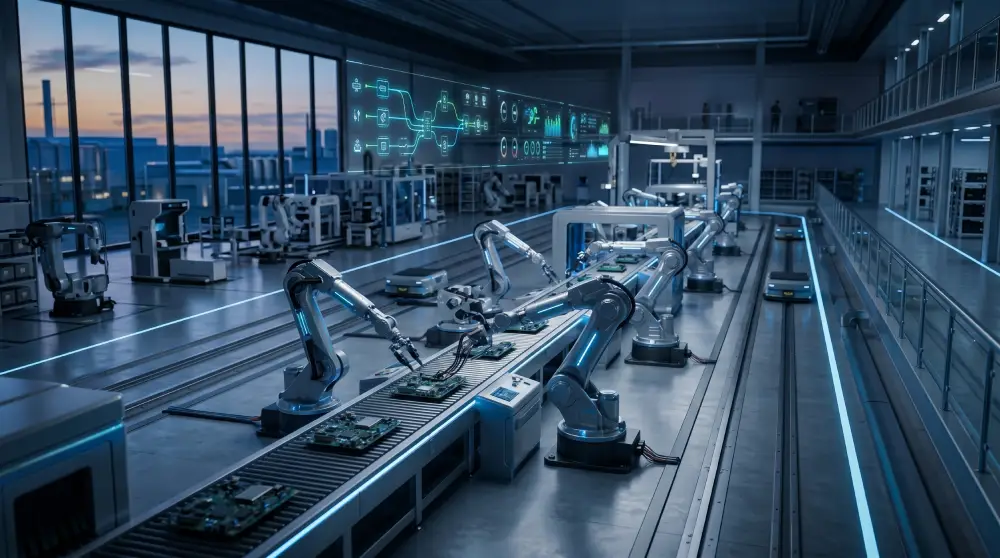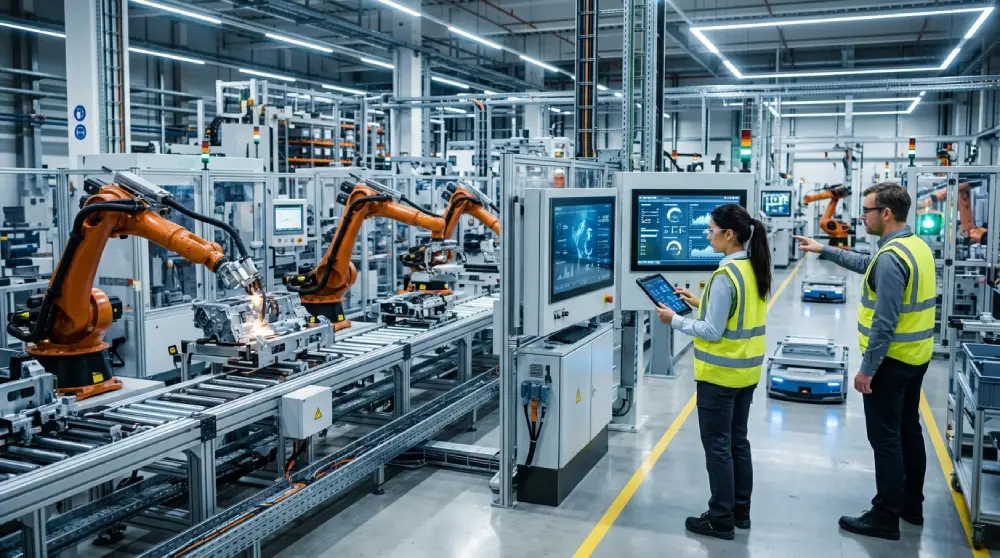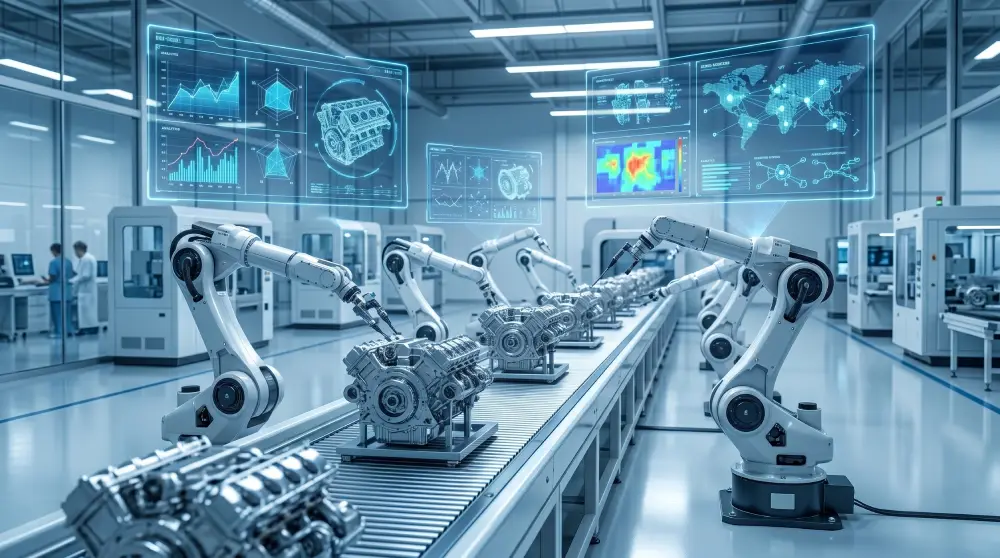
AI in Manufacturing is no longer a futuristic concept confined to research labs. It is actively changing how factories operate, how products are built, and how companies make decisions on the production floor. From predictive maintenance to intelligent quality checks, manufacturers across the globe are adopting artificial intelligence to become more efficient, safer, and more responsive to demand. This shift is redefining what modern manufacturing looks like and setting new standards for productivity and innovation.
What Is AI in Manufacturing
AI in manufacturing refers to the use of machine learning, computer vision, robotics, and data analytics to improve industrial processes. Instead of relying purely on manual oversight, factories now use intelligent systems that can analyze massive amounts of data in real time. These systems detect patterns, predict outcomes, and make recommendations that would be nearly impossible for humans to calculate manually at the same speed.
The goal is simple: use data driven intelligence to reduce waste, prevent failures, and optimize every stage of production, from raw material handling to final packaging.
Why Manufacturers Are Turning to AI
Traditional manufacturing methods often depend on scheduled maintenance, manual inspection, and reactive problem solving. These approaches can lead to unexpected downtime, inconsistent quality, and inefficient resource use. AI addresses these issues by offering continuous monitoring and predictive insights, allowing manufacturers to shift from reactive operations to proactive, data informed decision making.
Key Applications of AI in Manufacturing
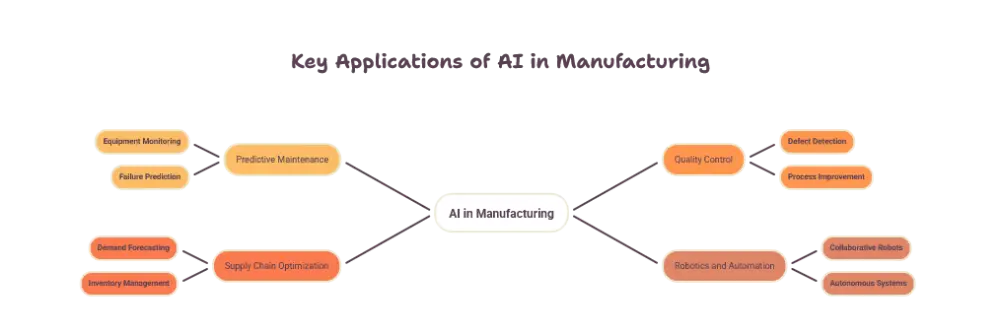
AI is being applied across nearly every part of the manufacturing process. Below are some of the most impactful use cases shaping the industry today.
Predictive Maintenance
One of the most valuable applications of AI in manufacturing is predictive maintenance. Sensors placed on machinery collect data such as vibration, temperature, and sound patterns. AI models analyze this data to detect early signs of wear or malfunction before a breakdown occurs. This allows maintenance teams to fix issues proactively rather than waiting for equipment to fail, minimizing unplanned downtime and extending machine lifespan.
Quality Control and Inspection
Computer vision powered by AI is revolutionizing quality control. Cameras and sensors scan products at high speed, identifying defects that might be missed by the human eye. These systems can detect surface scratches, misalignments, color inconsistencies, and structural flaws with remarkable accuracy, ensuring only high quality products move forward in the production line.
Supply Chain Optimization
AI helps manufacturers manage complex supply chains by predicting demand fluctuations, identifying potential delays, and recommending optimal inventory levels. This reduces the risk of overstocking or understocking materials, keeping production schedules on track and improving overall operational efficiency.
Robotics and Automation
Intelligent robots equipped with AI can perform repetitive or hazardous tasks with precision and consistency. Unlike traditional automation, AI powered robots can adapt to changes in their environment, learn from new data, and collaborate safely alongside human workers on the factory floor.
Demand Forecasting
analyzing historical sales data, market trends, and external factors like seasonality, AI helps manufacturers forecast demand more accurately. This allows for better production planning, reduced waste, and improved responsiveness to market shifts.
Benefits of AI in Manufacturing
The adoption of AI in manufacturing brings a wide range of benefits that extend beyond simple automation.
Improved Efficiency
AI streamlines workflows by automating routine tasks, freeing up human workers to focus on more complex, creative, and strategic responsibilities. This leads to faster production cycles and better resource allocation.
Enhanced Product Quality
With AI driven inspection systems, manufacturers can catch defects early, reducing waste and ensuring consistent product standards. This ultimately strengthens brand reputation and customer trust.
Reduced Downtime
Predictive maintenance powered by AI significantly reduces unexpected equipment failures. Machines are serviced at the right time, avoiding costly interruptions to production schedules.
Safer Work Environments
AI powered systems can monitor factory floors for safety hazards, alerting workers to potential risks in real time. Robots can also take over dangerous tasks, reducing the risk of injury to human employees.
Data Driven Decision Making
AI provides manufacturers with actionable insights derived from real time data. This empowers leadership teams to make informed decisions quickly, improving overall agility and responsiveness.
Challenges in Adopting AI in Manufacturing
While the benefits are significant, integrating AI into manufacturing does come with challenges that companies must navigate carefully.
Data Quality and Integration
AI systems rely heavily on high quality data. Manufacturers often struggle with fragmented systems, inconsistent data formats, and legacy equipment that lacks proper sensors or connectivity, making integration a complex process.
Workforce Adaptation
Introducing AI requires employees to develop new skills and adapt to updated workflows. Training programs and change management strategies are essential to ensure smooth adoption across teams.
Cybersecurity Concerns
As manufacturing systems become more connected and data driven, they also become more vulnerable to cyber threats. Protecting sensitive operational data and intellectual property requires robust security measures.
Scalability
Implementing AI solutions across an entire manufacturing operation, rather than a single pilot project, requires careful planning to ensure systems scale effectively without disrupting existing processes.
The Future of AI in Manufacturing
The future of AI in manufacturing points toward even greater levels of automation, intelligence, and connectivity. Concepts like digital twins, where a virtual replica of a physical production system is used to simulate and optimize operations, are becoming increasingly common. Manufacturers are also exploring generative AI to assist with design innovation, allowing engineers to create optimized product designs faster than traditional methods allow.
As AI models become more sophisticated, factories will likely see deeper integration between machines, software, and human workers, creating smart factories capable of adapting in real time to changing conditions. This evolution will continue to redefine efficiency, sustainability, and innovation across the manufacturing sector.
Conclusion
AI in Manufacturing is transforming the industry from the ground up, enabling smarter decision making, safer work environments, and more efficient production processes. From predictive maintenance to intelligent quality control, the applications of AI are helping manufacturers stay competitive in a rapidly evolving landscape. While challenges around data integration and workforce adaptation remain, the long term advantages of AI adoption are clear. Manufacturers that embrace this technology today are positioning themselves for a smarter, more resilient future.
Frequently Asked Questions
What is AI in manufacturing?
AI in manufacturing is the use of technologies like machine learning and computer vision to improve production processes, quality control, and decision making.
How does AI improve quality control in manufacturing?
AI uses computer vision to scan products and detect defects with high accuracy, ensuring consistent product quality.
What is predictive maintenance in manufacturing?
Predictive maintenance uses AI to analyze equipment data and predict failures before they happen, reducing unplanned downtime.
Is AI replacing human workers in manufacturing?
AI is designed to support human workers by automating repetitive tasks, allowing employees to focus on higher value responsibilities.
What are the biggest challenges of adopting AI in manufacturing?
Common challenges include data integration issues, workforce training needs, and cybersecurity concerns.