Key Highlights: Recognizing key warning signs like leaks or discolored water can prevent major plumbing issues. Ignoring old or damaged pipes can lead to costly water damage, mold growth, and burst pipes. A full pipe replacement is often more cost-effective than repeated pipe repair for aging systems. Understanding the causes of pipe failure, such as corrosion and tree roots, helps you make informed decisions. Professional pipe replacement services ensure your plumbing is compliant and provides long-term peace of mind.
Introduction
Your home’s plumbing system works hard behind the scenes every day. Over time, old pipes can wear out, creating a risk of sudden leaks and serious water damage. While the thought of replacing them can seem daunting, it’s a crucial step to protect your property and ensure your plumbing runs smoothly. Proactively addressing your pipes is a smart investment that prevents emergencies, protects your home’s value, and keeps your water supply safe and reliable for years to come.
Understanding the Importance of Pipe Replacement
Choosing to replace your plumbing pipes is a significant decision that safeguards your home’s health and value. New pipes improve your water quality by eliminating the risk of contaminants from corroded materials. This proactive measure prevents the headaches and high costs associated with emergency repairs from burst pipes.
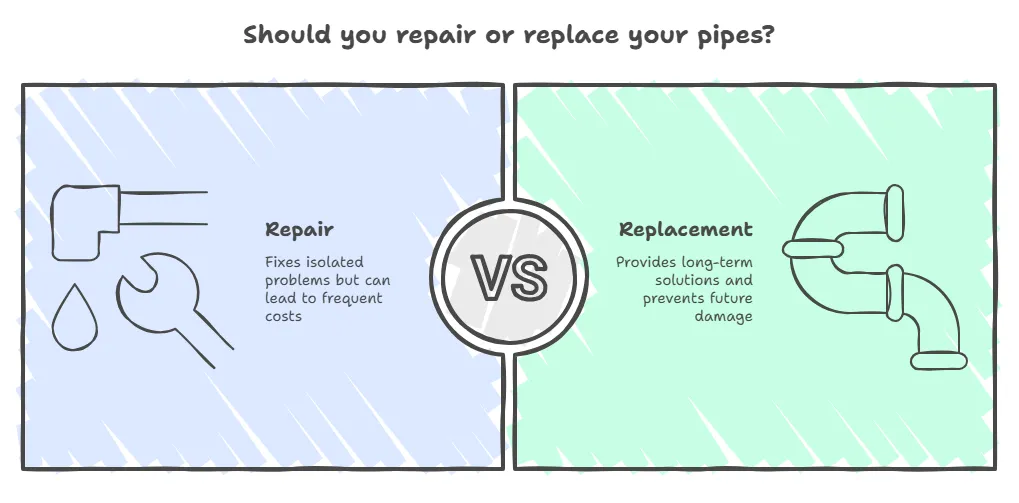
While a simple pipe repair fixes a single leak, a full pipe replacement addresses the entire system, offering a long-term solution. Investing in new plumbing pipes is an investment in the longevity of your home, helping you avoid the cycle of frequent and costly repairs.
Risks of Ignoring Old or Damaged Pipes
Putting off the replacement of old or damaged pipes can lead to serious consequences that affect both your home and your wallet. A small, ignored leak can cause significant water damage to drywall, flooring, and personal belongings. This moisture creates the perfect environment for mold growth, which poses health risks and requires expensive remediation to resolve. You are not just patching a leak; you are protecting your home’s structure.
The most severe risk is a burst pipe, which can flood a room in minutes and cause catastrophic damage. What starts as a minor issue can quickly escalate, turning a manageable replacement into a complex and stressful emergency. The potential for further damage to your plumbing system increases with every day you wait.
Ultimately, ignoring the warning signs results in much more costly repairs than a planned replacement. Proactively addressing aging pipes is the smartest way to protect your property from these avoidable disasters and maintain a safe, healthy living environment for your family.
When Replacement Is More Cost-Effective Than Repair
Knowing when to replace versus repair your pipes can save you a lot of money and stress. While a single pipe repair can fix an isolated problem, there comes a point when replacement becomes the more sensible financial choice. If you find yourself calling a plumber for frequent fixes, the costs can add up quickly, often surpassing the price of a one-time replacement.
Consider replacement over repair if you experience any of the following:
- Your plumbing system requires constant attention due to frequent leaks.
- You have extensive damage across multiple sections of your piping.
- Your home has old pipes made of outdated materials prone to corrosion.
Choosing pipe replacement provides reliable solutions that improve water flow and can even lower higher utility bills caused by hidden leaks. Instead of spending money on temporary patches, you invest in a long-term solution that protects your home from extensive damage and gives you lasting peace of mind.
Common Signs Your Home Needs Pipe Replacement
Your home often gives you clear warning signs when your plumbing system is in trouble. Paying attention to these clues can help you avoid a major disaster. Things like recurring plumbing issues, visible water stains on your walls or ceilings, and a noticeable drop in water pressure are all indicators that something is wrong.
Frequent leaks and problems with old pipes shouldn’t be dismissed as minor annoyances. These are often symptoms of a larger, underlying problem that requires a comprehensive solution. Below, we’ll explore some of the most common signs that point toward the need for a full pipe replacement.
Persistent Leaks and Water Damage
One of the most obvious signs that your pipes are failing is the presence of persistent leaks. If you are constantly finding puddles under sinks, noticing water stains on your ceiling, or calling a plumber for leaky pipes, it’s a strong indication that your home’s plumbing is deteriorating. A single leak can often be repaired, but recurring issues suggest a widespread problem.
These persistent leaks do more than just waste water; they cause slow but steady water damage. Over time, this moisture can rot wooden structures, ruin drywall, and warp flooring. What seems like a small drip can lead to thousands of dollars in repairs if left unaddressed. Don’t let a small issue turn into a major headache.
If you are dealing with frequent leaks, it’s time to stop patching the problem and consider a permanent solution. A professional plumber can assess the condition of your pipes and determine if a full replacement is the best course of action to protect your home and prevent future water damage.
Discolored Water or Rust Particles
The water from your tap should always be clear. If you turn on a faucet and notice brown, yellow, or murky water, it is a serious red flag. Discolored water is often a sign that your pipes are corroding from the inside out, releasing rust and other sediments into your water supply. This not only affects your water quality but also indicates that your pipes are breaking down.
You might notice this issue when you first turn on the water in the morning or after returning from a vacation. Other signs of corrosion include:
- Visible rust particles floating in your water.
- A metallic taste or smell from your tap water.
This problem is especially common in older homes with galvanized steel pipes. As these pipes age, their protective zinc coating wears away, allowing rust to form and leach into the water. If you see discolored water, it’s a clear warning that your pipes are failing and need to be replaced.
Unusual Noises from Pipes
Your plumbing system should operate quietly for the most part. If you start hearing unusual noises like banging, rattling, or loud whooshing sounds when you turn on the water, it’s a sign that something is wrong. These sounds are often warning signs of underlying issues that could lead to bigger problems if ignored.
Banging noises, sometimes called “water hammer,” can happen when the water flow stops abruptly, causing pipes to shake. Rattling might mean your pipes are not secured properly, while a whooshing sound could indicate a blockage or buildup that is restricting water flow. The type of pipe material can also contribute to how noises travel through your home.
Don’t dismiss these sounds as normal quirks of an older house. These unusual noises are your plumbing system’s way of telling you it needs attention. A professional can diagnose the cause of the sounds and determine if a repair or replacement is needed to restore quiet and prevent a potential pipe failure.
Causes Behind Pipe Failures
Pipes don’t last forever, and several factors can lead to their failure. The age and pipe material are two of the biggest culprits, as older materials like galvanized steel are prone to corrosion. External forces can also cause significant damage.
Factors like invasive tree roots, high external pressure on underground pipes, and hard water buildup all contribute to the breakdown of your plumbing. Understanding these common causes can help you identify potential risks to your own system. Let’s look at some of these issues in more detail.
Corrosion and Pipe Material Degradation
One of the most common reasons for pipe failure is corrosion. Over decades, the pipe material itself starts to break down, especially in older homes. Galvanized iron pipes and steel pipes are particularly vulnerable to rust, which eats away at the metal from the inside out. This process weakens the pipes, making them susceptible to leaks and bursts.
Hard water accelerates this degradation. The high concentration of minerals like calcium and magnesium in hard water creates mineral deposits inside the pipes. This buildup narrows the passage for water, increasing pressure and putting extra strain on already weakening pipes. Eventually, this internal pressure can cause the pipe to fail completely.
In very old homes, there’s also the risk of lead pipes, which pose a serious health hazard as they corrode and leach lead into your drinking water. Replacing pipes suffering from corrosion is not just about preventing leaks—it’s about ensuring your water is safe and your plumbing system is sound.
Tree Root Intrusion and External Pressure
The dangers to your pipes aren’t always internal. For underground pipes connecting your home to the main water or sewer line, external threats are a major concern. Tree roots are a primary cause of damage, as they are naturally drawn to the moisture and nutrients inside your pipes. The roots can work their way into tiny cracks, expanding over time and eventually crushing or breaking the pipe.
Besides tree roots, other external factors can damage your pipes, including:
- Shifting soil due to weather changes.
- Pressure from construction or heavy vehicles above.
- Foreign objects in the sewer line causing blockages.
When these issues occur, they can disrupt your water pressure or cause a complete blockage. A professional plumber can help identify the exact cause of the problem, often using cameras to inspect the lines. Addressing these external pressures is crucial for a lasting repair or replacement.
Choosing Between Pipe Repair and Pipe Replacement
Deciding between a quick pipe repair and a full pipe replacement can be tough. A repair is often suitable for a single, isolated leak in an otherwise healthy plumbing system. It’s a fast and affordable fix for a minor problem, but it may not address the root cause if your pipes are old.
On the other hand, pipe replacement is one of the most reliable solutions for aging or failing systems. It provides a fresh start, eliminating recurring problems and ensuring your plumbing is dependable for decades. The following sections will help you understand how professionals assess your system and why replacement can be the better long-term investment.
How Professionals Assess Your Plumbing System
When you call a professional plumber for help, they don’t just guess what’s wrong. They use a systematic approach to accurately diagnose the health of your plumbing system. The first step is often a visual inspection of accessible pipes, where they look for obvious signs of corrosion, leaks, and damage. They will also check your water pressure to see if it’s too high or too low.
To get a deeper look, especially for underground or hidden pipes, professionals use advanced technology. Sewer camera inspections are a common tool, allowing the plumber to see the inside of your pipes in real time. This helps them pinpoint the exact location and cause of the problem, whether it’s a crack, blockage, or tree root intrusion.
This thorough assessment ensures that the recommended solution addresses the actual issue. Here’s how these methods compare:
| Assessment Method | What It Identifies |
|---|---|
| Visual Inspection | Obvious leaks, corrosion on exposed pipes, water stains |
| Camera Inspection | Internal cracks, tree root intrusion, blockages, pipe collapses |
Key Differences in Longevity and Performance
When deciding between repair and replacement, it’s important to think about the future. A pipe repair is a patch that fixes an immediate problem, but its longevity is limited. If the rest of your plumbing pipes are the same age and condition, another leak is likely just around the corner. This can lead to a frustrating and expensive cycle of repairs.
In contrast, installing new pipes offers a clean slate with decades of reliable performance. Modern pipe material options like PEX and copper are designed to resist corrosion and withstand pressure changes, ensuring a strong and consistent flow. With new pipes, you can expect improved water pressure and the peace of mind that comes with a durable, long-lasting system.
While a repair might seem cheaper upfront, a full replacement is often the more cost-effective choice in the long run. It eliminates the need for repeated service calls and protects your home from the risk of future leaks and water damage, providing superior longevity and performance for your entire home.
What to Expect During the Pipe Replacement Process
A whole-house pipe replacement is a major project, but knowing what to expect can make the process smoother. The replacement process is handled by a professional plumber and involves a series of methodical steps to ensure everything is done correctly. It typically begins with a detailed inspection to map out your home’s plumbing.
From there, the team will work on removing old sections of pipe and installing the new ones. The goal is to minimize disruption to your home while ensuring a secure, leak-free system. The following sections will break down the key stages of this important home improvement project.
Preparation, Inspection, and Permits
Before any old pipes are removed, a thorough preparation and inspection phase is essential. A professional will start by assessing your entire plumbing system to create a detailed plan. This often includes a sewer camera inspection to identify any hidden issues in underground lines. This planning stage ensures the replacement process is as efficient as possible.
Depending on where you live and the scope of the work, obtaining permits may be a necessary step. Your plumbing contractor will handle this to ensure the project complies with local building codes. Steps in this phase include:
- A comprehensive inspection to map out the plumbing system.
- Creating a detailed action plan for replacement.
- Securing all required municipal permits.
This preparation work is crucial for a smooth project, though it can add additional time to the overall timeline. Taking these steps upfront prevents delays and ensures the job is done right the first time.
Timeline and Steps Involved in Replacing Pipes
The timeline for a pipe replacement project can vary, but for a typical home, it often takes a few days. The first step of the replacement process is to shut off the main water supply and drain all the existing pipes. Next, the plumbers will begin systematically removing the old pipes, which may involve cutting into walls or floors to access them.
Once the old pipes are out, the new ones are carefully installed and sealed. Professionals work to create secure connections to prevent leaks and ensure smooth water flow. After the installation is complete, the system is tested by turning the water back on and checking every faucet and appliance for proper function and pressure.
This methodical approach prevents further damage and ensures the new system is reliable. While projects involving extensive damage may take longer, a standard pipe replacement is a relatively quick process that provides decades of worry-free plumbing.
Conclusion
In conclusion, recognizing the signs that indicate a need for pipe replacement is crucial for maintaining a safe and efficient plumbing system in your home. Issues such as persistent leaks, discolored water, or unusual noises should never be overlooked, as they can lead to more significant problems down the line. understanding the causes of pipe failures and knowing when to opt for replacement over repair, you can save both time and money. If you’re experiencing any of these warning signs, don’t hesitate to contact a professional plumber who can assess your situation and guide you through the pipe replacement process. Remember, timely action can prevent extensive damage and keep your home running smoothly.
Frequently Asked Questions
Can I replace pipes myself, or should I hire a professional plumber?
While a small, single-pipe fix might seem manageable, a whole-house pipe replacement is not a good idea for a DIY project. It’s a complex job that should be left to a professional plumber. Hiring a company that offers expert replacement services ensures the work is done correctly and safely, preventing major plumbing problems.
Which piping materials are best when replacing old pipes?
When replacing old lead pipes or steel pipes, modern piping materials like copper, PEX, and CPVC are excellent choices. Copper is highly durable, while PEX is flexible and resistant to corrosion. The best pipe material for your home will depend on your budget and specific plumbing needs.
How much does pipe replacement typically cost in New Jersey or New York?
The cost of a whole-house pipe replacement in New Jersey or New York typically ranges from $3,000 to $16,000. The final price depends on factors like the size of your home, the type of pipes chosen, and local labor costs, which are often calculated per linear foot.