Key Highlights
- Understanding the factors that influence chimney repair costs is crucial for homeowners.
- The cost of chimney repair varies based on the type of repair, from minor repointing to a full rebuild.
- Chimney masonry issues can range from cracked mortar joints to serious structural damage.
- A professional inspection is the best way to identify the extent of damage and get an accurate quote.
- Timely chimney repair prevents more costly repairs and protects your home from fire and water damage.
- Different types of repairs, like flue repair or crown replacement, have distinct price points.
Introduction
Your chimney is a vital part of your home’s safety and structure. Over time, exposure to the elements can wear down the chimney masonry, leading to cracks in mortar joints and other damage. Understanding the potential repair costs is the first step toward responsible maintenance. This guide will explain the key factors that determine the cost of chimney repair, helping you budget for the necessary work. Whether you need a simple fix or a more complex type of repair, we have the information you need.
Understanding Chimney Masonry Repair
Chimney masonry repair is the process of fixing the brick, stone, and mortar that make up your chimney structure. This can involve anything from sealing small cracks to rebuilding entire sections. The goal is to restore the chimney’s integrity and ensure it functions safely. Common issues include deteriorating mortar joints, a damaged chimney crown, or problems with the chimney cap.
Knowing what this work entails helps you appreciate its importance for your home. We will explore what chimney masonry repair is, the common types of chimneys found in the US, and why keeping your chimney in good shape is essential for safety.
What Is Chimney Masonry Repair?
Chimney masonry repair involves restoring the physical structure of your chimney. This type of repair focuses on fixing damage to the bricks, stones, and mortar joints that hold everything together. When mortar joints crumble or bricks crack, the entire chimney structure can become unstable and unsafe.
Addressing a damaged chimney quickly is essential. The repair work might involve repointing, which is replacing old mortar, or even replacing individual bricks. The goal is to ensure the chimney is sealed, stable, and capable of withstanding weather and heat. Neglecting these repairs can lead to more significant problems, including water leaks and structural failure.
In 2024, the average cost of chimney masonry repair for simple jobs is around $455, but this can vary widely depending on the extent of the work. For a precise estimate on your specific chimney repair needs, it’s always best to consult a professional Masonry Contractor.
Common Types of Masonry Chimneys in the US
In the United States, you will find a few common types of masonry chimneys, each with its own repair needs. The chimney type you have will influence potential repair costs and the kind of damage you might see. Recognizing your chimney’s material is the first step in understanding its maintenance requirements.
Some of the most prevalent different types of masonry chimneys include:
- Brick Chimney: This is the most traditional and common type. While durable, the mortar joints can deteriorate over time.
- Stucco Chimneys: These have a cement-based finish over a brick or block structure. Cracks in the stucco can allow water to seep in.
- Stone Chimneys: Built with natural stones, these are very durable but can be more complex and costly to repair.
Specific signs that indicate your chimney needs repair, such as crumbling mortar or visible cracks, apply to all these types. Paying attention to the condition of your chimney stack can help you catch problems early.
Why Proper Chimney Masonry Matters for Home Safety
Maintaining your chimney’s masonry is about more than just appearance; it’s critical for your family’s safety. A damaged chimney can pose serious risks, including the potential for a dangerous chimney fire. Cracks and blockages can cause creosote to build up, which is a highly flammable substance.
Furthermore, a compromised chimney can allow harmful gases like carbon monoxide to leak into your home instead of venting outside. This odorless gas can be deadly. There is also the risk of structural damage. A deteriorating chimney can collapse, causing significant harm to your roof and home. Regular chimney inspection helps maintain the integrity of the chimney.
In most cases, it is cheaper to repair a damaged chimney than to rebuild it completely. Timely repairs address issues before they lead to catastrophic failure, saving you from the much higher cost of a full replacement.
When Does a Chimney Need Masonry Repair?
Knowing when to call for chimney repair can save you from bigger headaches later. Often, the chimney itself will show you clear signs that it needs attention. These chimney issues can range from small cracks in the mortar to more obvious signs of water damage. Even minor problems can escalate if ignored.
Learning to spot these warning signs is key to proactive home maintenance. Below, we’ll detail the visible signs of damage to look for, explore the common causes of deterioration, and explain why timely repairs are so important.
Visible Signs of Damage to Watch For
You don’t have to be an expert to spot signs of a damaged chimney. A simple visual inspection can reveal many common problems. Look for visible cracks in the bricks or mortar, as this is a clear indicator that the structure is weakening. You might also notice white, chalky stains on the masonry, a sign of moisture issues.
A leaning chimney is a serious red flag that requires immediate professional attention. Other signs that your chimney needs repair include:
- Crumbling or deteriorating mortar joints
- Bricks that are flaking or popping out (spalling)
- A cracked or damaged chimney crown
- A rusted or missing chimney cap
- Water stains on the ceiling or walls near the fireplace
If you notice any of these issues, it is time to call a professional. Catching these signs early can prevent more extensive and costly damage.
Causes of Chimney Masonry Deterioration
Chimney masonry deteriorates for several reasons, but water damage is the most common culprit. Rain, snow, and ice can seep into porous bricks and mortar. When this moisture freezes and thaws, it expands and contracts, causing cracks and breaking the masonry apart over time. This process is a primary type of damage that weakens the entire structure.
Poor construction can also lead to premature failure. If the chimney was built on an improper foundation, it might start to lean. A damaged flue liner can also contribute to deterioration from the inside out by allowing heat and corrosive gases to reach the masonry. This can create a risk of carbon monoxide poisoning.
Other issues like wood rot in surrounding structures can also impact the chimney. The cost of repair is most affected by the extent and type of this damage, along with the chimney’s size and accessibility.
The Importance of Timely Repairs
Addressing chimney problems as soon as you notice them is crucial. What starts as a minor issue can quickly become a major one, leading to far more costly repairs. For example, a few small cracks can allow water to penetrate the chimney structure, leading to widespread deterioration that might require a partial or even full rebuild.
Giving these issues immediate attention saves you money in the long run and protects your home. A compromised chimney can lead to water leaks, structural instability, and fire hazards. An annual inspection by a professional can help you catch problems early before they escalate.
Minor repairs, like repointing small areas, might cost a few hundred dollars. In contrast, major repairs involving structural work can cost several thousand. Acting quickly keeps you on the lower end of that spectrum.
Key Factors That Influence Chimney Masonry Repair Cost
Several variables determine the final repair costs for your chimney masonry. The extent of the damage is the most significant factor, as minor cracks are much cheaper to fix than a leaning chimney. The specific type of repair needed, such as repointing versus a complete rebuild, will also heavily influence the price.
Your chimney type and its size can also affect the overall cost. A trusted Masonry Contractor can provide an accurate quote based on these elements. Let’s look closer at how size, accessibility, damage level, materials, and even your location impact the labor cost and final price.
Chimney Size and Accessibility
The size of your chimney directly impacts the cost of repairs. A larger chimney stack requires more materials and more time to repair, increasing both material and labor costs. Many masons price their work per square foot, so a taller and wider chimney will naturally have a higher repair bill.
Accessibility is another major factor affecting labor rates. If your chimney is hard to reach, such as on a steep or high roof, the contractor will need to set up scaffolding to work safely. This extra equipment and setup time add to the overall cost. A chimney that is easily accessible by a ladder may have a lower repair rate.
Regular chimney maintenance and chimney cleaning can help you spot issues before they become widespread, but when repairs are needed, size and access will always be primary cost drivers.
Extent of Damage: Minor vs Major Repairs
The cost of chimney repair is directly tied to the extent of damage. Distinguishing between minor and major issues is key to understanding your potential expenses. Minor repairs are typically cosmetic or preventative and are much less expensive than major structural work.
Minor repairs usually cost between $160 and $750. These include:
- Sealing small cracks
- Minor repointing of mortar joints
- Repairing a small area of wood rot
- Fixing a slightly damaged chimney crown
More extensive repairs are needed when there is significant structural damage. These repairs can cost from $1,000 to $15,000 or more. Major repairs involve rebuilding sections of the chimney, replacing the entire flue liner, or addressing a leaning structure. These complex jobs require more time, materials, and expertise.
Materials Used in Chimney Masonry Repair
The materials needed for your chimney repair will also affect the total cost. Different repairs require different materials, each with its own price point. For example, simple repointing only requires new mortar, which is relatively inexpensive. However, if bricks are damaged beyond repair, a brick replacement will be necessary, adding to the material cost.
The type of chimney you have also plays a role. Stucco chimneys may need specialized stucco mix for patching, while a flue repair could require a new stainless steel or clay tile liner, which can be one of the more expensive components.
Common materials that impact cost include:
- Mortar: Used for repointing mortar joints.
- Bricks or Stones: For replacement of damaged units.
- Sealant: For waterproofing the exterior masonry.
- Crown Coat: For chimney crown repair.
The quality and type of these materials will influence the longevity and cost of the repair.
Regional Differences in Repair Costs Across the US
Where you live can have a surprising impact on your chimney repair costs. Labor cost is one of the biggest reasons for these regional differences. Masons in urban areas with a higher cost of living typically charge more per hour than those in rural areas. This can significantly affect the final price of your repair project.
Material costs can also vary by location. The average cost for a repair in one state might be higher or lower than in another, even for the same type of work. It is always a good idea to get quotes from local professionals, like a professional chimney sweep or a qualified Masonry Contractor, to understand the pricing in your area.
While it’s difficult to give exact figures for every region, this table illustrates how costs can differ.
| Region | Average Labor Cost (per hour) | Notes |
|---|---|---|
| Northeast | $75 – $150+ | Higher costs in major metropolitan areas. |
| Midwest | $50 – $100 | Generally more affordable labor rates. |
| South | $60 – $120 | Costs can vary widely between cities and rural areas. |
| West | $80 – $160+ | Higher costs on the coast and in major cities. |
Average Chimney Masonry Repair Costs in 2024
Understanding the average cost of chimney repair can help you budget effectively. In 2024, simple repairs typically range from $160 to $750. However, these repair costs can escalate quickly depending on the extent of damage. A full chimney replacement, for instance, could cost up to $15,000.
The final price is a combination of labor cost and materials. Let’s break down the typical price ranges for common repairs, examine the split between labor and materials, and compare the costs of a DIY approach versus hiring a professional.
Typical Price Ranges for Common Repairs
The average cost of chimney repair depends heavily on the specific job. Minor repairs are relatively affordable, while more extensive repairs can be a significant investment. Knowing the typical price ranges for different types of chimney repairs helps you prepare for the necessary repairs your home needs.
Here are some common repairs and their average cost ranges:
- Repointing: $4 to $25 per square foot.
- Chimney Crown Repair: $150 to $350 for minor fixes, up to $3,000 for a full replacement.
- Flue Repair (Cracked Tiles): $65 to $100 per square foot.
- Waterproofing/Sealing: $150 to $500.
- Full Chimney Stack Rebuild: Around $150 per linear foot.
These prices reflect the complexity and materials involved in each task. Getting a quote from a professional is the best way to determine the exact cost for your chimney.
Breakdown of Labor and Material Costs
Your total chimney repair costs are made up of two main cost components: labor and materials. For many masonry jobs, labor is the largest expense. For example, in a repointing project, labor can account for up to 90% of the total bill. This is because the work is detailed and time-consuming.
Labor rates for a qualified Masonry Contractor can range from $50 to over $150 per hour, depending on your location and the complexity of the job. Emergency repairs will cost even more, sometimes up to $300 per hour. Material costs vary based on the repair, such as needing new bricks for a brick replacement or special coating for a crown repair.
Comparing DIY and Professional Repair Costs
When faced with a chimney repair, you might wonder if a DIY approach could save you money. While you would only pay for materials, tackling this repair work yourself comes with significant risks. Chimney repair often involves working at heights, which can be dangerous without proper safety gear and experience.
Hiring a professional from a company like Ramos Masonry ensures the job is done safely and correctly. Professionals can identify hidden damage you might miss, and their work is typically guaranteed. An improper DIY repair could lead to bigger problems, like leaks or structural issues, costing you more in the long run.
Consider these points when comparing options:
- Safety: Professionals have the training and equipment for working safely on roofs.
- Quality: An experienced Masonry Contractor ensures the repair is durable and meets building codes.
- Hidden Damage: A professional chimney sweep can spot underlying issues during an inspection.
- Cost: While DIY saves on labor, fixing a botched job can be more expensive than hiring a pro from the start.
What’s Included in a Chimney Masonry Repair Quote?
When you receive a quote for chimney repair, it should provide a clear breakdown of the expected repair costs. A detailed estimate helps you understand exactly what you are paying for and avoids surprises later. A typical quote begins with the findings from a thorough chimney inspection, which diagnoses the problems.
The quote should then list the specific repair work to be done, such as repointing or crown repair. Let’s examine the common components of a repair quote, including inspection fees, specific cost items, and potential additional services.
Inspection and Diagnostic Fees
Before any repair work begins, a professional chimney inspection is necessary to accurately diagnose the problem. This inspection is a critical first step, and many contractors charge diagnostic fees for this service. This fee covers the time and expertise required to assess the condition of your entire chimney system, from the firebox to the top of the stack.
The cost for a professional chimney inspection typically ranges from $130 to $380. During the inspection, the specialist will look for cracks, water damage, creosote buildup, and issues with the flue liner that might require flue repair. This thorough check ensures that the proposed repairs will address the root cause of the problem.
While some homeowners might question this upfront cost, it’s a vital part of the process. An accurate diagnosis from an annual inspection prevents unnecessary work and ensures the right repairs are recommended, ultimately saving you money.
Cost Components: Repointing, Brick Replacement, Crown Repair
A detailed repair quote will itemize the specific tasks needed to fix your chimney. This breakdown helps you understand where your money is going. Each component will have an associated cost for labor and materials.
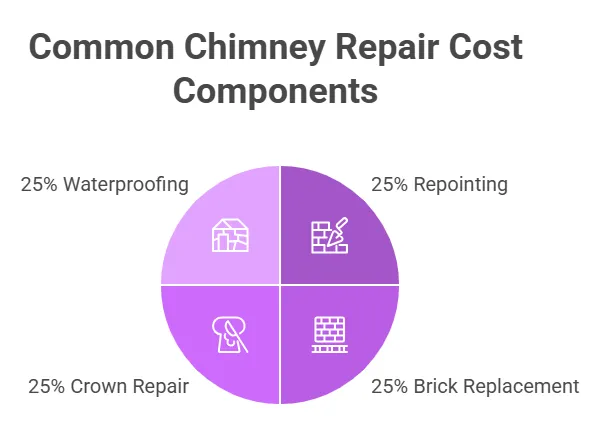
Common cost components you might see on a quote from a Masonry Contractor include:
- Repointing: This line item covers the cost of removing old mortar from the mortar joints and applying new mortar to a specific area of the chimney stack.
- Brick Replacement: If any bricks are severely damaged, the quote will list the cost to remove and replace them.
- Crown Repair: This will specify whether the chimney crown is being patched or completely rebuilt and list the associated cost.
- Waterproofing: If needed, the cost to apply a sealant to the exterior masonry will be included.
Reviewing these items helps you compare quotes from different contractors and ensure all necessary work is covered.
Additional Services and Hidden Costs
Sometimes, a chimney inspection reveals issues beyond the initial visible damage. A good quote will mention potential additional services that may be required, helping you avoid hidden costs. These are not always necessary but are important to be aware of.
For example, the contractor might discover that the flue liner is cracked and needs to be repaired or replaced. Or, the chimney cap might be missing or damaged, requiring a chimney cap replacement to prevent water and debris from entering the flue.
Potential additional costs could include:
- Flue Liner Replacement: A significant expense if the existing liner is failing.
- Smoke Chamber Parging: Smoothing the smoke chamber to improve efficiency and safety.
- Scaffolding Rental: If the chimney is tall or difficult to access.
Discussing these possibilities with your contractor beforehand ensures transparency and helps you budget for the entire project.
Beginner’s Guide: How to Approach Chimney Masonry Repair
Approaching a chimney repair project for the first time can feel daunting. While major structural issues should always be left to a professional Masonry Contractor, a homeowner can sometimes handle very simple repairs, like sealing a tiny crack. This guide is designed to help you understand the basic process.
We will provide a step-by-step guide covering what you need to get started, from tools to safety gear. Following these basics for chimney maintenance can help you decide if a task is within your skill set or if it’s time to call for help.
What You’ll Need to Get Started (Tools, Safety Gear, Resources)
Before you begin any repair work, gathering the right tools and safety gear is essential. Attempting a repair without the proper equipment can be ineffective and dangerous. For any work done at height, safety should be your top priority.
For basic masonry repairs, you will typically need:
- Safety Gear: Sturdy ladder, safety harness, gloves, and safety glasses.
- Tools: Trowel, mortar hawk, jointing tool, hammer, and chisel.
- Materials: Mortar mix, bricks (if needed), and a waterproofing sealant.
- Cleaning Supplies: Wire brush and a bucket of water.
Remember, this list is for very minor repairs. For a comprehensive chimney inspection to identify all issues, it is best to hire a professional chimney sweep. They have specialized tools to assess the entire system correctly.
Step-by-Step Guide to Chimney Masonry Repair
This guide outlines the basic steps for handling minor masonry repairs. It is important to emphasize that complex tasks like a flue repair, a major chimney crown repair, or any structural repair work should be handled by a qualified professional. This guide is intended for simple fixes only.
The process involves assessing the damage, preparing the area, performing the repair, and ensuring a clean finish. Each step is crucial for achieving a durable and safe result. Rushing through any part of the process can lead to a faulty repair that fails quickly.
Following these steps carefully can help you address small issues before they become big problems. However, always know your limits. If you feel unsure at any point, stop and contact a professional Masonry Contractor from a trusted company like Ramos Masonry.
Step 1: Assessing the Damage
The first step in any repair is to carefully assess the extent of the damage. From the ground, use binoculars to get a closer look at the chimney stack. Look for visible cracks in the bricks and mortar, crumbling sections, or white, chalky stains.
If it is safe to do so, use a sturdy ladder to get a closer look. Examine the mortar joints and the condition of the chimney crown. Are the cracks hairline or wide? Is the damage localized to one small area, or is it spread across a larger section of the damaged chimney?
This initial assessment will help you determine if the chimney issues are minor enough for a DIY fix or if they require a professional chimney inspection. If you see large cracks, a leaning structure, or extensive crumbling, do not proceed. These are signs of serious problems that need an expert.
Step 2: Gathering Materials and Tools
Once you have assessed the damage and determined it is a minor repair, the next step is to gather all the necessary materials and tools. Having everything on hand before you start will make the job go much smoother. Your material list will depend on the specific repair.
For repointing mortar joints, you will need a pre-mixed mortar that matches your existing mortar color as closely as possible. For a small brick replacement, you will need a matching brick. The type of materials you choose will impact the final look and durability of the repair.
Make sure your safety gear is in good condition, especially your ladder and safety harness if you are working at height. Lay out all your tools, including your trowel, chisel, and wire brush, so they are within easy reach.
Step 3: Preparing the Work Area
Proper preparation of the work area is key to a successful repair. Start by cleaning the damaged section of the chimney structure. Use a wire brush to remove any loose, crumbling mortar, dirt, and debris from the joints you plan to repair. This ensures the new mortar will bond properly.
If you are working near the top of the chimney stack, make sure the chimney cap is covered to prevent debris from falling into the flue. You should also lay down a tarp on the roof and on the ground below to catch any falling mortar and protect your property.
A clean and well-prepared surface is essential for a lasting repair. Rinsing the area with a small amount of water can also help the new mortar cure correctly, but be careful not to oversaturate the brick. This is a step a professional chimney sweep or mason would never skip.
Step 4: Performing Basic Masonry Repairs
With the area prepared, you can now begin the repair work. For repointing mortar joints, mix your mortar according to the manufacturer’s directions to a thick, consistent paste. Using a trowel, pack the new mortar firmly into the cleaned-out joints. Be sure to fill them completely to avoid air pockets.
Once the joints are filled, use a jointing tool to smooth the mortar and create a finish that matches the rest of the chimney. This step is important for both appearance and water resistance. These types of minor repairs can prevent the need for more costly necessary repairs later.
Remember, this process is only for simple patch-ups. If you find the damage is more extensive than you initially thought, it is always cheaper to stop and call a professional than to attempt a large-scale repair yourself. An improper repair can compromise the chimney and lead to a full rebuild.
Step 5: Ensuring a Quality Finish and Final Inspection
After completing the repair, the final step is to ensure a quality finish. Gently clean any excess mortar off the face of the bricks with a damp brush before it dries completely. Allow the new mortar to cure for the time recommended by the manufacturer, which can be several days. During this time, protect the area from rain.
Once cured, perform a final inspection of your work. The new joints should be solid and well-bonded. For complete peace of mind, especially after a DIY repair, consider scheduling a professional chimney inspection. An expert can verify that the repair was successful and check for any other issues.
This last step is crucial for ensuring the structural integrity of the chimney and confirming that your chimney maintenance efforts were effective. Knowing the job is done right provides safety and prevents more costly future repairs.
Conclusion
In conclusion, understanding chimney masonry repair costs is essential for homeowners who want to maintain the safety and integrity of their homes. recognizing the signs that indicate your chimney needs repair and being aware of the factors that influence costs, you can make informed decisions. Whether you’re considering a DIY approach or hiring a professional, knowing what to expect financially helps you budget effectively and avoid surprises. Remember, timely repairs not only save you money in the long run but also ensure the longevity of your chimney. If you need further assistance or a personalized consultation regarding your chimney masonry needs, don’t hesitate to reach out for guidance.
Frequently Asked Questions
Is it more cost-effective to repair or rebuild a masonry chimney?
It is almost always more cost-effective to repair a damaged chimney than to opt for a full chimney replacement. However, if the extent of the damage is severe and compromises the chimney’s structural integrity, a rebuild might be the only safe option. Timely repairs prevent issues from escalating into costly repairs.
How do I know if my chimney masonry repair will be covered by insurance?
Your homeowners insurance may cover chimney repair if the damage was caused by a sudden, covered event like a lightning strike or storm. However, damage resulting from neglect or lack of maintenance is typically not covered. Review your policy or contact your agent to understand your specific coverage for necessary repairs.
What questions should I ask a chimney repair contractor about costs?
Ask for a detailed, itemized quote that breaks down the labor cost and materials. Inquire about their warranty, timeline for the type of repair, and whether the quote includes potential additional chimney repair costs. Also, confirm they are licensed and insured before agreeing to any work.
How do different materials impact the overall repair cost?
The materials used significantly impact repair costs. A standard brick chimney repair is often less expensive than one using custom stone. Similarly, replacing a flue liner with stainless steel is more costly than patching mortar joints or performing a minor crown repair. The quality and type of material directly affect the price.