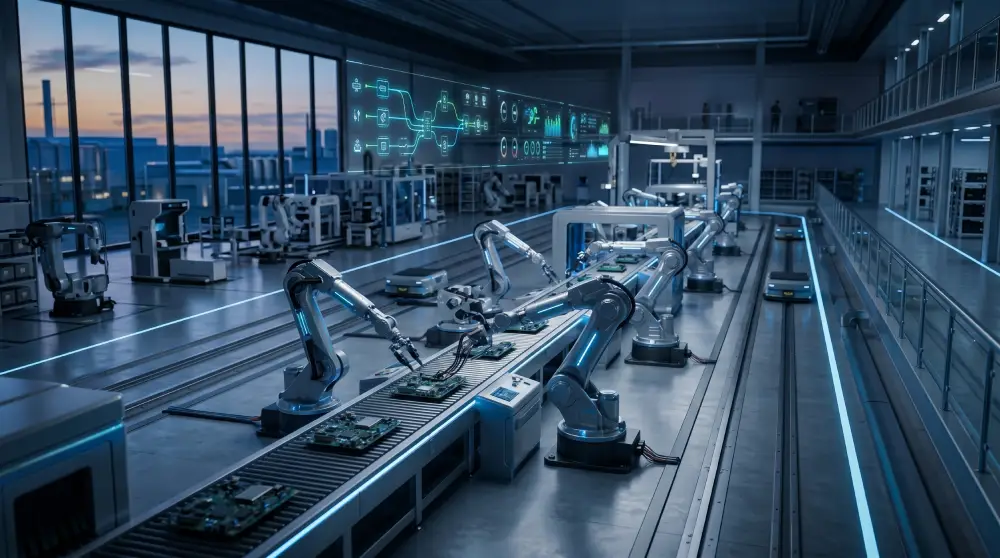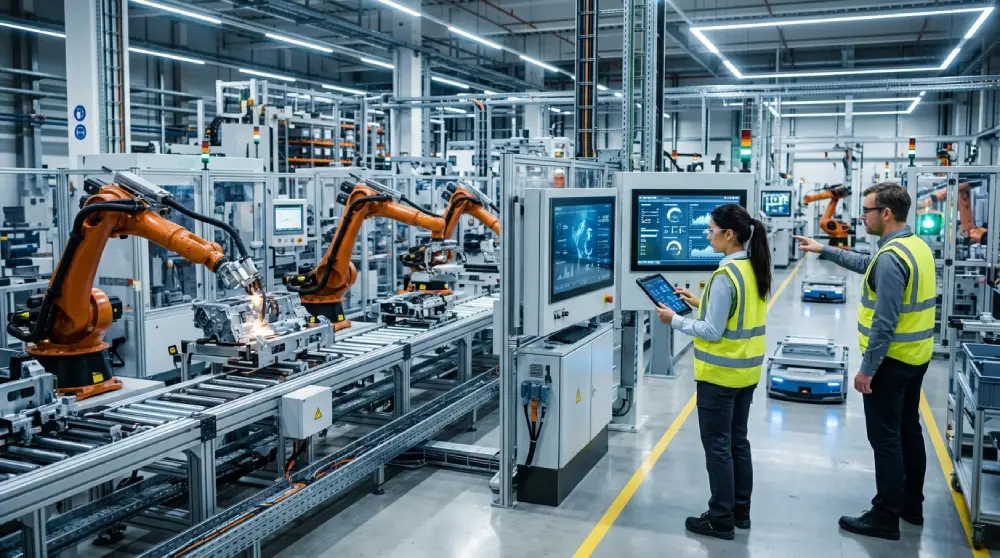
Industry 4.0 Explained in simple terms refers to the ongoing transformation of manufacturing and industrial processes through smart, connected technology. It blends physical machinery with digital intelligence, allowing factories and supply chains to communicate, analyze, and adapt in real time. For businesses across every sector, understanding this shift is no longer optional; it is quickly becoming the foundation of modern industrial competitiveness.
What Is Industry 4.0?
Industry 4.0 refers to the fourth wave of industrial transformation, where physical production systems merge with digital technology. Unlike earlier industrial shifts that focused on mechanization or automation alone, this stage emphasizes connectivity, data exchange, and intelligent decision making across the entire value chain.
Machines, sensors, and software systems now communicate with each other with minimal human intervention. This creates smart factories capable of self monitoring, predictive maintenance, and continuous process improvement.
Why the Term “Fourth” Matters
The name reflects a historical progression. Each industrial revolution introduced a new layer of capability, and Industry 4.0 represents the point where digital and physical systems truly converge.
The Evolution of Industrial Revolutions
To understand Industry 4.0, it helps to look at what came before it.
The First Industrial Revolution
This era introduced steam power and mechanical production, moving manufacturing away from manual labor and toward machine assisted processes.
The Second Industrial Revolution
Electricity and assembly lines defined this period, enabling mass production and significantly higher output.
The Third Industrial Revolution
Computers and early automation systems transformed manufacturing once again, introducing programmable logic and digital control into factories.
The Fourth Industrial Revolution
Building on all previous stages, Industry 4.0 introduces intelligent systems that think, learn, and adapt using real time data.
Key Technologies Driving Industry 4.0
Several core technologies power this transformation, working together rather than in isolation.
Internet of Things
Connected sensors and devices collect continuous data from machines, products, and environments, allowing companies to monitor operations remotely and in real time.
Artificial Intelligence and Machine Learning
AI systems analyze massive datasets to detect patterns, predict failures, and optimize processes far faster than traditional methods allow.
Cloud Computing
Cloud platforms give manufacturers the flexibility to store, access, and process industrial data from anywhere, supporting collaboration across global operations.
Big Data and Analytics
Industrial systems generate enormous volumes of data. Advanced analytics tools convert this raw information into actionable insight for smarter decision making.
Robotics and Automation
Modern robotics go beyond repetitive tasks. Today’s robots collaborate with human workers, adjust to changing conditions, and support flexible production lines.
Digital Twins
A digital twin is a virtual replica of a physical system. Manufacturers use these simulations to test changes, predict outcomes, and reduce operational risk before implementing anything in the real world.
Benefits of Industry 4.0
Companies adopting Industry 4.0 principles often experience meaningful operational improvements.
Improved Efficiency
Automated systems and predictive analytics reduce downtime and streamline production schedules.
Better Quality Control
Real time monitoring allows manufacturers to detect defects early, improving product consistency.
Enhanced Flexibility
Smart factories can quickly adjust to changing demand, customization requests, or supply chain disruptions.
Stronger Sustainability
Optimized processes reduce waste and energy consumption, supporting more environmentally responsible operations.
Challenges in Adopting Industry 4.0
Despite its advantages, the transition presents real challenges for organizations.
Workforce Skill Gaps
Employees need new technical skills to operate and manage advanced digital systems, requiring ongoing training and development.
Data Security Concerns
Increased connectivity introduces new vulnerabilities, making cybersecurity a critical part of any Industry 4.0 strategy.
Integration Complexity
Merging legacy equipment with modern digital systems can be technically demanding and requires careful planning.
Industry 4.0 Across Different Sectors
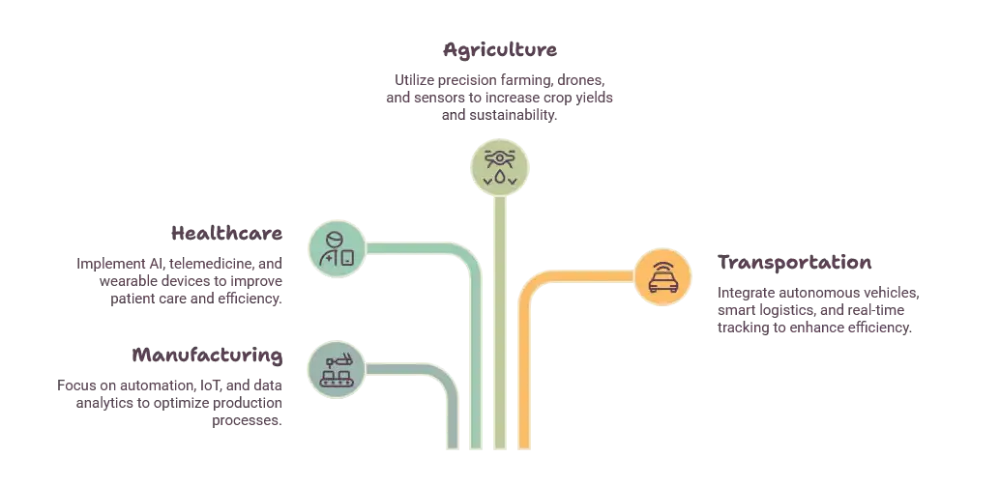
While manufacturing remains the most visible example, Industry 4.0 principles now extend into many industries.
Automotive
Smart factories use robotics and predictive analytics to streamline vehicle assembly and quality assurance.
Healthcare
Connected devices and data driven systems support smarter diagnostics, hospital logistics, and equipment maintenance.
Logistics and Supply Chain
Real time tracking and predictive analytics help companies manage inventory, optimize delivery routes, and reduce disruptions.
Energy
Smart grids and connected sensors improve efficiency, monitor consumption, and support renewable energy integration.
The Future of Industry 4.0
As technology continues to evolve, Industry 4.0 is expected to deepen its influence across global industries. Emerging concepts like Industry 5.0 are already building on this foundation, emphasizing human centered collaboration alongside intelligent automation.
Organizations that embrace these changes early are likely to gain long term advantages in efficiency, adaptability, and innovation.
Conclusion
Industry 4.0 represents a fundamental shift in how industries operate, blending physical machinery with intelligent digital systems. From smart factories to predictive analytics, this transformation is reshaping manufacturing, healthcare, logistics, and beyond. While challenges around skills and security remain, the long term benefits of efficiency, flexibility, and sustainability make Industry 4.0 a defining force in the modern industrial landscape.
FAQs
What does Industry 4.0 mean in simple terms?
Industry 4.0 refers to the integration of smart digital technology, such as sensors, AI, and automation, into industrial and manufacturing processes to improve efficiency and decision making.
How is Industry 4.0 different from previous industrial revolutions?
Earlier revolutions focused on mechanization, electricity, and computerization. Industry 4.0 focuses on connectivity and intelligence, allowing systems to communicate and make decisions with minimal human input.
What technologies are part of Industry 4.0?
Core technologies include the Internet of Things, artificial intelligence, cloud computing, big data analytics, robotics, and digital twins.
Which industries benefit from Industry 4.0?
Manufacturing, automotive, healthcare, logistics, and energy sectors all use Industry 4.0 principles to improve operations and efficiency.
What are the biggest challenges of adopting Industry 4.0?
Common challenges include workforce skill gaps, cybersecurity risks, and the complexity of integrating new digital systems with existing equipment.Industry 4.0 Explained: discover how smart tech, AI, IoT, and automation are transforming manufacturing and industries worldwide.