
Robotic Process Automation is transforming the way businesses handle repetitive digital tasks by letting software robots do the work that once consumed hours of human effort. From data entry to invoice processing, this technology is helping companies of every size operate faster and with fewer errors. This guide explains what it is, how it works, and why so many organizations are adopting it.
What Is Robotic Process Automation
Robotic Process Automation, often shortened to RPA, refers to software robots or bots that mimic human actions within digital systems. These bots can log into applications, move files, fill in forms, and extract data exactly the way a person would, but without fatigue or manual errors.
How RPA Bots Work
RPA bots interact with existing software through the user interface rather than requiring deep integration. They follow a set of predefined rules and can be trained to recognize patterns, screens, and workflows just like a human employee would.
The Difference Between RPA and Traditional Automation
Traditional automation often requires custom coding within backend systems. RPA instead works on top of existing applications, which means businesses can automate processes without rebuilding their entire technology stack.
Key Benefits of Robotic Process Automation
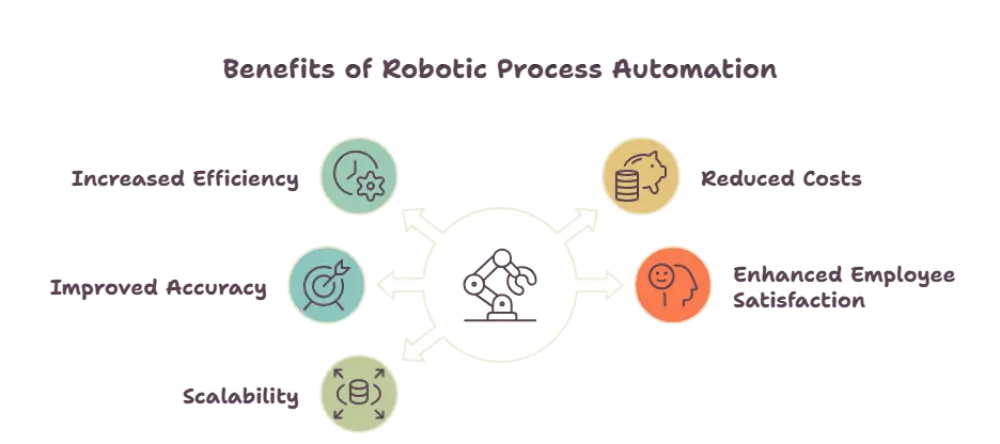
Organizations turn to RPA for several practical reasons that go beyond simple efficiency gains.
Increased Accuracy
Bots follow instructions exactly as programmed, which drastically reduces the human errors that often occur during repetitive manual tasks like data entry or reconciliation.
Faster Processing Times
Since bots can work around the clock without breaks, tasks that once took hours can often be completed in minutes, freeing employees to focus on more meaningful work.
Improved Employee Satisfaction
When repetitive tasks are handled by bots, employees can shift their attention toward creative problem solving, strategy, and customer interaction, which often leads to higher job satisfaction.
Common Use Cases for RPA
Robotic Process Automation applies across nearly every industry and department.
Finance and Accounting
Bots are frequently used for invoice processing, reconciliation, and generating financial reports, since these tasks involve structured data and repetitive steps.
Human Resources
RPA can handle onboarding paperwork, payroll processing, and employee record updates, reducing the administrative burden on HR teams.
Customer Service
Bots assist by pulling customer information, updating records, and even triggering responses for common inquiries, allowing support teams to focus on complex issues.
How to Implement RPA Successfully
A thoughtful approach to implementation determines whether RPA delivers lasting value.
Identify the Right Processes
Not every task is suitable for automation. The best candidates are repetitive, rule based, and involve structured data that does not require human judgment.
Involve the Right Stakeholders
Successful RPA projects bring together IT teams, department leaders, and end users early on so the automation actually solves real workflow problems.
Start Small and Scale Gradually
Rather than automating everything at once, many organizations begin with a single process, measure the results, and expand from there.
Challenges to Keep in Mind
While RPA offers clear advantages, it is not without its challenges.
Process Changes Can Break Bots
Since bots often rely on specific screens or workflows, any change to the underlying application can disrupt automation and require updates.
Governance and Oversight
Without proper monitoring, bots can continue running outdated processes or make errors at scale. Ongoing oversight ensures automation stays aligned with business needs.
The Future of Robotic Process Automation
RPA continues to evolve alongside artificial intelligence and machine learning, giving bots the ability to handle more complex, judgment based tasks over time. This combination, often referred to as intelligent automation, is expanding what businesses can automate beyond simple rule based work.
Integration With Artificial Intelligence
Pairing RPA with AI allows bots to read unstructured documents, understand natural language, and make more nuanced decisions than rule based automation alone.
Growing Adoption Across Industries
As more organizations recognize the value of freeing employees from repetitive work, adoption of RPA is expected to keep expanding across healthcare, logistics, banking, and beyond.
Conclusion
Robotic Process Automation offers a practical way for organizations to streamline repetitive tasks, reduce errors, and free employees to focus on higher value work. identifying the right processes, involving key stakeholders, and starting with manageable projects, businesses can build a strong foundation for automation success. As RPA continues to evolve alongside artificial intelligence, its role in everyday operations will only continue to grow.
FAQs
What does Robotic Process Automation actually do?
It uses software bots to complete repetitive digital tasks such as data entry, form filling, and file transfers, mimicking the actions a human would normally perform.
Is RPA the same as artificial intelligence?
No, RPA follows predefined rules for structured tasks, while artificial intelligence involves learning and decision making, though the two are often combined for more advanced automation.
Which departments benefit most from RPA?
Finance, human resources, and customer service commonly benefit due to their high volume of repetitive, rule based tasks.
What types of tasks are not suitable for RPA?
Tasks that require complex judgment, frequent exceptions, or constantly changing processes are generally poor candidates for traditional RPA.
Does implementing RPA require replacing existing software systems?
No, RPA typically works on top of existing applications through the user interface, so businesses do not need to overhaul their current systems.