
Cloud computing trends continue to redefine how businesses build, deploy, and scale their digital operations. As organizations move further away from traditional infrastructure, understanding these trends has become essential for staying competitive. From artificial intelligence integration to edge computing, the cloud landscape is evolving faster than ever, and companies that adapt early tend to gain a significant operational advantage.
In this article, we will explore the most important cloud computing trends that are influencing businesses across industries today.
- Why Cloud Computing Trends Matter
- Artificial Intelligence Integration in Cloud Platforms
- Rise of Multi Cloud Strategies
- Edge Computing Expansion
- Serverless Computing Adoption
- Stronger Focus on Cloud Security
- Growth of Industry Specific Cloud Solutions
- Sustainability in Cloud Computing
- Increased Use of Hybrid Cloud Environments
- Automation and DevOps Evolution
- Quantum Computing on the Horizon
- Conclusion
- Frequently Asked Questions
Why Cloud Computing Trends Matter
Cloud technology is no longer just a hosting solution. It has become the backbone of digital transformation. Businesses rely on cloud platforms for data storage, application development, artificial intelligence, and collaboration.
Keeping up with emerging trends helps organizations improve efficiency, strengthen security, and deliver better customer experiences. Ignoring these shifts can leave companies struggling with outdated systems that cannot keep pace with modern demands.
Artificial Intelligence Integration in Cloud Platforms
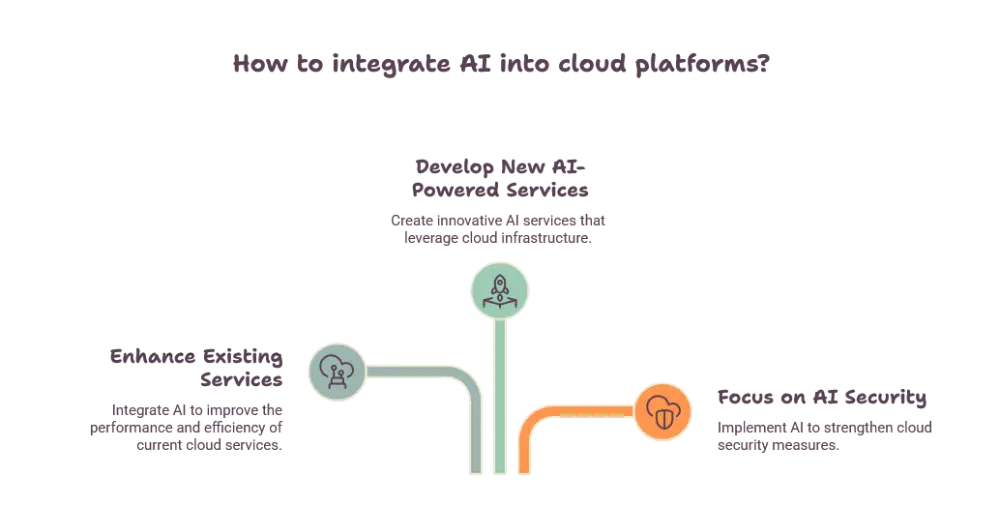
Artificial intelligence and cloud computing are becoming deeply intertwined. Cloud providers now offer built in machine learning tools that allow businesses to build smarter applications without needing extensive technical expertise.
Smarter Automation Through AI
AI powered automation is helping cloud platforms manage workloads more efficiently. Systems can now predict traffic spikes, allocate resources automatically, and even detect anomalies before they cause disruptions.
AI Driven Data Insights
Cloud based AI tools are enabling companies to process massive datasets in real time. This allows businesses to make faster and more accurate decisions based on live information rather than outdated reports.
Rise of Multi Cloud Strategies
More organizations are choosing to use multiple cloud providers instead of relying on a single vendor. This approach reduces dependency risks and allows businesses to select the best services from different providers.
Improved Flexibility and Reliability
A multi cloud approach gives companies the flexibility to distribute workloads based on performance needs. If one provider experiences downtime, operations can continue smoothly through another platform.
Avoiding Vendor Lock In
Many businesses are adopting multi cloud environments to avoid being tied to a single ecosystem. This gives them greater control over how they manage data, applications, and infrastructure.
Edge Computing Expansion
Edge computing is becoming a major force in the cloud industry. Instead of sending all data to centralized servers, edge computing processes information closer to where it is generated.
Faster Response Times
reducing the distance data must travel, edge computing significantly improves speed. This is especially valuable for industries like healthcare, manufacturing, and autonomous vehicles where real time processing is critical.
Supporting IoT Growth
The rise of connected devices has fueled the need for edge computing. As more devices generate data continuously, processing information locally helps reduce latency and bandwidth strain.
Serverless Computing Adoption
Serverless computing continues to gain popularity because it allows developers to focus purely on writing code without managing servers.
Simplified Development Process
With serverless architecture, cloud providers automatically handle scaling, maintenance, and infrastructure management. This allows development teams to launch applications faster and with less operational overhead.
Scalability on Demand
Serverless platforms automatically adjust resources based on real time usage. This ensures applications remain responsive even during unexpected surges in demand.
Stronger Focus on Cloud Security
As cloud adoption grows, so does the importance of robust security measures. Businesses are prioritizing advanced protection strategies to safeguard sensitive data.
Zero Trust Security Models
The zero trust approach is becoming a standard practice in cloud environments. This model requires continuous verification of users and devices, reducing the risk of unauthorized access.
Enhanced Compliance Standards
Cloud providers are strengthening compliance frameworks to help businesses meet industry regulations. This is particularly important for sectors like finance and healthcare that handle sensitive information.
Growth of Industry Specific Cloud Solutions
Cloud providers are increasingly offering specialized solutions tailored to specific industries such as healthcare, retail, finance, and manufacturing.
Customized Tools for Unique Needs
Industry specific cloud platforms come with built in compliance features, specialized workflows, and tools designed for particular business challenges. This helps organizations implement cloud solutions more effectively without extensive customization.
Faster Digital Transformation
These tailored solutions allow companies to adopt cloud technology more quickly since the platforms already align with their operational requirements.
Sustainability in Cloud Computing
Environmental responsibility has become a growing priority within the cloud industry. Providers are investing in energy efficient data centers and renewable energy sources.
Green Data Centers
Many cloud companies are redesigning their infrastructure to reduce energy consumption and carbon emissions. This includes using advanced cooling systems and optimizing server efficiency.
Supporting Corporate Sustainability Goals
Businesses are choosing cloud providers that align with their sustainability commitments. This trend reflects a broader shift toward environmentally conscious technology practices.
Increased Use of Hybrid Cloud Environments
Hybrid cloud solutions combine private and public cloud infrastructure, giving businesses more control over how they manage workloads.
Balancing Security and Flexibility
Hybrid environments allow sensitive data to remain on private servers while less critical operations run on public cloud platforms. This balance offers both security and scalability.
Seamless Integration Across Systems
Modern hybrid cloud tools make it easier to integrate different environments, allowing data and applications to move smoothly between platforms.
Automation and DevOps Evolution
Automation continues to reshape how cloud environments are managed. DevOps practices are becoming more advanced with the help of intelligent automation tools.
Continuous Integration and Deployment
Automated pipelines allow development teams to release updates faster while maintaining consistent quality. This speeds up innovation and reduces manual errors.
Infrastructure as Code
Managing cloud infrastructure through code has become a standard practice. This approach improves consistency, reduces configuration errors, and simplifies large scale deployments.
Quantum Computing on the Horizon
While still emerging, quantum computing is beginning to influence cloud computing discussions. Several major cloud providers are experimenting with quantum capabilities.
Potential for Complex Problem Solving
Quantum computing could eventually help solve problems that are currently too complex for traditional computers, including advanced simulations and optimization tasks.
Early Stage Experimentation
Although widespread adoption is still years away, businesses are beginning to explore how quantum computing might integrate with cloud platforms in the future.
Conclusion
Cloud computing trends are shaping a future where businesses operate with greater speed, intelligence, and flexibility. From artificial intelligence integration to edge computing and sustainability efforts, these developments are transforming how organizations approach technology.
Staying informed about these trends allows businesses to make smarter decisions, improve efficiency, and remain competitive in an increasingly digital world. As cloud technology continues to evolve, embracing these innovations will be key to long term success.
Frequently Asked Questions
What are the biggest cloud computing trends today?
The most significant trends include artificial intelligence integration, multi cloud strategies, edge computing, serverless architecture, and stronger cloud security practices.
How is artificial intelligence changing cloud computing?
Artificial intelligence is enabling smarter automation, predictive analytics, and real time data processing within cloud platforms, helping businesses make faster and more informed decisions.
What is the difference between multi cloud and hybrid cloud?
Multi cloud refers to using multiple public cloud providers, while hybrid cloud combines private and public cloud infrastructure for greater flexibility and control.
Why is edge computing becoming important in cloud technology?
Edge computing reduces latency by processing data closer to its source, which improves speed and supports real time applications like IoT devices and autonomous systems.
How is cloud computing supporting sustainability efforts?
Cloud providers are investing in energy efficient data centers and renewable energy sources to reduce environmental impact and support corporate sustainability goals.