AI for small businesses is no longer a luxury reserved for large corporations with massive budgets. Today, even a one person shop or a small local team can use artificial intelligence to handle tasks that once required hours of manual work. From answering customer questions to managing inventory, AI for small businesses is changing how owners run their day to day operations. The best part is that you do not need to be a tech expert to get started. Many tools are designed to be simple, intuitive, and ready to use right out of the box.
In this guide, we will walk through what AI for small businesses actually means, why it matters, and how you can begin using it in your own company without feeling overwhelmed.
- What Does AI for Small Businesses Really Mean
- Why Small Business Owners Should Pay Attention to AI
- Common Ways AI for Small Businesses Is Used Today
- How to Start Using AI for Small Businesses Without Feeling Overwhelmed
- The Future of AI for Small Businesses
- Final Thoughts on AI for Small Businesses
- Frequently Asked Questions
What Does AI for Small Businesses Really Mean
When people hear the word AI, they often picture complicated robots or futuristic technology that feels out of reach. In reality, AI for small businesses is much simpler than that. It refers to software and tools that use machine learning and automation to perform tasks that normally require human effort. This could be something as basic as a chatbot answering customer questions on your website, or as advanced as software that predicts which products will sell best next month.
The goal of AI for small businesses is not to replace people. Instead, it is meant to support business owners and employees by taking care of repetitive tasks, freeing up time for the work that actually requires human creativity and judgment. Whether you run a bakery, a consulting firm, or an online store, AI can be tailored to fit your specific needs.
Why Small Business Owners Should Pay Attention to AI
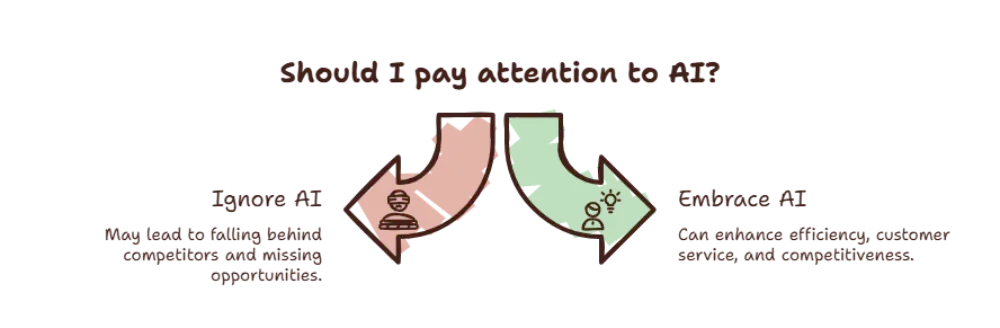
Running a small business often means wearing many hats. You might be the marketer, the accountant, the customer service rep, and the inventory manager all in one day. This is exactly why AI for small businesses has become so valuable. It helps level the playing field, allowing smaller companies to operate with the kind of efficiency that was once only possible for larger organizations with bigger teams.
- Some key benefits that make AI for small businesses worth exploring include the following.
- Saving time on repetitive administrative work such as scheduling, data entry, and email responses.
- Improving customer service by offering instant replies through chat tools, even outside of business hours.
- Making smarter decisions through data analysis that highlights trends in sales, customer behavior, and inventory needs.
- Reducing human error in tasks like bookkeeping, invoicing, and order processing.
- Personalizing marketing efforts so that customers receive offers and content that actually match their interests.
These benefits add up over time, helping small business owners reclaim hours each week that can be redirected toward growth, strategy, and building stronger relationships with customers.
Common Ways AI for Small Businesses Is Used Today
AI for small businesses shows up in more places than most people realize. Many owners are already using some form of AI without even labeling it that way. Understanding these common applications can help you identify where AI might fit naturally into your own operations.
Customer support is one of the most popular starting points. Chatbots and virtual assistants can answer frequently asked questions, take orders, or direct customers to the right resources, all without requiring a staff member to be available around the clock.
Marketing is another area where AI for small businesses makes a noticeable difference. Tools can help generate content ideas, write social media captions, analyze which posts perform best, and even suggest the optimal time to publish content for maximum engagement.
Inventory and supply management also benefit greatly. AI can analyze past sales data to predict future demand, helping business owners avoid overstocking or running out of popular items.
Accounting and bookkeeping tasks, which are often tedious and time consuming, can be simplified through AI powered software that automatically categorizes expenses, flags unusual transactions, and generates financial reports.
Hiring and human resources processes are also being streamlined, with AI helping to screen resumes, schedule interviews, and answer common employee questions.
How to Start Using AI for Small Businesses Without Feeling Overwhelmed
The idea of adopting AI for small businesses can feel intimidating at first, especially if you are not particularly tech savvy. The good news is that you do not need to overhaul your entire business overnight. Starting small and building up gradually is the most practical approach.
Begin by identifying the tasks that take up the most time or feel the most repetitive in your daily routine. This could be responding to the same customer questions over and over, manually tracking inventory, or spending hours each week on social media posts. Once you know where the pain points are, you can look for AI tools designed specifically to address that need.
It is also helpful to start with free trials or beginner friendly versions of tools before committing to anything long term. This allows you to test whether a particular solution actually fits your workflow and provides real value before making any bigger decisions.
Training yourself and your team, even informally, is another important step. You do not need a formal course, but spending a little time understanding how a new tool works will help you get the most out of it. Many AI platforms also offer tutorials, guides, or customer support to help new users get comfortable quickly.
Finally, be patient with the process. AI for small businesses is most effective when it is integrated thoughtfully over time, rather than rushed into every part of your operations at once.
The Future of AI for Small Businesses
The role of AI for small businesses is only expected to grow in the coming years. As technology becomes more accessible and affordable, even the smallest companies will have opportunities to compete with larger players in ways that were not possible before. Business owners who take the time to understand and adopt these tools now are positioning themselves to stay ahead of the curve.
What makes this moment particularly exciting is the shift toward more user friendly and customizable AI solutions. Instead of one size fits all software, many tools are now built to adapt to the specific needs of different industries, whether that is retail, hospitality, professional services, or creative fields.
Small businesses that embrace AI thoughtfully, focusing on solving real problems rather than chasing trends, will likely see the most meaningful results. The key is to view AI not as a replacement for the human touch that makes small businesses special, but as a way to enhance and support that human element.
Final Thoughts on AI for Small Businesses
AI for small businesses represents a real opportunity for owners who want to work smarter, not harder. From automating routine tasks to improving customer interactions and making more informed decisions, the benefits are practical and achievable, even for businesses with limited resources. The journey does not require becoming a technology expert overnight. It simply requires curiosity, a willingness to experiment, and a focus on solving the specific challenges your business faces every day.
As more tools become available and more business owners share their experiences, AI for small businesses will continue to feel less like a futuristic concept and more like an everyday part of running a successful company.
Frequently Asked Questions
Is AI for small businesses expensive to implement?
Many AI tools offer free versions or low cost plans designed specifically for small businesses, making it possible to start small and scale up as needed.
Do I need technical skills to use AI for small businesses?
No, most modern AI tools are designed with simple, user friendly interfaces that do not require coding or technical expertise.
What is the easiest way to start using AI for small businesses?
A good starting point is identifying one repetitive task, such as customer support or social media scheduling, and exploring AI tools built specifically for that purpose.
Can AI for small businesses replace human employees?
AI is generally designed to support and assist employees by handling repetitive tasks, allowing staff to focus on more meaningful and creative work rather than replacing them entirely.
How long does it take to see results from AI for small businesses?
Results can vary, but many business owners notice time savings and efficiency improvements within the first few weeks of consistent use.