Finding the best AI tools for business has become one of the top priorities for companies of every size. Whether you run a small startup or manage operations for a large enterprise, artificial intelligence is no longer optional. It has become a core part of how teams communicate, create content, manage data, and serve customers. In this guide, we will explore the best AI tools for business across different categories, explain how they work, and help you understand which type of tool suits your specific needs.
As competition grows tighter and customer expectations rise, businesses that adopt the right AI solutions gain a clear advantage. They save time, reduce manual errors, and free up their teams to focus on strategic work instead of repetitive tasks. This article breaks down the categories of business AI tools, their practical uses, and the key factors you should consider before choosing one for your organization.
Why Businesses Are Investing in AI Tools
Companies across industries are shifting budgets toward automation and intelligent software. The reason is simple. AI tools help businesses do more with less. They reduce the time spent on routine tasks such as data entry, scheduling, customer support replies, and content creation.
Some of the biggest reasons businesses adopt AI tools include:
- Faster decision making through real time data analysis
- Reduced operational costs by automating repetitive work
- Improved customer experience through instant support and personalization
- Better accuracy in tasks like reporting, forecasting, and quality checks
- Increased productivity, allowing employees to focus on creative and strategic work
Understanding these benefits is the first step toward identifying the best AI tools for business that match your goals.
Categories of the Best AI Tools for Business
AI tools are not one size fits all. Different departments within a company need different types of solutions. Below are the major categories every business owner should know about.
AI Tools for Content Creation and Marketing
Marketing teams rely heavily on AI to produce content faster without sacrificing quality. These tools can help generate blog posts, social media captions, ad copy, and email campaigns. Many also offer features for keyword research, content optimization, and audience targeting.
Key points to consider in this category:
- Look for tools that support multiple content formats such as blogs, videos, and social posts
- Choose tools with built in SEO guidance to improve organic visibility
- Prioritize platforms that allow easy collaboration between writers and editors
AI Tools for Customer Support
Customer service is one of the areas where AI has made the biggest impact. Chatbots and virtual assistants now handle a large portion of customer inquiries without human involvement. This reduces wait times and improves satisfaction.
Important considerations include:
- The ability to integrate with existing helpdesk or CRM systems
- Support for multiple languages if you serve a global audience
- Smooth handoff to human agents for complex issues
AI Tools for Data Analysis and Business Intelligence
Data driven decision making is at the heart of modern business strategy. AI powered analytics tools can process large datasets, identify patterns, and generate insights that would take humans much longer to find manually.
Businesses should focus on:
- Tools that offer real time dashboards and reporting
- Predictive analytics features for forecasting trends
- Easy integration with existing data sources like spreadsheets and databases
AI Tools for Project Management and Productivity
Project management has also evolved with the help of AI. These tools can automatically assign tasks, track deadlines, and flag potential delays before they become problems.
Things to look for include:
- Smart scheduling that adjusts to team availability
- Automated progress tracking and status updates
- Integration with communication tools used by your team
AI Tools for Human Resources
HR departments use AI to streamline recruitment, onboarding, and employee engagement. From screening resumes to answering common employee questions, these tools reduce administrative workload significantly.
Key benefits include:
- Faster candidate screening based on skills and experience
- Automated onboarding workflows for new hires
- Sentiment analysis to monitor employee satisfaction
AI Tools for Sales and Lead Generation
Sales teams use AI to identify promising leads, personalize outreach, and predict which prospects are most likely to convert. This helps sales representatives focus their energy where it matters most.
Important features to evaluate:
- Lead scoring based on behavior and engagement
- Automated follow up sequences
- Integration with existing CRM platforms
How to Choose the Best AI Tools for Business
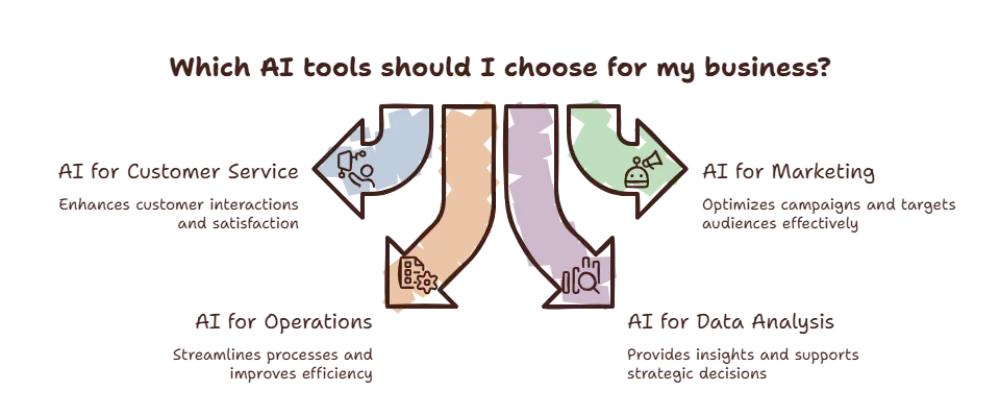
With so many options available, selecting the right tool can feel overwhelming. Here are some practical steps to guide your decision.
Define Your Business Needs First
Before exploring any tool, identify the specific problem you are trying to solve. Are you trying to save time on content creation, improve customer response times, or gain better insights from your data? Having a clear goal narrows down your options significantly.
Check for Ease of Integration
The best AI tools for business should fit naturally into your existing workflow. Look for solutions that integrate smoothly with the software your team already uses, such as email platforms, CRMs, or project management systems.
Evaluate the Learning Curve
Some AI tools require extensive training to use effectively, while others are designed to be intuitive from day one. Choose tools that your team can adopt quickly without lengthy onboarding processes.
Consider Scalability
Your business needs today may not be the same in a year. Choose AI tools that can grow with your company, whether that means handling more data, supporting more users, or adding new features as needed.
Prioritize Data Security
Since many AI tools handle sensitive business and customer information, data security should be a top priority. Look for platforms that follow strong privacy practices and comply with relevant data protection regulations.
Best Practices for Implementing AI Tools in Your Business
Adopting AI tools successfully requires more than just signing up for a platform. Consider these best practices to maximize results.
- Start with a pilot program in one department before rolling out company wide
- Provide proper training so employees understand how to use the tools effectively
- Set clear performance metrics to measure the impact of each tool
- Regularly review and update your AI strategy as new tools and features emerge
- Encourage feedback from employees who interact with these tools daily
The Future of AI in Business
As AI technology continues to advance, businesses can expect even more sophisticated tools that handle complex tasks with greater accuracy. Automation will likely expand into areas that currently require significant human judgment, while AI assisted decision making will become a standard part of business operations.
Companies that stay ahead of this curve by continuously evaluating and adopting the best AI tools for business will be better positioned to compete in an increasingly digital marketplace. The key is to approach adoption thoughtfully, focusing on tools that align with genuine business needs rather than chasing every new trend.
Conclusion
The best AI tools for business cover a wide range of functions, from content creation and customer support to data analysis and human resources. The right combination of tools depends entirely on your specific goals, team structure, and industry. taking the time to define your needs, evaluate integration options, and prioritize security, you can build an AI strategy that genuinely improves efficiency and supports long term growth. As these technologies continue to evolve, staying informed and adaptable will help your business make the most of what AI has to offer.
Frequently Asked Questions
What are the best AI tools for business in general?
The best AI tools for business depend on your specific needs, but they typically fall into categories such as content creation, customer support, data analysis, project management, human resources, and sales. Identifying your biggest operational challenge helps determine which category to explore first.
Are AI tools suitable for small businesses?
Yes, many AI tools are designed with flexibility in mind, making them accessible for small businesses as well as large enterprises. Small businesses often benefit significantly since these tools can handle tasks that would otherwise require additional staff.
How do I know which AI tool is right for my business?
Start by identifying the specific problem you want to solve, then look for tools that integrate easily with your current systems, have a manageable learning curve, and can scale as your business grows.
Do AI tools require technical expertise to use?
Most modern AI tools are built to be user friendly and do not require advanced technical knowledge. However, some tools may need basic training to help your team use all the features effectively.
Is it safe to use AI tools for handling business data?
Many AI tools follow strict data protection standards, but it is important to review each platform’s privacy policy and security practices before sharing sensitive business or customer information