
The future of work is no longer a distant concept reserved for tech conferences and research papers. It is happening right now, reshaping how businesses hire, how teams collaborate, and how employees define success in their careers. From remote work to artificial intelligence, the workplace of tomorrow is being built today, and organizations that fail to adapt risk falling behind.
What Does the Future of Work Actually Mean
The future of work refers to the ongoing transformation of how, when, and where people perform their jobs. It encompasses technology adoption, changing employee expectations, evolving organizational structures, and new definitions of productivity. This shift is not just about tools; it is about mindset.
A Shift From Location to Output
Traditional work culture measured success by hours spent at a desk. That model is fading fast. Companies are increasingly focused on what employees deliver rather than where they sit while doing it.
The Rise of Human Centered Work
Employees today expect more than a paycheck. They want purpose, flexibility, and a workplace that respects their wellbeing. This human centered approach is becoming a defining feature of modern organizations.
Key Trends Shaping the Future of Work
Several major trends are driving this transformation across industries.
Remote and Hybrid Work Models
Remote work is no longer a temporary solution. Hybrid models that blend in office collaboration with remote flexibility are becoming the standard for many companies worldwide. Employees value the autonomy this offers, while employers benefit from access to wider talent pools.
Artificial Intelligence and Automation
AI is transforming how work gets done. Repetitive tasks are increasingly automated, freeing employees to focus on creative problem solving, strategy, and relationship building. Rather than replacing humans entirely, AI is becoming a collaborative tool that enhances productivity.
The Gig and Freelance Economy
More professionals are choosing project based work over traditional full time roles. This shift gives workers greater control over their schedules and allows companies to scale teams based on real time needs.
Continuous Learning and Upskilling
As job roles evolve, employees must continuously update their skills. Organizations are investing in learning platforms and internal training programs to help their workforce stay relevant in a fast changing environment.
How Technology Is Redefining the Workplace
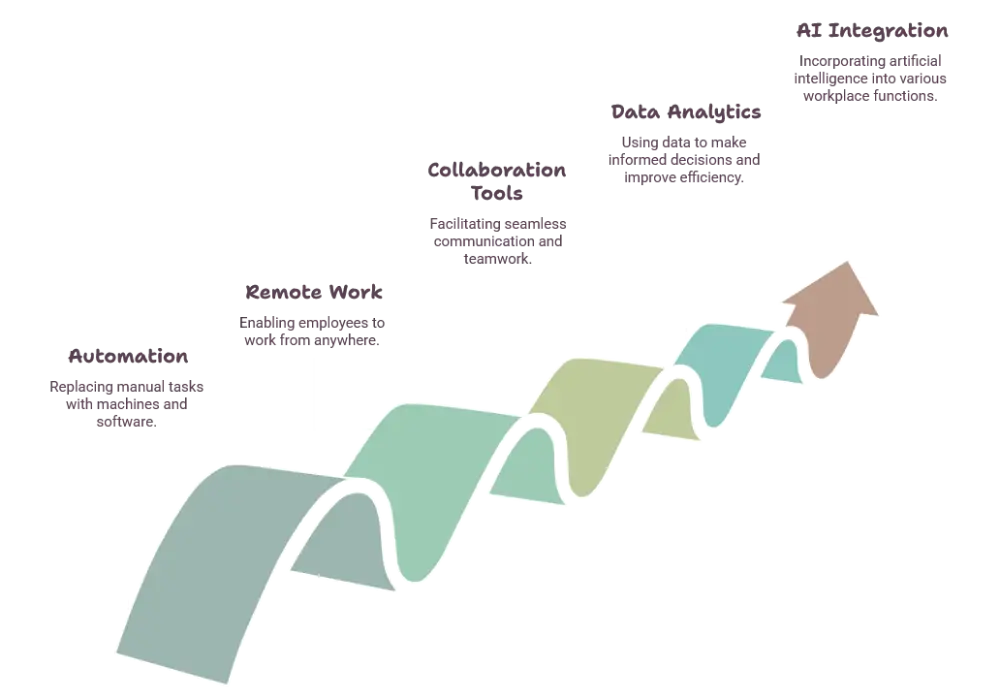
Technology sits at the core of the future of work conversation. It is not just changing tasks, it is changing entire business models.
Collaboration Tools and Digital Workspaces
Cloud based platforms now allow teams to work together seamlessly, regardless of physical location. Real time document sharing, video conferencing, and project management tools have become essential rather than optional.
Automation in Everyday Processes
From scheduling to data entry, automation is reducing manual workload across departments. This allows employees to dedicate more time to high value activities that require critical thinking.
Data Driven Decision Making
Organizations are relying more on analytics to guide workforce planning, performance evaluation, and resource allocation. Data helps leaders make informed choices rather than relying purely on intuition.
The Changing Role of Employees and Leaders
As workplaces evolve, so do the expectations placed on both employees and leadership.
Employees as Adaptive Problem Solvers
Modern employees are expected to be adaptable, tech savvy, and comfortable with continuous change. Soft skills like communication, emotional intelligence, and collaboration are becoming just as valuable as technical expertise.
Leaders as Enablers, Not Controllers
Leadership styles are shifting from command and control toward mentorship and empowerment. Effective leaders in the future of work focus on removing obstacles and enabling their teams to perform at their best.
Building a Future Ready Organization
Organizations that want to thrive in the future of work need to take intentional steps toward transformation.
Prioritizing Flexibility
Flexible work arrangements, whether remote, hybrid, or fully in person, should be tailored to the nature of the role and the needs of the workforce.
Investing in Employee Wellbeing
Mental health support, manageable workloads, and a positive work culture are essential for long term employee retention and satisfaction.
Embracing a Culture of Innovation
Encouraging experimentation and new ideas helps organizations stay ahead of industry shifts and remain competitive in a rapidly evolving landscape.
Conclusion
The future of work is not a single destination but an ongoing evolution shaped by technology, employee expectations, and organizational culture. Businesses that embrace flexibility, invest in their people, and adapt to emerging tools will be best positioned to succeed. As the workplace continues to transform, one thing remains clear: adaptability is the key to thriving in this new era of work.
Frequently Asked Questions
What is the future of work?
The future of work refers to how jobs, workplaces, and employee expectations are evolving due to technology, remote work, and changing organizational cultures.
How is artificial intelligence changing the future of work?
AI is automating repetitive tasks and supporting decision making, allowing employees to focus more on creativity, strategy, and problem solving.
Is remote work here to stay?
Yes, remote and hybrid work models have become a lasting part of modern workplace culture rather than a temporary trend.
What skills will be important for the future of work?
Adaptability, digital literacy, communication, and continuous learning are becoming essential skills for employees across industries.
How can companies prepare for the future of work?
Companies can prepare by offering flexible work options, investing in employee wellbeing, and fostering a culture that supports innovation and continuous learning.