Hybrid work models have become one of the most talked about shifts in the modern workplace. They blend remote work and in office work into a single flexible system that gives employees more control over where and how they get things done. As organizations rethink what productivity actually looks like, hybrid work models are quickly becoming the standard rather than the exception.
This shift is not just about convenience. It reflects a deeper change in how companies view trust, collaboration, and employee wellbeing.
What Are Hybrid Work Models
A hybrid work model is a workplace structure that combines remote work with time spent in a physical office. Instead of requiring employees to be present every single day, companies allow a mix of home based and office based work depending on the role, team needs, or personal preference.
There is no single formula for hybrid work. Some companies set fixed days for office attendance, while others give employees full freedom to choose their schedule based on their tasks.
Common Types of Hybrid Work Structures
Hybrid work is not one size fits all. Organizations tend to shape their approach around what suits their culture and operations best.
Some teams follow a fixed schedule where certain days are designated for office collaboration and others for remote focus work. Other teams operate on a flexible model where employees decide their own rhythm based on workload and personal productivity.
There are also role based hybrid setups, where certain departments work mostly remote while others, such as client facing teams, spend more time on site.
Why Companies Are Adopting Hybrid Work Models
The shift toward hybrid work did not happen overnight. It grew out of necessity and has since proven to offer real advantages for both employees and organizations.
Companies have realized that productivity is not tied to a physical location. Many employees perform just as well, if not better, when given autonomy over their work environment. This realization has pushed businesses to rethink traditional office centric policies.
A Response to Changing Employee Expectations
Today’s workforce values flexibility as much as compensation and career growth. Employees want the ability to manage their personal responsibilities alongside their professional goals. Hybrid work models directly respond to this expectation by removing rigid attendance requirements.
Key Benefits of Hybrid Work Models
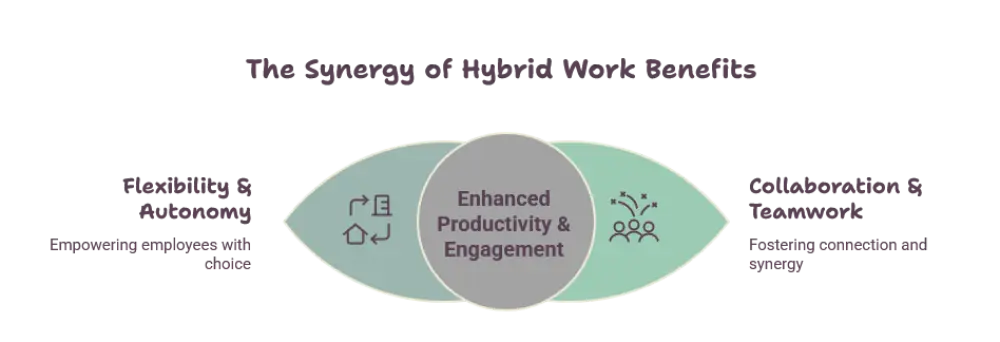
Hybrid work models offer a wide range of benefits that touch nearly every part of an organization, from employee satisfaction to overall business performance.
Improved Work Life Balance
Employees gain more control over their schedules, allowing them to balance personal commitments with professional responsibilities. This often leads to reduced stress and better mental wellbeing.
Increased Productivity
Many employees find they can focus better at home for tasks that require deep concentration, while office time is reserved for meetings and collaborative projects. This balance often results in higher overall output.
Access to Wider Talent Pools
Since hybrid roles do not always require daily commuting, companies can hire talent from different regions without requiring relocation. This opens the door to a more diverse and skilled workforce.
Stronger Employee Retention
Flexibility has become a major factor in job satisfaction. Employees are more likely to stay with companies that respect their need for autonomy and adaptable work arrangements.
Reduced Commuting Stress
Fewer mandatory office days mean employees spend less time commuting, which contributes to better energy levels and overall satisfaction throughout the week.
Challenges of Hybrid Work Models
While hybrid work offers many advantages, it also introduces unique challenges that organizations must actively manage.
Maintaining Team Collaboration
When team members are not physically together every day, spontaneous collaboration can decline. Companies need to be intentional about creating opportunities for meaningful interaction, whether in person or virtual.
Ensuring Fair Treatment
There is a risk that employees who spend more time in the office may be perceived as more visible or dedicated, even if remote employees are equally productive. Leaders need to be mindful of avoiding bias based on physical presence.
Managing Communication Gaps
With teams split across different locations and schedules, communication can become fragmented. Clear communication protocols and reliable tools are essential to keep everyone aligned.
Preserving Company Culture
Building a strong sense of belonging can be harder when employees are not consistently together. Organizations must find new ways to nurture culture beyond the physical office space.
Best Practices for Implementing Hybrid Work Models
Successfully running a hybrid work model requires more than simply allowing employees to choose where they work. It calls for thoughtful planning and clear structure.
Set Clear Expectations
Employees should understand what is expected of them in terms of availability, communication, and deliverables, regardless of where they are working from.
Invest in the Right Tools
Reliable collaboration platforms, project management systems, and communication tools help bridge the gap between remote and in office employees.
Prioritize Outcomes Over Presence
Instead of measuring productivity by hours spent in the office, companies should focus on the quality and consistency of results employees deliver.
Create Purposeful Office Time
When employees do come into the office, that time should be used for collaboration, brainstorming, and relationship building rather than solo tasks that could easily be done remotely.
Support Manager Training
Managers play a critical role in making hybrid work successful. Providing them with training on leading distributed teams helps maintain consistency and fairness across the organization.
Technology’s Role in Hybrid Work Models
Technology is the backbone of any successful hybrid work model. Without the right digital infrastructure, hybrid arrangements can quickly become disorganized.
Communication and Collaboration Platforms
Video conferencing tools, instant messaging apps, and shared digital workspaces allow teams to stay connected no matter where they are working from.
Cloud Based Systems
Cloud technology ensures employees can access files, documents, and applications securely from any location, keeping workflows smooth and uninterrupted.
Data Security Considerations
As employees work from multiple locations, organizations must strengthen their cybersecurity measures to protect sensitive information from potential vulnerabilities.
The Future of Hybrid Work Models
Hybrid work models are unlikely to be a temporary trend. As more industries adapt their operations to support flexible arrangements, hybrid work is expected to remain a long term fixture of the modern workplace.
Organizations that continue to refine their hybrid strategies, based on employee feedback and evolving business needs, will likely see stronger engagement and long term success. The future of work is not about choosing between remote and office environments entirely, but about finding the right balance between the two.
Conclusion
Hybrid work models represent a meaningful shift in how organizations approach productivity, flexibility, and employee wellbeing. blending the best aspects of remote and in office work, companies can create environments that support both business goals and individual needs.
As hybrid work continues to evolve, organizations that prioritize clear communication, fair policies, and the right technology will be best positioned to thrive in this new era of work.
Frequently Asked Questions
What is a hybrid work model?
A hybrid work model is a flexible workplace structure that combines remote work with time spent in a physical office, allowing employees to split their schedule between both environments.
How does a hybrid work model differ from fully remote work?
Fully remote work means employees work entirely outside a traditional office, while a hybrid work model includes a mix of remote days and in office days.
What are the main benefits of hybrid work models for employees?
Hybrid work models offer better work life balance, reduced commuting stress, increased flexibility, and the ability to focus on tasks in the environment that suits them best.
What challenges do companies face when adopting hybrid work models?
Common challenges include maintaining team collaboration, ensuring fair treatment between remote and in office employees, and preserving company culture across distributed teams.
Is hybrid work here to stay?
Yes, hybrid work models are widely expected to remain a long term feature of modern workplaces as organizations continue to prioritize flexibility and employee wellbeing.