
Data Privacy Laws are the legal rules that govern how organizations collect, store, use, and share personal information. As businesses gather more data than ever before, from browsing habits to financial records, these laws have become essential for protecting individuals and holding companies accountable. Understanding how they work is no longer optional for anyone who runs a website, app, or online service.
What Are Data Privacy Laws
Data privacy laws are regulations created by governments to control how personal information is handled. They define what counts as personal data, how it can be collected, and what rights individuals have over their own information.
These laws typically require organizations to be transparent about their data practices, obtain consent before collecting sensitive information, and allow users to access, correct, or delete their data.
Why These Laws Exist
The rise of digital platforms created massive amounts of personal data. Without clear rules, this information could be misused, sold, or exposed through breaches. Data privacy laws exist to give individuals control over their digital identity and to hold companies responsible for protecting that information.
Key Data Privacy Laws Around the World
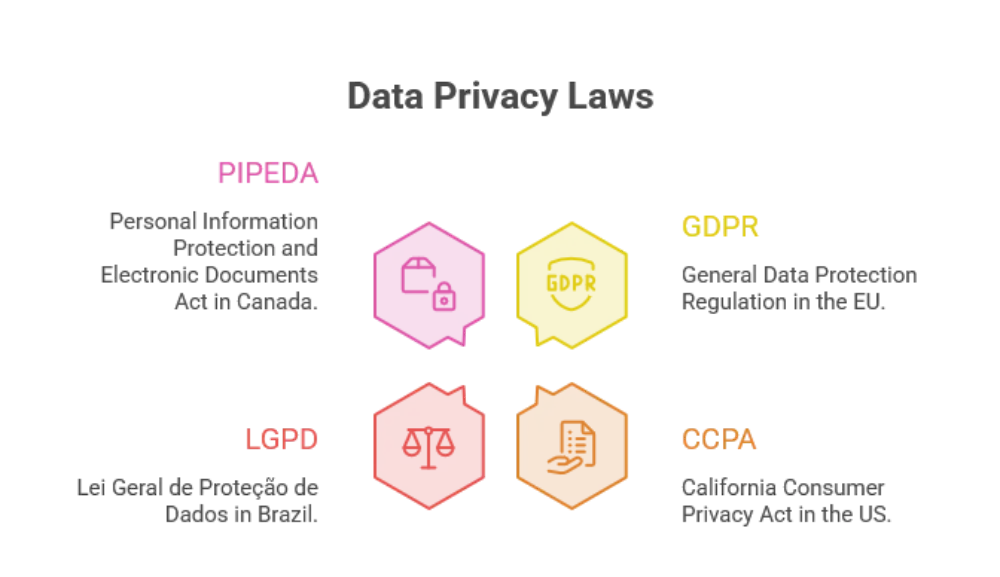
Different regions have developed their own frameworks, each with unique requirements and enforcement mechanisms.
General Data Protection Regulation
The General Data Protection Regulation, widely known as GDPR, applies to organizations operating in the European Union. It is considered one of the strictest privacy frameworks globally. GDPR gives individuals rights such as data access, correction, deletion, and the ability to withdraw consent at any time.
California Consumer Privacy Act
The California Consumer Privacy Act, or CCPA, protects residents of California. It gives consumers the right to know what personal data is being collected and the right to opt out of having their data sold to third parties.
Other Notable Regulations
Countries such as Brazil, Canada, India, and Australia have also introduced their own privacy frameworks. While the specific rules vary, most share a common goal: giving people more control over their personal information.
Core Principles of Data Privacy Laws
Most privacy regulations are built around a few shared principles that guide how organizations must handle data.
Transparency
Organizations must clearly explain what data they collect and why. Privacy policies should be written in plain language rather than dense legal jargon.
Consent
Before collecting personal data, companies usually need explicit permission from the user. This consent must be informed, meaning the person understands exactly what they are agreeing to.
Data Minimization
Businesses should only collect the data they actually need. Gathering excessive information increases risk and often violates privacy regulations.
Security
Organizations are required to implement reasonable safeguards to protect data from breaches, leaks, and unauthorized access.
Why Data Privacy Laws Matter for Businesses
Compliance with data privacy laws is not just a legal formality. It directly affects customer trust, brand reputation, and long term business sustainability.
Building Customer Trust
When customers know their data is handled responsibly, they are more likely to engage with a brand. Transparency around data practices builds loyalty and confidence.
Avoiding Legal Consequences
Failing to comply with privacy regulations can lead to serious legal action, including fines and mandatory audits. Staying compliant protects a business from unnecessary legal exposure.
Strengthening Data Security
Following privacy laws often pushes organizations to adopt stronger security practices, which reduces the risk of costly data breaches.
How Businesses Can Stay Compliant
Compliance requires more than a one time effort. It involves ongoing monitoring and updates as laws evolve.
Conduct Regular Data Audits
Companies should regularly review what data they collect, where it is stored, and who has access to it. This helps identify unnecessary risks.
Update Privacy Policies
Privacy policies should reflect current data practices and be reviewed whenever new regulations are introduced.
Train Employees
Everyone handling customer data should understand the basics of privacy compliance. Human error remains one of the leading causes of data breaches.
Use Secure Data Storage Solutions
Encrypting sensitive information and limiting access to authorized personnel helps reduce the chance of unauthorized exposure.
The Future of Data Privacy Laws
As technology continues to evolve, so will the laws that govern it. Artificial intelligence, biometric data, and connected devices are pushing lawmakers to rethink existing frameworks.
Emerging Trends
More countries are expected to introduce comprehensive privacy legislation in the coming years. There is also a growing push toward global standardization, making it easier for businesses to comply across multiple regions.
The Role of Consumers
Individuals are becoming more aware of their digital rights. This growing awareness is likely to push companies toward even greater transparency and accountability.
Conclusion
Data Privacy Laws play a critical role in protecting personal information in an increasingly digital world. From GDPR to CCPA, these regulations shape how businesses collect, store, and use data. Staying compliant is not just about avoiding legal trouble. It is about building trust, protecting users, and creating a safer digital environment for everyone. As privacy laws continue to evolve, businesses that stay informed and proactive will be best positioned for long term success.
FAQs
What are Data Privacy Laws?
Data Privacy Laws are regulations that control how organizations collect, use, store, and share personal information, while giving individuals rights over their own data.
Why are Data Privacy Laws important for businesses?
They help businesses build customer trust, avoid legal penalties, and strengthen overall data security practices.
What is the difference between GDPR and CCPA?
GDPR applies to organizations operating in the European Union and is one of the strictest privacy frameworks, while CCPA specifically protects the privacy rights of California residents.
How can a business stay compliant with Data Privacy Laws?
Businesses can stay compliant by conducting regular data audits, updating privacy policies, training employees, and using secure data storage practices.
Do Data Privacy Laws apply to small businesses?
Yes, many privacy laws apply to businesses of all sizes if they collect or process personal data, especially when dealing with customers in regulated regions.