
You’re running a service business, and you’ve poured your heart and soul into building it. You’ve mastered your craft, you’ve meticulously designed your offerings, and you’ve spent countless hours acquiring new clients. But are you focusing enough on keeping the amazing clients you already have? The truth is, retaining customers is significantly more cost-effective than acquiring new ones. It’s also the bedrock of sustainable growth and a thriving reputation. Think about it: happy, loyal customers are your best advocates, providing invaluable word-of-mouth referrals and becoming a predictable revenue stream. If you’re still on the fence, consider this: a 5% increase in customer retention can increase profits by 25% to 95%. That’s a powerful statistic, and it highlights the critical importance of making customer retention a top priority.
So, where do you begin? It’s not about a magic bullet; it’s about a consistent, thoughtful approach to every interaction. It’s about understanding that the customer journey doesn’t end after the initial sale or service. In fact, that’s when the real work of building enduring relationships begins. This article will equip you with five essential customer retention strategies specifically tailored for service businesses. These strategies will help you cultivate loyalty, foster deeper connections, and ultimately, ensure your business not only survives but thrives for years to come. Let’s dive in.
Your service is your product, and the way you deliver it is everything. Exceptional customer service isn’t just about being polite; it’s about proactively anticipating needs, exceeding expectations, and making every interaction positive and memorable. For service businesses, where the interaction is as much a part of the offering as the core service itself, this is non-negotiable. It’s the silent handshake that reassures your client they’ve made the right choice and will continue to do so.
Defining and Delivering on Your Service Promise
Every service business has a promise, whether explicitly stated or implicitly understood. This promise encompasses the quality of your service, the reliability of your delivery, and the overall experience your client will have. The first step in mastering exceptional customer service is clearly defining this promise. What can your clients expect from you, every single time? Is it promptness? Unparalleled expertise? A personalized touch?
Once defined, the real challenge lies in consistently delivering on that promise. This requires a deep understanding of your operational processes, effective team training, and a culture that prioritizes client satisfaction. Don’t leave it to chance. Document your service standards, create checklists, and regularly review your performance against these benchmarks. Remember, consistency builds trust, and trust is the foundation of retention.
Understanding Client Expectations and Needs
Before you can exceed expectations, you need to understand them. This involves active listening and empathetic communication. During initial consultations, sales calls, and even subsequent interactions, pay close attention to what your clients are saying, and equally importantly, what they might be not saying. What are their pain points? What are their goals? What are their preferences?
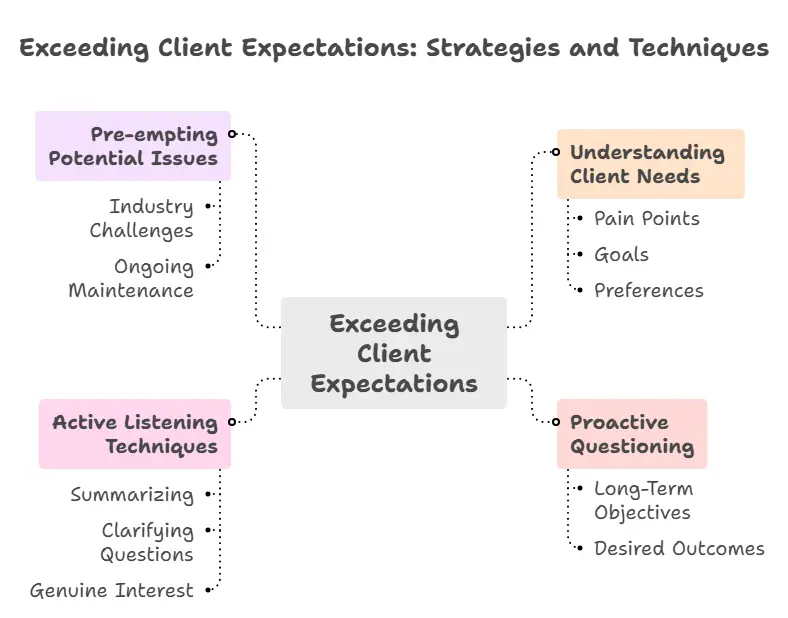
- Proactive Questioning: Don’t just wait for clients to tell you what they need. Ask insightful questions that uncover unspoken needs. For a consultant, this might mean asking about their long-term business objectives. For a therapist, it could involve exploring their desired outcomes for treatment.
- Active Listening Techniques: Practice active listening by summarizing what you hear, asking clarifying questions, and demonstrating genuine interest. This not only ensures you grasp their needs accurately but also makes the client feel valued and understood.
- Pre-empting Potential Issues: Based on your experience and understanding of common challenges within your industry, try to anticipate potential problems before they arise. If you’re a web designer, you might proactively offer ongoing website maintenance to prevent future technical glitches.
Empowering Your Staff to Deliver Excellence
Your employees are the frontline of your customer service. If they are not empowered, trained, and motivated, your efforts at customer retention will falter. They are the ones directly interacting with your clients, solving problems, and shaping perceptions. Investing in your team is investing in your client relationships.
Comprehensive Training and Onboarding
New hires need to be thoroughly trained not only on the technical aspects of your service but also on your company’s customer service philosophy. This includes understanding your brand voice, your service standards, and your approach to conflict resolution.
- Role-Playing Scenarios: Simulate common customer interactions, including challenging ones, to help your staff build confidence and develop effective responses.
- Product/Service Knowledge Deep Dive: Ensure everyone on your team has a comprehensive understanding of your offerings, their benefits, and how they address client needs.
- Empathy and Communication Skills Training: Focus on soft skills that are crucial for building rapport and trust. Teach them how to de-escalate tense situations, handle complaints gracefully, and express genuine care.
Granting Autonomy and Decision-Making Power
While clear guidelines are important, rigid procedures can stifle effective problem-solving and leave clients feeling frustrated. Empower your staff to make reasonable decisions within defined parameters. This allows them to resolve issues quickly and efficiently, often on the first contact, which is a significant driver of customer satisfaction.
- Setting Clear Boundaries: Define the scope of their autonomy. What types of decisions can they make without escalation? What requires manager approval?
- Providing Necessary Tools and Resources: Ensure your team has access to the information, technology, and support they need to make informed decisions.
- Trusting Their Judgment: Foster a culture where employees feel trusted to act in the best interest of the client and the business. This encourages initiative and a sense of ownership.
Building Stronger Relationships Through Personalization
In a world of automated responses and generic communication, personalization stands out. For service businesses, where the relationship is personal, tailoring your approach to individual clients is not just a nice-to-have; it’s a must-have for retention. It shows you see them as individuals with unique needs and preferences, not just another ticket in the system.
Understanding Individual Client Histories and Preferences
The more you know about your clients, the better you can serve them. This goes beyond basic contact information. It involves understanding their past interactions, their specific service needs, their communication preferences, and even their personal achievements or interests, where appropriate.
Leveraging Customer Relationship Management (CRM) Systems
A robust CRM system is your best friend here. It’s a central hub for all your client data, allowing you to track interactions, record preferences, and gain a holistic view of each customer.
- Comprehensive Data Capture: Ensure your CRM captures not just client details but also notes on their goals, previous challenges, service history, and any specific requests or feedback.
- Segmenting Your Clientele: Use your CRM to segment clients based on various criteria (e.g., service type, frequency of use, value) to tailor your communications and offers.
- Drip Campaigns and Automated Follow-ups: While personalization is key, automation can help deliver it at scale. Set up automated reminders, follow-ups, or birthday messages based on CRM data.
Tailoring Communication and Offers
Once you have this valuable data, use it to personalize your outreach. Generic emails and one-size-fits-all offers won’t cut it.
Personalized Communication Channels and Tone
Consider how each client prefers to be contacted. Some might prefer a phone call, others email, and some may even appreciate a quick text message. Adapt your tone and language to match their personality and your established relationship.
- Reference Past Interactions: When you reach out, reference previous conversations or services. “I remember you mentioned needing X during our last session…” This instantly signals that you’re paying attention.
- Customized Messaging: Craft emails or messages that directly address their specific needs or interests. Instead of a general newsletter, send them content specifically relevant to their industry or personal journey.
Exclusive Offers and Loyalty Programs
Rewarding loyal clients with exclusive offers shows your appreciation and encourages continued business. This can take many forms, from discounts to early access to new services or even personalized gifts.
- Tiered Loyalty Programs: Create a program where clients earn rewards or benefits based on their level of engagement or spending. Points systems, discount tiers, or exclusive member events can be highly effective.
- Birthday and Anniversary Recognition: A simple personalized message or a small discount on their birthday or anniversary can go a long way in making them feel special.
- Early Access and Beta Programs: Offer your most loyal clients the chance to try new services or features before they are released to the general public. This makes them feel valued and provides you with valuable feedback.
Implementing Proactive Communication and Feedback Loops
Don’t wait for problems to arise before you communicate. Proactive communication keeps clients informed, manages expectations, and demonstrates your commitment to their success. Equally important is creating channels for feedback and genuinely acting upon it.
Regular Updates and Check-ins
Consistent communication helps keep your business top-of-mind and reinforces your value proposition. It’s about staying connected without being intrusive.
Scheduled Progress Reports and Updates
Depending on the nature of your service, regular progress reports are essential. This could be a weekly email update, a monthly call, or a more formal report. The key is to keep the client informed about the status of their project or service.
- Transparency in Progress: Clearly outline what has been accomplished, what is planned for the next period, and any potential roadblocks.
- Setting Realistic Timelines: Ensure your updates also serve to reinforce agreed-upon timelines and manage expectations regarding delivery.
- Opportunity for Questions: Always include a call to action, inviting them to ask questions or provide input.
Seasonal or Occasional Check-ins
Beyond ongoing projects, consider reaching out periodically to check in, even if there’s no immediate service being provided. This can be a brief email or call to see how things are going and if there’s anything you can assist with.
- Annual Reviews or Consultations: Offer an annual review of their service or a consultative session to discuss their evolving needs.
- Holiday Greetings and Well Wishes: Simple holiday greetings can maintain a positive connection.
- Industry Updates or Relevant News: Share articles or insights that might be of value to their business or personal interests related to your service.
Establishing Effective Feedback Mechanisms
Actively seeking feedback demonstrates that you value your clients’ opinions and are committed to continuous improvement. However, simply collecting feedback isn’t enough; you need to act on it.
Post-Service Surveys and Follow-ups
After completing a service, send out a concise survey to gauge their satisfaction. Keep it short and focused to maximize completion rates.
- Net Promoter Score (NPS) Surveys: NPS questions like “On a scale of 0-10, how likely are you to recommend us to a friend or colleague?” are excellent for measuring overall satisfaction and loyalty.
- Specific Questioning: Ask targeted questions about different aspects of their experience, such as the quality of service, communication, and timeliness.
- Open-Ended Feedback Options: Always include an open-ended question where clients can elaborate on their experience or offer suggestions.
Direct Channels for Complaints and Suggestions
Make it easy for clients to share their concerns or ideas. This could be a dedicated email address, a contact form on your website, or a direct line to a customer service manager.
- Visible Contact Information: Ensure your contact information for feedback is easily accessible on your website and in your communications.
- Acknowledgement and Action Plan: Acknowledge all feedback promptly, even if it’s just to say you’ve received it. For constructive criticism, outline how you plan to address it.
- Demonstrating Change: When you implement changes based on feedback, communicate this back to your clients. This shows you listen and act.
Fostering a Sense of Community and Belonging
People crave connection. fostering a sense of community around your service business, you create an environment where clients feel like they are part of something larger, strengthening their bond with your brand. This is particularly powerful for service businesses where clients may share similar interests or face similar challenges.
Exclusive Content and Resources
Offer something of value beyond your core service. This can be educational content, industry insights, or even just networking opportunities.
Educational Webinars and Workshops
Host webinars or workshops that provide valuable information related to your industry or service. This positions you as an expert and gives clients a reason to engage with your brand outside of direct service delivery.
- Topics of Interest: Survey your clients to understand what topics they would find most beneficial.
- Interactive Sessions: Encourage participation through Q&A sessions and live discussions.
- On-Demand Access: Make recordings available for those who couldn’t attend live.
Informative Blog Posts and Newsletters
Regularly publish blog posts and newsletters that offer valuable tips, industry news, case studies, and insights. Tailor this content to the specific interests of your client segments.
- Expert Interviews: Feature interviews with industry leaders or successful clients.
- How-To Guides and Tutorials: Provide practical, actionable advice that clients can implement.
- Client Spotlights: Showcase successful client projects or stories to inspire others.
Creating Opportunities for Client Interaction
Facilitating connections between your clients can be a powerful retention tool. It creates a network effect and strengthens their loyalty to your business as a hub.
Client Appreciation Events
Organize events specifically for your clients. This could be a casual networking reception, a celebratory gathering, or even an exclusive workshop.
- Networking Opportunities: Design events that encourage clients to connect with each other.
- Showcase Your Appreciation: Use these events as an opportunity to thank them for their business.
- Gather Informal Feedback: Observe client interactions and listen to casual conversations to gain insights.
Online Forums or Private Groups
Consider creating a private online forum or social media group (e.g., a LinkedIn or Facebook group) where clients can connect with each other, share experiences, and ask questions. You can moderate these spaces to ensure they remain positive and productive.
- Moderated Discussions: Actively moderate the group to maintain a positive atmosphere and ensure conversations are constructive.
- Exclusive Content Sharing: Share special offers or announcements first within these groups.
- Facilitate Peer-to-Peer Support: Empower clients to help each other, fostering a strong sense of belonging.
Continuously Measuring and Improving Your Retention Efforts
| Customer Retention Strategy | Description |
|---|---|
| Personalized Communication | Regularly communicate with customers to understand their needs and provide personalized solutions. |
| Reward Programs | Implement loyalty programs to reward repeat customers and encourage them to continue using your services. |
| Quality Customer Service | Provide exceptional customer service to build trust and loyalty with your customers. |
| Feedback Collection | Regularly collect feedback from customers to understand their satisfaction levels and make improvements. |
| Value-added Services | Offer additional services or benefits to existing customers to enhance their overall experience. |
Customer retention isn’t a static goal; it’s an ongoing process of measurement, analysis, and refinement. You need to track your progress, understand what’s working, and adapt your strategies accordingly. This data-driven approach ensures your retention efforts remain effective.
Key Performance Indicators (KPIs) for Retention
To effectively measure your retention efforts, you need to define and track specific KPIs. These metrics will give you a clear picture of your success and highlight areas for improvement.
Customer Lifetime Value (CLV)
CLV is the total revenue a business can expect from a single customer account throughout their relationship. Increasing CLV is a direct indicator of successful retention.
- Calculating CLV: Understand the formula for calculating CLV based on your business model (e.g., Average Purchase Value x Purchase Frequency x Average Customer Lifespan).
- Segmentation by CLV: Analyze CLV across different customer segments to identify your most valuable clients and understand what drives their longevity.
Churn Rate
Churn rate is the percentage of customers who stop doing business with you over a given period. A lower churn rate is a direct indicator of strong customer retention.
- Defining Your Churn Calculation: Determine how you define a “churned” customer (e.g., no activity for X months, cancellation of subscription).
- Analyzing Churn Drivers: Investigate why customers are leaving. Is it price, service quality, or something else?
Repeat Purchase Rate
This KPI measures the percentage of customers who have made more than one purchase. It’s a straightforward indicator of customer loyalty.
- Tracking Over Time: Monitor your repeat purchase rate to see if your retention strategies are leading to increased customer loyalty.
- Identifying Patterns: Look for patterns in repeat purchases – are there specific services or bundles that encourage repeat business?
Analyzing Data and Adapting Strategies
Once you have your KPIs in place, you need to regularly analyze the data and use it to inform your decisions. This is where your retention efforts truly come to life.
Regular Performance Reviews
Schedule regular meetings to review your retention metrics. This allows you to identify trends, celebrate successes, and address challenges proactively.
- Cross-Functional Team Involvement: Involve relevant team members from sales, marketing, and customer service in these reviews.
- Benchmarking Against Goals: Compare your performance against your established retention goals and industry benchmarks.
Iterative Strategy Refinement
Based on your analysis, be prepared to adjust and refine your retention strategies. What worked last year might not be as effective today.
- A/B Testing: Experiment with different communication methods, loyalty program structures, or service enhancements to see what resonates best with your clients.
- Pilot Programs: Before rolling out a major new retention initiative, consider a pilot program with a smaller segment of your customer base to test its effectiveness.
- Staying Agile: The market and customer expectations are constantly evolving. Remain agile and willing to adapt your strategies to meet these changes.
In conclusion, customer retention for service businesses is not a passive outcome; it’s an active, ongoing pursuit that requires intentionality and a deep commitment to your clients. mastering exceptional customer service, personalizing every interaction, maintaining proactive communication, fostering a sense of community, and diligently measuring your efforts, you can build a loyal customer base that fuels sustainable growth and a flourishing reputation. Remember, your existing clients are your most valuable asset. Invest in them, cherish them, and watch your service business thrive.
FAQs
What are customer retention strategies for service businesses?
Customer retention strategies for service businesses are tactics and techniques used to keep existing customers engaged and satisfied with the services provided. These strategies aim to build long-term relationships with customers and encourage repeat business.
Why are customer retention strategies important for service businesses?
Customer retention strategies are important for service businesses because they help in maintaining a loyal customer base, increasing customer lifetime value, and reducing customer churn. Satisfied and loyal customers are more likely to continue using the services and also refer new customers.
What are some examples of customer retention strategies for service businesses?
Some examples of customer retention strategies for service businesses include personalized communication with customers, offering loyalty programs, providing exceptional customer service, seeking and acting on customer feedback, and creating a seamless and convenient customer experience.
How can service businesses measure the effectiveness of their customer retention strategies?
Service businesses can measure the effectiveness of their customer retention strategies by tracking customer retention rates, analyzing customer feedback and satisfaction scores, monitoring repeat business and referral rates, and comparing customer lifetime value before and after implementing the strategies.
What are the benefits of implementing customer retention strategies for service businesses?
The benefits of implementing customer retention strategies for service businesses include increased customer loyalty, higher customer lifetime value, reduced customer acquisition costs, improved brand reputation, and a competitive edge in the market.