Key Highlights: Intellectual and developmental disabilities (I/DD) are conditions that begin during childhood and can affect a person’s physical, learning, or behavioral skills. An intellectual disability is specifically defined by limitations in both intellectual functioning and adaptive behavior. The goal of support is not to “cure” these conditions but to enhance quality of life and promote independent living through tailored care. True inclusion means creating communities where people with developmental disabilities are valued and can participate fully. A diagnosis of I/DD involves a comprehensive evaluation of a person’s abilities and challenges to create the best support plan. Many stereotypes about I/DD are untrue; individuals have unique strengths and can lead fulfilling lives.
Introduction
Welcome to a conversation about understanding and connection. The terms intellectual disability and developmental disabilities are often surrounded by myths and misunderstandings. These misconceptions can create barriers, affecting social interactions and preventing people from being seen as the unique individuals they are. This guide aims to move beyond those myths. Here, you will find clear, respectful information that fosters awareness, celebrates individuality, and champions a more inclusive world for everyone. Let’s explore the realities of living with these conditions together.
Intellectual and Developmental Disabilities Explained
Intellectual and developmental disabilities, often called I/DD, are a group of conditions that emerge during a person’s developmental period. They are characterized by impairments in physical, learning, language, or behavior areas that can impact day-to-day functioning throughout a person’s lifetime.
These conditions involve challenges in both intellectual functioning—like learning and problem-solving—and adaptive behavior, which includes practical, everyday life skills. Understanding these core components is the first step to appreciating the diverse experiences of people with an intellectual disability.
Understanding Key Definitions and Differences
To truly grasp what I/DD means, it’s helpful to break down the key terms. “Intellectual functioning” refers to a person’s mental capacity for learning, reasoning, planning, and problem-solving. This is often what people think of as intelligence, but it is only one part of the picture. True ability is not measured by a single test.
“Adaptive behavior” is the other crucial component. This term covers the wide range of skills needed for everyday life. These skills include communicating with others, managing self-care like dressing and bathing, developing social skills, and handling practical tasks like time management or using money. These are the life skills that enable a person to live independently.
So, what is the difference between these terms? “Developmental disabilities” is a broad umbrella category for many lifelong challenges that can be intellectual, physical, or both. An “intellectual disability,” officially known as an intellectual developmental disorder, is a specific type of developmental disability. For a diagnosis, a person must show limitations in both intellectual functioning and adaptive behavior that appeared before the age of 18.
Categories and Common Types in the United States
Developmental disabilities are not a single condition but a diverse group. In the United States, it is estimated that about one in six children has one or more developmental disabilities, highlighting how many families these conditions touch. These can affect the nervous system, sensory system, metabolism, and more.
Some of the most recognized types of I/DD include autism spectrum disorders (ASD), Down syndrome, and cerebral palsy. Each condition presents unique characteristics and support needs. Fragile X syndrome is another example, known as a common genetic cause of intellectual disability.
| Disability Category | Brief Description |
|---|---|
| Autism Spectrum Disorders (ASD) | Affects social interaction, communication, and behavior. |
| Cerebral Palsy | A group of disorders affecting movement, muscle tone, and coordination. |
| Down Syndrome | A genetic condition that affects physical and intellectual development. |
| Fetal Alcohol Spectrum Disorders (FASDs) | Conditions caused by prenatal alcohol exposure, affecting physical, behavioral, and intellectual abilities. |
Myths and Misconceptions about Intellectual and Developmental Disabilities
For too long, public understanding of intellectual and developmental disabilities has been shaped by harmful stereotypes and misconceptions. Outdated and offensive terms like “mental retardation” have contributed to stigma, creating a distorted view of what people with I/DD are capable of. These myths overshadow the reality of their lives and abilities.
Challenging these false ideas is essential for fostering genuine inclusion. replacing stereotypes with facts and human-centered stories, we can build a more accepting and supportive society where every person is valued for who they are, not defined by a diagnosis. The following sections will help separate fact from fiction.
Stereotypes vs. Reality
Many stereotypes about people with I/DD are simply untrue and limit how we see their potential. The reality is that individuals with intellectual and developmental disabilities have a wide range of abilities, desires, and dreams, just like anyone else. They are not defined by their challenges but by their unique strengths and personalities.
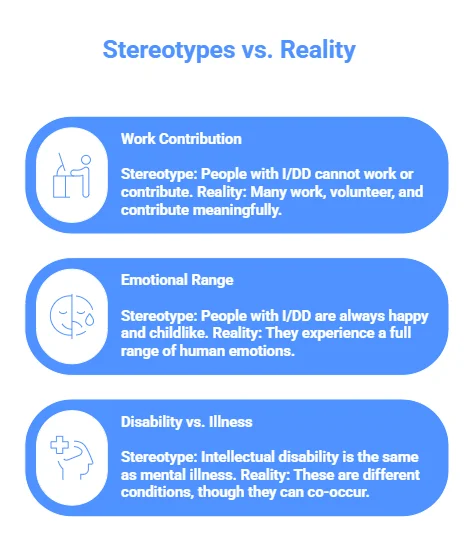
Let’s look at some common stereotypes and compare them with reality:
- Stereotype: People with I/DD cannot work or contribute to society. Reality: Many individuals work in competitive jobs, volunteer, and make meaningful contributions to their communities.
- Stereotype: People with I/DD are always happy and childlike. Reality: They experience a full range of human emotions, including happiness, sadness, and anger.
- Stereotype: An intellectual disability is the same as a mental health illness. Reality: These are different conditions, although they can co-occur. I/DD relates to developmental functioning, while mental illness affects mood and thought.
Moving beyond these stereotypes is the foundation of true inclusion. When we see the person first, we open the door to understanding their real capabilities and celebrating their place in our communities. Using respectful language and avoiding outdated terms like mental retardation is a critical part of this shift.
How Media Shapes Public Perception
The stories we see on screens and read in books have a powerful influence on our beliefs. The media can either reinforce negative stereotypes about people with I/DD or challenge them by presenting authentic, multidimensional characters. How people are portrayed directly shapes public perception and understanding.
Unfortunately, many media depictions have historically been one-dimensional, focusing only on disability or creating caricatures. This can lead to misunderstandings about how individuals manage social interactions and what they can achieve. These portrayals can make it harder for people with I/DD to be seen as full and complete human beings.
As you engage with media, think critically about the stories being told. Are they promoting dignity and respect? Seeking out films, shows, and books that feature nuanced and realistic portrayals is a great way to deepen your understanding and support a more inclusive narrative.
Recognizing Symptoms and Signs
Knowing what signs to look for is key to early support for people with intellectual and developmental disabilities. The earliest symptoms often appear as a developmental delay during childhood, when a child is not meeting milestones at the expected age. Recognizing these signs is not about labeling, but about opening the door to help.
Early diagnosis of I/DD and intervention can make a significant difference in a person’s long-term quality of life. Whether in a child or an adult, identifying areas of challenge allows families and support teams to provide the right tools and resources. Below, we’ll explore what these signs might look like at different life stages.
Early Signs in Children
Observing your child’s development is a natural part of parenting. Sometimes, you might notice that your child’s development is following a different path. A significant developmental delay in meeting common milestones can be an early indicator of an intellectual or developmental disability.
Some specific signs to be aware of during a child’s development include:
- Noticeable delays in major milestones like sitting up, crawling, walking, or talking.
- Difficulties with speech and language, such as having a very limited vocabulary for their age.
- Slower learning of self-care skills like toilet training or dressing.
- Differences in social and emotional development, like not understanding social cues.
If you notice these signs, it is important to speak with a healthcare provider. An evaluation can help determine if these delays are related to a disability and what support might be needed to help with their intellectual functioning and adaptive behavior.
Everyday Experiences in Adults
For adults, the signs of an intellectual or developmental disability often appear as challenges in managing the demands of daily life. These difficulties are not a reflection of a person’s effort but are related to the way their brain processes information and skills.
These challenges can affect practical life skills, such as managing finances, using public transportation, or keeping a schedule. Social skills can also be an area of difficulty, as some individuals may struggle to understand social boundaries or interpret nonverbal cues in social interactions. This can make building and maintaining relationships more complex.
The goal of support for adults is to foster independent living and a high quality of life. identifying these everyday challenges, caregivers and support professionals can help individuals develop strategies and life skills to navigate their daily life with confidence and autonomy.
Causes and Contributing Factors
Have you ever wondered what causes intellectual and developmental disabilities? The truth is that for most cases, the specific cause is unknown. Experts believe it is usually a complex mix of factors rather than a single event. These factors can include genetics, environmental risks, and various medical conditions.
This complexity means there is often no simple answer. The influences can occur before birth, during birth, or in early childhood. Understanding these potential causes can help demystify the conditions and reinforce that they are not anyone’s fault. Let’s look closer at some of these contributing factors.
Genetic Influences and Environmental Risks
Many intellectual and developmental disabilities are linked to genetic factors. These conditions can happen because of genetic mutations, which are changes in a person’s genes. Sometimes, these are inherited from parents, while other times they occur spontaneously. Well-known examples include Down syndrome and Fragile X syndrome.
Environmental risks can also play a role, particularly during pregnancy. Exposure of the mother or child to certain toxins, like lead, can increase the risk. Infections that a mother might have during pregnancy, such as rubella, can also disrupt the baby’s development and contribute to a disability.
It is often an interaction between genetic predispositions and environmental factors that leads to an I/DD. Certain medical conditions in the mother during pregnancy, like untreated hypothyroidism, can also be a factor. Because the causes are so complex, it is usually impossible to pinpoint a single reason.
Birth Conditions and Early Development
The period around birth and the first few years of a child’s development are critical. Certain complications during birth can contribute to an intellectual or developmental disability. For example, a lack of oxygen to the brain (hypoxia) or being born very prematurely can increase the risk.
After birth, events during early development can also be a factor. A severe injury to the brain from an accident or infections like meningitis that spread to the nervous system can cause damage that results in a disability. Untreated newborn jaundice is another example that can lead to a type of brain damage.
It is important for families to know that in the majority of cases, the cause of a child’s disability remains unknown. Parents should not blame themselves. The focus should always be on supporting the child’s development and well-being from the moment a need is identified.
Diagnosis, Treatment, and Support Options
Receiving a diagnosis of I/DD is the first step toward accessing the right support. The evaluation process is designed to be thorough, looking at a person’s strengths as much as their challenges. There is no “cure” for I/DD, but that is not the goal. Instead, treatment and support focus on helping individuals thrive.
The aim is to build skills, enhance independence, and ensure a good quality of life. This involves creating a plan for long-term support that is tailored to the person’s unique needs and goals. The following sections explain how the diagnosis is made and what care options are available.
The Evaluation Process
The evaluation process for an intellectual or developmental disability is comprehensive and looks at the whole person. It is not just a single test. Professionals conduct a multi-step assessment to understand an individual’s abilities and needs fully.
This process involves evaluating two main areas: intellectual functioning and adaptive behavior. Intellectual functioning may be assessed using standardized tests that measure reasoning and problem-solving skills. Adaptive behavior is typically assessed by talking with the individual, family members, and others who know them well to understand their everyday life skills. The American Psychiatric Association’s Diagnostic and Statistical Manual of Mental Disorders (DSM) provides criteria that guide professionals in making a diagnosis.
A key part of the evaluation process is identifying a person’s strengths. Understanding what an individual is good at and enjoys is just as important as identifying their challenges. This complete picture helps create a truly effective and person-centered support plan after a diagnosis of I/DD is confirmed.
Approaches to Care and Long-Term Support
Care for individuals with I/DD is not one-size-fits-all. The best approaches to care are person-centered, meaning they are designed around the individual’s goals, preferences, and needs. This empowers them to be active participants in their own lives. For caregivers, understanding these options is key to providing effective long-term support.
Several types of support and interventions can help individuals build skills and live more independently. These include:
- Educational Support: Individualized Education Plans (IEPs) in schools help tailor learning to a student’s needs.
- Behavioral Interventions: These therapies help individuals learn positive behaviors and social skills.
- Vocational Training: This support helps people develop job skills for meaningful employment.
- Family Education: This helps loved ones learn how to best support the individual and manage care.
The ultimate goal of these approaches is to foster inclusion and enable independent living to the greatest extent possible. Long-term support is flexible and evolves as the person’s needs change, always aiming to enhance their overall quality of life.
Living with Intellectual and Developmental Disabilities
Life with an intellectual or developmental disability is a journey filled with unique experiences, goals, and achievements. It is a life that can be rich and fulfilling. The focus should be on what individuals can do, not what they cannot. With the right support, people with I/DD can develop their social skills, participate in their communities, and lead happy lives.
Embracing community inclusion and celebrating personal achievements are essential to ensuring a high quality of life. The stories and experiences of individuals living with I/DD show us that a diagnosis does not define a person’s potential for growth, connection, and joy in their daily life.
Real-Life Stories and Achievements
When we look beyond a diagnosis, we see a person with unique talents, passions, and accomplishments. Real-life stories are powerful because they challenge stereotypes and show the diverse and vibrant lives that people with I/DD lead. Their achievements, big and small, deserve to be celebrated.
These achievements can take many forms and reflect each person’s individual journey. Some examples include:
- Graduating from a school program or vocational training.
- Getting a driver’s license or learning to use public transportation independently.
- Excelling in social activities like a sports team, art class, or club.
- Building lasting friendships and romantic relationships.
These stories remind us that inclusion is about creating opportunities for everyone to pursue their goals. focusing on strengths and providing support, we empower individuals to write their own success stories and show the world what is possible.
Community Inclusion and Accessibility
What does true community inclusion look like? It is more than just being present in a space; it is about being an active, valued member of the community. It means having the same opportunities as everyone else to work, learn, and participate in social activities. For this to happen, our communities must be accessible to all.
Accessibility is the key to independent living. This includes physical access, like ramps and accessible public transportation, but it also means creating welcoming social environments. Are local events, clubs, and workplaces open and accommodating to people with different needs? Do people feel they belong?
Building an inclusive community is a shared responsibility. It requires us to think about how we can remove barriers, both physical and social. When we make our communities more accessible and welcoming, we create a place where everyone has the chance to contribute and connect.
Legal Rights and Advocacy in the United States
In the United States, people with intellectual and developmental disabilities have legal rights that are protected by law. These national policies are designed to prevent discrimination and ensure that individuals have access to the same opportunities as everyone else. This framework provides crucial protection in areas like education, employment, and community life.
Alongside these laws, advocacy organizations play a vital role. These groups work to defend the rights of individuals, empower families, and push for stronger policies. Together, legal rights and advocacy help create a more just and inclusive society.
National Policies for Protection and Inclusion
Several landmark national policies in the U.S. form the bedrock of protection for people with disabilities. The Americans with Disabilities Act (ADA) is a major civil rights law that prohibits discrimination in all areas of public life, including jobs, schools, and transportation. Another key policy is the Individuals with Disabilities Education Act (IDEA), which ensures that children with disabilities have access to a free, appropriate public education.
These laws are designed to ensure full inclusion and protect individuals from unfair treatment. They mandate reasonable accommodations to help people participate in all aspects of a person’s life, from the classroom to the workplace. The goal is to level the playing field and remove barriers.
While clinical manuals like the Diagnostic and Statistical Manual of Mental Disorders define conditions for diagnosis, these national policies define rights in a societal context. They ensure that a person is seen as a whole individual with rights to protection and opportunities, not just as a set of symptoms or a diagnosis.
Organizations Supporting Individuals and Families
Navigating the world of I/DD can feel overwhelming, but family members and individuals do not have to do it alone. A strong network of organizations exists to provide information, guidance, and support. These groups are invaluable resources for anyone touched by an intellectual or developmental disability.
These organizations offer many forms of support, including:
- Advocacy: They work at local, state, and national levels to champion rights and influence policy.
- Resources: They provide families with information on services, therapies, and financial assistance.
- Community: They connect individuals and families with each other, creating powerful support networks.
- Awareness: They educate the public to reduce stigma and promote inclusion.
Groups like the American Association on Intellectual and Developmental Disabilities (AAIDD) and The Arc are leaders in this field. They conduct research, set professional standards, and are powerful voices for advocacy, helping millions of individuals and their families find the support they need.
Conclusion
In summary, understanding intellectual and developmental disabilities (I/DD) is crucial for fostering awareness, inclusion, and empathy in our communities. debunking myths and misconceptions, we can advocate for dignity and respect, ensuring that individuals with I/DD are seen for their unique strengths and experiences. Real-life stories highlight the importance of community support and accessibility, emphasizing that everyone deserves the opportunity to thrive. If you’re seeking further insights or resources on this important topic, don’t hesitate to reach out. Together, we can build a more inclusive society where everyone is valued and empowered.
Frequently Asked Questions
What is the difference between intellectual disability and developmental disability?
A developmental disability is a broad term for a group of lifelong conditions affecting areas like learning or behavior. An intellectual disability is a specific type of developmental disability. Its diagnosis of I/DD requires significant limitations in both intellectual functioning (reasoning) and adaptive behavior (life skills) that appear before age 18.
Where can families find support and resources for intellectual and developmental disabilities?
Family members can find incredible support from national and local organizations like The Arc, the American Association on Intellectual and Developmental Disabilities (AAIDD), and various condition-specific groups. These organizations offer resources, advocacy, and connections to community services and other families who share similar experiences.
How is long-term care managed for individuals with intellectual and developmental disabilities?
Long-term support is highly personalized to the trajectory of the individual. It is managed with the goal of promoting the highest possible quality of life and independent living. Support can range from assistance from in-home caregivers to living in a group home, all tailored to the person’s unique needs and preferences.