
Blockchain Technology is one of the most talked about innovations of the digital age. It has moved far beyond its early association with cryptocurrency and is now shaping industries such as finance, healthcare, supply chain, and government services. At its core, Blockchain Technology is a decentralized digital ledger that records transactions across multiple computers so that no single entity has full control. This structure makes it transparent, secure, and resistant to tampering. In this post, we will explore what Blockchain Technology really means, how it works, its key features, and why businesses across the world are adopting it.
- What Is Blockchain Technology?
- How Does Blockchain Technology Work?
- Key Features of Blockchain Technology
- Types of Blockchain Networks
- Real World Applications of Blockchain Technology
- Benefits of Adopting Blockchain Technology
- Challenges Facing Blockchain Technology
- The Future of Blockchain Technology
- Conclusion
- FAQs
What Is Blockchain Technology?
Blockchain Technology is essentially a chain of blocks that store data in a secure and linked manner. Each block contains information about transactions, and once a block is filled, it gets connected to the previous one, forming a continuous chain. This chain is distributed across a network of computers, known as nodes, rather than being stored in one central location.
Why It Is Called a “Ledger”
The term ledger refers to a record keeping system. Traditional ledgers are maintained by banks or institutions. Blockchain Technology replaces this centralized approach with a shared ledger that everyone in the network can access and verify.
How Does Blockchain Technology Work?
Understanding the working process helps in grasping why this technology is considered revolutionary.
Step by Step Working Process
When a transaction occurs, it is broadcasted to a network of computers known as nodes. These nodes validate the transaction using consensus mechanisms. Once validated, the transaction is combined with others to create a new block. This block is then added to the existing blockchain in a permanent and unalterable way. Every participant in the network has access to the updated ledger.
Consensus Mechanisms
Consensus mechanisms are protocols that ensure all nodes agree on the validity of transactions. Common types include Proof of Work and Proof of Stake. These mechanisms prevent fraud and duplicate transactions without needing a central authority.
Key Features of Blockchain Technology
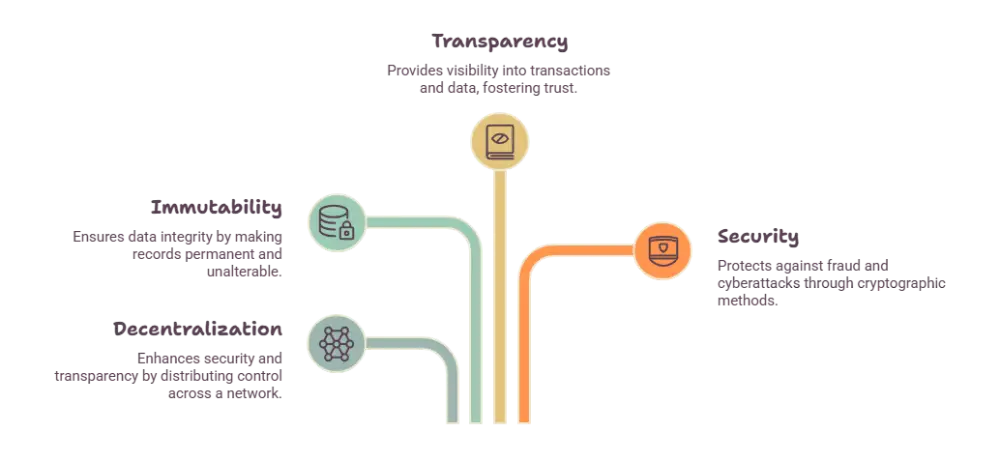
Blockchain Technology stands out due to several defining characteristics.
Decentralization
Unlike traditional systems, there is no single point of control. Data is spread across multiple nodes, reducing the risk of a single failure affecting the entire system.
Transparency
Every transaction is visible to participants within the network, promoting trust and accountability among users.
Immutability
Once data is recorded on the blockchain, it becomes extremely difficult to alter. This permanence protects against fraud and unauthorized changes.
Security
Cryptographic techniques secure data on the blockchain, making unauthorized access or hacking significantly harder compared to traditional databases.
Types of Blockchain Networks
Blockchain Technology is not a single system. It comes in different forms depending on use case requirements.
Public Blockchain
Public blockchains are open to anyone who wants to join and participate in verifying transactions. They promote transparency and decentralization at scale.
Private Blockchain
Private blockchains restrict access to specific participants, often used by organizations needing more control over their network.
Consortium Blockchain
This type is managed collaboratively by multiple organizations, blending elements of both public and private blockchains for shared governance.
Real World Applications of Blockchain Technology
The versatility of Blockchain Technology has led to its adoption across various industries.
Finance and Banking
Financial institutions use Blockchain Technology to streamline cross border payments, reduce fraud, and improve transaction speed without relying heavily on intermediaries.
Supply Chain Management
Companies use blockchain to track products from origin to delivery, ensuring authenticity and reducing counterfeit goods in the market.
Healthcare
Patient records can be securely stored and shared among authorized healthcare providers, improving accuracy and confidentiality of medical data.
Voting Systems
Blockchain Technology offers a way to create tamper proof voting systems, increasing trust in electoral processes through transparent record keeping.
Real Estate
Property transactions can be recorded on blockchain, reducing paperwork, minimizing fraud, and speeding up the transfer of ownership.
Benefits of Adopting Blockchain Technology
Organizations that integrate Blockchain Technology into their operations often experience several advantages.
Improved Trust Among Parties
Since data cannot be easily altered, all parties involved in a transaction can trust the recorded information without needing third party verification.
Enhanced Efficiency
removing intermediaries, processes become faster and more streamlined, saving time across various business operations.
Greater Data Security
The distributed nature of blockchain makes it far more resistant to cyberattacks compared to centralized databases.
Challenges Facing Blockchain Technology
Despite its many benefits, Blockchain Technology also faces certain obstacles that need to be addressed for wider adoption.
Scalability Issues
As more transactions occur, networks can face slower processing times, which developers are continuously working to resolve.
Regulatory Uncertainty
Different countries have varying regulations regarding blockchain and digital assets, creating challenges for global implementation.
Energy Consumption
Certain consensus mechanisms require significant computational power, raising concerns about environmental impact.
The Future of Blockchain Technology
The future looks promising as more industries recognize the potential of Blockchain Technology. Emerging trends include integration with artificial intelligence, the Internet of Things, and improved scalability solutions. Governments and enterprises are increasingly exploring blockchain based systems for identity verification, digital contracts, and secure data sharing. As the technology matures, it is expected to become a standard component of digital infrastructure worldwide.
Conclusion
Blockchain Technology has proven itself to be much more than a passing trend. Its ability to provide transparency, security, and decentralization makes it valuable across multiple industries including finance, healthcare, supply chain, and beyond. While challenges such as scalability and regulation remain, ongoing innovation continues to strengthen its potential. As businesses and governments explore new applications, Blockchain Technology is set to play a significant role in shaping a more secure and efficient digital future.
FAQs
What is Blockchain Technology in simple terms?
Blockchain Technology is a digital system that records transactions across multiple computers in a secure and transparent way, without relying on a central authority.
Is Blockchain Technology only used for cryptocurrency?
No, Blockchain Technology is used in many industries including healthcare, supply chain, real estate, and voting systems, not just cryptocurrency.
How secure is Blockchain Technology?
Blockchain Technology uses cryptographic methods and a decentralized structure, making it highly resistant to hacking and unauthorized data changes.
What is the difference between public and private blockchain?
A public blockchain is open for anyone to join and verify transactions, while a private blockchain restricts access to specific authorized participants.
Can Blockchain Technology be hacked?
While no system is completely immune, the decentralized and cryptographic nature of Blockchain Technology makes it significantly harder to hack compared to traditional centralized systems.