
Cybersecurity best practices are no longer optional for businesses of any size. As more operations move online, the risk of data breaches, ransomware, and phishing attacks continues to grow. Following the right security habits helps protect sensitive information, maintain customer trust, and keep systems running smoothly. This guide walks through the most effective and practical cybersecurity best practices that any organization can apply today.
Why Cybersecurity Best Practices Matter
Cyber threats evolve constantly, and attackers are always looking for weak points in a network. A single mistake, like clicking a suspicious link or using a weak password, can open the door to serious damage. Strong cybersecurity practices reduce that risk and create a safer digital environment for employees, customers, and partners.
Businesses that ignore security basics often face downtime, data loss, and reputational harm. Building good habits early prevents these issues before they start.
Core Cybersecurity Best Practices
Use Strong and Unique Passwords
Weak passwords remain one of the easiest ways for attackers to gain access. Every account should have a unique password that combines letters, numbers, and symbols. Reusing the same password across multiple platforms increases risk significantly.
A password manager can help generate and store complex passwords securely, removing the temptation to reuse simple ones.
Enable Multi Factor Authentication
Multi factor authentication adds an extra layer of protection beyond just a password. Even if a password is stolen, a second verification step, such as a code sent to a phone, can stop unauthorized access. This simple addition blocks a large percentage of automated attacks.
Keep Software and Systems Updated
Outdated software often contains known vulnerabilities that hackers actively target. Regular updates and patches close these security gaps. Automating updates where possible ensures nothing gets overlooked.
Train Employees on Security Awareness
Human error is one of the biggest causes of security incidents. Regular training helps employees recognize phishing emails, suspicious links, and social engineering attempts. A well informed team acts as a first line of defense against cyber threats.
Secure Your Network
A secure network is the backbone of good cybersecurity. Firewalls, encrypted connections, and secure Wi Fi settings all help prevent unauthorized access. Segmenting networks so sensitive data is isolated from general traffic adds another layer of protection.
Back Up Data Regularly
Regular backups ensure that data can be restored quickly in case of ransomware or accidental loss. Backups should be stored in multiple locations, including offline or cloud based systems, so they remain safe even if the main network is compromised.
Limit Access Based on Roles
Not every employee needs access to every system. Applying the principle of least privilege means giving people access only to what their role requires. This reduces the potential damage if an account is ever compromised.
Monitor Systems Continuously
Constant monitoring helps detect unusual activity before it becomes a major problem. Intrusion detection tools and regular log reviews allow teams to spot and respond to threats quickly.
Advanced Cybersecurity Practices
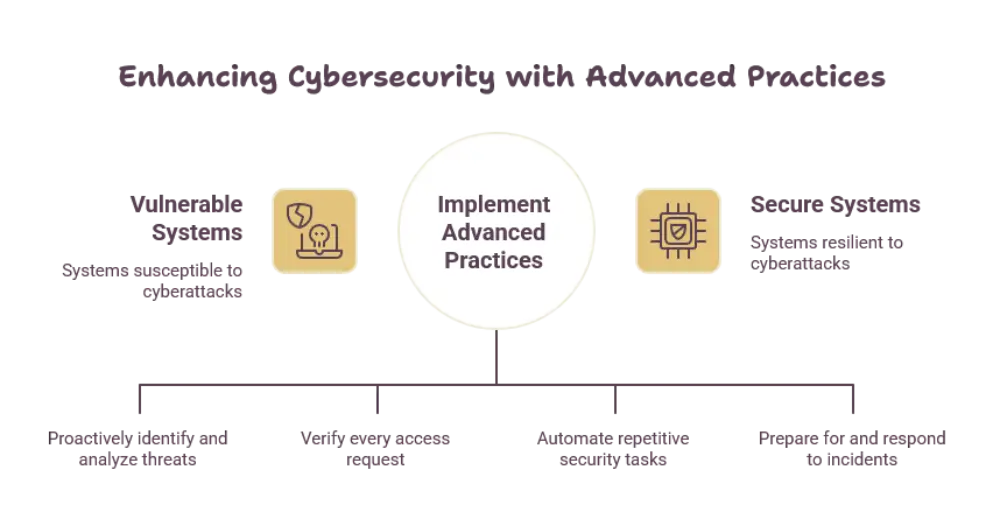
Conduct Regular Security Audits
Periodic audits help identify weaknesses in current systems and processes. These reviews should cover software, hardware, and employee practices to ensure everything aligns with current security standards.
Encrypt Sensitive Data
Encryption protects data both at rest and in transit. Even if data is intercepted, encryption makes it unreadable without the proper key, adding a strong layer of defense against theft.
Create an Incident Response Plan
Having a clear plan for responding to a cyber incident can significantly reduce damage and downtime. This plan should outline who to contact, how to isolate affected systems, and how to communicate with stakeholders during a breach.
Secure Endpoints and Devices
Laptops, phones, and other devices connected to a network can all become entry points for attackers. Endpoint protection software, device encryption, and remote wipe capabilities help secure these devices against loss or theft.
Building a Long Term Cybersecurity Culture
Cybersecurity is not a one time task but an ongoing effort. Encouraging a culture where every employee feels responsible for security helps maintain strong defenses over time. Leadership support, clear policies, and regular communication all contribute to a resilient security culture.
Reviewing and updating security policies as new threats emerge ensures that practices stay relevant and effective.
Conclusion
Following strong cybersecurity best practices protects businesses from costly breaches and builds trust with customers and partners. From using strong passwords and multi factor authentication to training employees and securing networks, every step matters. A proactive approach to cybersecurity today helps prevent bigger problems tomorrow.
Frequently Asked Questions
What are the most important cybersecurity best practices for small businesses?
Small businesses should focus on strong passwords, multi factor authentication, regular software updates, and employee training. These steps address the most common causes of security breaches.
How often should a company update its cybersecurity policies?
Cybersecurity policies should be reviewed at least once a year, or sooner if new threats or technologies emerge that could affect current systems.
What is multi factor authentication and why is it important?
Multi factor authentication requires users to verify their identity through more than one method, such as a password and a code sent to a device. It adds an extra layer of security beyond passwords alone.
How can employees help prevent cybersecurity breaches?
Employees can help by recognizing phishing attempts, using strong passwords, avoiding suspicious links, and following company security policies consistently.
Why is data backup important for cybersecurity?
Data backups ensure that information can be recovered quickly after a cyberattack, hardware failure, or accidental deletion, reducing downtime and data loss.