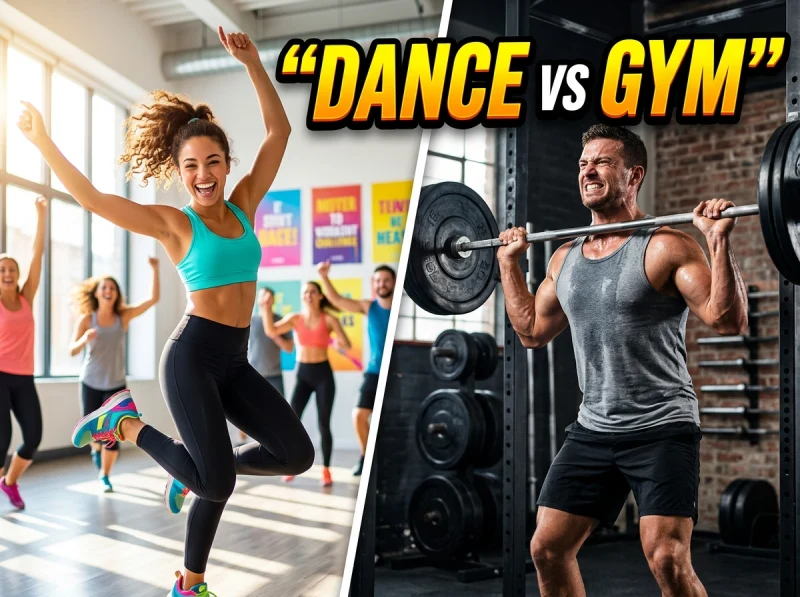
You’re standing at a crossroads, contemplating your next fitness adventure. The gym beckons with its rows of gleaming machines and the promise of sculpted physiques. Yet, a different rhythm calls to you – the infectious beat of music, the freedom of movement, the exhilarating joy of dance. The eternal question echoes: Dance workout or gym? Which one will truly propel you towards your fitness aspirations? This isn’t just about breaking a sweat; it’s about finding a sustainable, enjoyable, and effective path to a healthier you.
You might picture the gym as the undisputed champion of fitness, a place of iron and sweat where results are guaranteed. And yes, the gym offers a structured, science-backed approach to physical conditioning. It’s where you can meticulously track your progress, isolate specific muscle groups, and push your physical limits in ways that are undeniably powerful. However, the landscape of fitness is far broader than just barbells and treadmills. Dance, often perceived as merely an artistic expression or a weekend pastime, is emerging as a formidable contender in the realm of athletic training, offering a unique blend of benefits that can rival, and in some aspects, even surpass traditional gym routines.
The decision between a dance workout and a gym session isn’t a simple binary choice; it’s a nuanced exploration of your personal goals, preferences, and what resonates with your body and mind. To truly make an informed decision, you need to understand the distinct advantages each offers, where they overlap, and where one might hold a slight edge over the other. This exploration will help you find the rhythm that not only moves your body but also captivates your spirit, ensuring you don’t just start a fitness journey, but thrive on it for the long haul.
Let’s dive straight into the tangible, physical outcomes. You might be surprised to discover just how much bang you get for your buck, or rather, for your dance move. Forget the notion that dance is purely an aerobic pursuit; it’s a comprehensive physical conditioner.
Calorie Burn and Cardiovascular Health: Getting Your Heart Racing and Your Metabolism Firing
You’re aiming to burn calories, boost your cardiovascular health, and improve your stamina. Excellent! Dance workouts are surprisingly effective on this front. Think about it: sustained movement, often at a moderate to high intensity, naturally elevates your heart rate and keeps it there for an extended period. This is precisely what you want for a robust cardiovascular workout.
- Comparable Achievements: Research, like that from Northeastern University, confirms that free-form dancing can expend enough energy to meet the recommended intensities for moderate to vigorous physical activity. This means that the calories you burn during an energetic dance session can be directly comparable to what you’d achieve on a treadmill or during a vigorous cycling class. You’re not just having fun; you’re actively engaging your heart and lungs, strengthening your circulatory system, and improving your endurance. Imagine shimmying your way to a healthier heart – it’s entirely possible.
- Elevating Your Heart Rate: The key here is intensity and duration. A slow ballroom dance might not provide the same cardiovascular challenge as a high-energy Zumba class or a fast-paced contemporary routine. However, with the right style and commitment, you can absolutely achieve significant improvements in your cardiorespiratory fitness. You’ll find your resting heart rate drops, your VO2 max increases, and your overall stamina improves, making everyday activities feel less taxing.
Full-Body Engagement: The Ultimate Symphony of Movement
One of the most elegant advantages of dance is its inherent ability to engage your entire physique. Unlike many gym exercises that often focus on isolating a single muscle group, dance demands a holistic, coordinated effort from head to toe.
- Unilateral and Bilateral Movements: As you leap, turn, and sway, your legs are working to propel you, your core is stabilizing your torso, your arms are articulating expressive movements, and your back is engaged in maintaining posture and fluidity. This constant, integrated use of multiple muscle groups builds a harmonious strength that translates beautifully into everyday life. You’re not just building biceps; you’re building functional strength that supports every movement you make.
- Beyond Isolation: While isolated exercises in the gym are crucial for targeted muscle development, dance offers a different kind of strength – a connected, dynamic strength. Think about the agility and control required to execute a pirouette or a complex series of steps. This requires the coordinated effort of your hamstrings, quadriceps, glutes, abdominal muscles, obliques, back extensors, and even the small stabilizing muscles you might not even be conscious of. This all-encompassing engagement is a hallmark of dance that is difficult to replicate with traditional weightlifting.
Functional Movement and Coordination: Building a Body That Moves with Grace and Purpose
Beyond sheer strength and calorie expenditure, dance excels at cultivating functional movement patterns. This means it trains your body to move efficiently and effectively in real-world scenarios, enhancing your balance, agility, and spatial awareness.
- Integrated Muscle Activation: Dance intrinsically trains the coordination between your upper body, lower body, core, and posture. You learn to simultaneously activate different muscle groups to achieve a desired movement. This integrated approach is far more representative of how our bodies are designed to move than performing a bicep curl in isolation.
- Enhanced Balance and Agility: The constant shifting of weight, the need for controlled landings after jumps, and the intricate footwork all contribute to remarkable improvements in balance and agility. You’ll find yourself navigating your environment with greater ease and confidence, reducing the risk of falls and increasing your overall physical confidence.
- Spatial Awareness: Dance demands that you are aware of your body in space, your proximity to others, and the boundaries of your movement. This heightened spatial awareness is a valuable skill that transcends the dance floor, improving your coordination and reaction time in various situations.
The Psychological Playground: Why Dance Captures Your Mind and Spirit
The benefits of dance extend far beyond the purely physical. It taps into a deeper, more intrinsic motivational core, making it a powerful tool for long-term wellness.
Long-Term Consistency: The Joyful Path to Motivation
You’ve probably experienced it yourself: the initial surge of enthusiasm for a new gym routine, followed by a gradual decline as the monotony sets in. Dance offers a potent antidote to this common fitness killer.
- Music as a Motivator: The power of music is undeniable. It can uplift your mood, energize your body, and make challenging movements feel effortless. Different genres and tempos can evoke a wide range of emotions, transforming a workout from a chore into an experience. This intrinsic connection to music is a major driver of adherence to dance workouts.
- Variety and Creativity: The sheer diversity of dance styles – from hip-hop and salsa to ballet and contemporary – ensures there’s always something new to explore. This constant variation prevents boredom and keeps your mind engaged. Furthermore, the creative aspect of dance allows for self-expression, making the workout feel less like a task and more like an outlet. You’re not just following a prescribed set of exercises; you’re often interpreting movement and making it your own.
- The “Flow” State: Many dancers describe entering a state of “flow,” where they are so immersed in the movement and the music that they lose track of time and external worries. This state of optimal experience is incredibly rewarding and makes you eager to return for more. This psychological engagement is a significant advantage in fostering long-term consistency, the ultimate determinant of fitness success.
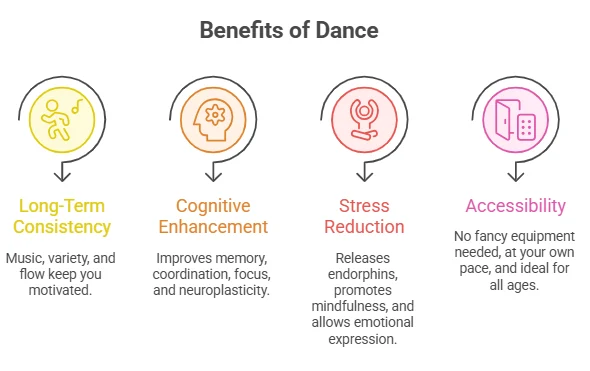
Cognitive Enhancement: Keeping Your Brain as Fit as Your Body
Beyond the physical exertion, dance is a powerful cognitive workout. It challenges your brain in ways that a repetitive gym routine simply cannot.
- Memory and Coordination Challenges: Learning choreography requires you to memorize sequences of steps, recall them at the right time, and coordinate your body parts to execute them precisely. This constant mental engagement strengthens neural pathways, improving memory, pattern recognition, and fine motor skills. You’re essentially cross-training your brain while you train your body.
- Focus and Problem-Solving: As you progress in your dance journey, you’ll encounter increasingly complex routines. This demands a high level of focus and the ability to problem-solve on the fly, adapting to new movements and correcting mistakes. This mental agility can translate into improved performance in other areas of your life, from work to academic pursuits.
- Neuroplasticity: The continuous learning and adaptation involved in dance actively promote neuroplasticity – the brain’s ability to reorganize itself by forming new neural connections. This is crucial for maintaining cognitive health and function throughout your lifespan.
Stress Reduction: Dancing Your Worries Away
In today’s fast-paced world, stress can be a relentless companion. Dance offers a beautiful and effective way to combat its negative effects, often surpassing the stress-relief capabilities of a traditional gym session.
- Endorphin Release: Like any form of physical activity, dancing triggers the release of endorphins, the body’s natural mood boosters and painkillers. This can lead to a sense of euphoria and well-being, effectively melting away tension and anxiety.
- Mindful Movement: The focus required to execute dance steps encourages a form of mindfulness. You become present in the moment, concentrating on the rhythm, the movement, and your body’s sensations, which can effectively quiet the chatter of everyday worries.
- Emotional Expression: Dance provides a vital outlet for emotional expression. Whether you’re feeling joyful, frustrated, or anything in between, you can channel those emotions into your movement, leading to a cathartic release. This expressive quality can be incredibly therapeutic and enhance your overall emotional resilience.
Accessibility: Your Dance Floor Awaits, Wherever You Are
One of the most significant advantages of dance as a fitness pursuit is its remarkable accessibility. You don’t need to invest in expensive memberships or specialized equipment to get started.
- No Fancy Equipment Needed: Beyond comfortable clothing and perhaps a good pair of shoes, dance requires no specialized gym equipment. You can transform your living room into a dance studio with just your body and some music. This removes a major barrier to entry for many individuals.
- At Your Own Pace: Whether you’re a complete beginner or have some dance experience, you can find classes or online resources that cater to your current fitness level. You can start with simpler routines and gradually progress, ensuring you’re always challenged but never overwhelmed. This self-paced approach is incredibly empowering.
- Ideal for All Ages and Abilities: The adaptability of dance makes it an excellent choice for a wide range of individuals, including beginners and older adults who might find the structured environment of a gym intimidating or physically demanding at times. There are many dance forms that focus on low-impact movements and emphasize grace and coordination.
Where the Gym Still Holds Its Ground: Precision, Power, and Progress
While dance offers a compelling and multifaceted approach to fitness, it’s important to acknowledge that the gym still excels in specific areas. Understanding these distinctions will allow you to make the most informed decision for your unique goals.
Targeted Muscle Hypertrophy: Building Bulk with Precision
If your primary objective is to dramatically increase muscle size and definition through targeted hypertrophy, then the gym often offers a more direct and efficient path.
- Isolation and Progressive Overload: Gyms are equipped with specialized machines and free weights designed for isolating specific muscle groups. This allows for precise control over the stimulus applied to each muscle. Furthermore, the concept of progressive overload – gradually increasing the weight, repetitions, or intensity over time – is central to muscle growth in a gym setting, and it’s more easily quantifiable and systematically applied when lifting weights.
- Mechanical Tension and Muscle Damage: Weightlifting, when performed correctly, creates significant mechanical tension and micro-trauma in the muscle fibers, which is the primary driver of hypertrophy. While dance does build muscle, the focus is often on endurance and functional strength rather than maximal muscle growth.
Precise Progressive Overload Tracking: Quantifying Your Gains
The gym environment is built around tracking progress, particularly when it comes to lifting weights. This precision can be incredibly motivating and reassuring for some individuals.
- Quantitative Measurement: You can easily track the exact weight you lift, the number of repetitions you perform, and the sets completed. This data provides a clear, objective measure of your progress over time, allowing you to see your strength increasing incrementally.
- Efficiency for Strength Goals: For individuals whose primary goal is to become significantly stronger and heavier, the structured, measurable nature of gym training is arguably more efficient for achieving these specific outcomes.
Rehabilitation-Specific Training: Guided Recovery and Injury Prevention
In cases where you’re recovering from an injury or need to address specific physical imbalances, a gym setting with qualified trainers often provides the most structured and targeted rehabilitation programs.
- Expert Guidance: Physical therapists and certified athletic trainers in a gym environment can design and supervise exercises that are specifically tailored to your injury and recovery needs. This ensures that you’re performing movements correctly and safely, minimizing the risk of re-injury.
- Controlled Environment: The controlled environment of a gym allows for precise movements and the use of specific equipment that can facilitate the healing process and gradually reintroduce your body to stress.
Maximal Strength Development: Pushing Your Ultimate Limits
When your objective is to achieve peak physical strength – lifting the absolute heaviest weights possible – the gym is the undisputed arena.
- Heavy Lifting: The fundamental practice of lifting extremely heavy weights, even for low repetitions, is the cornerstone of maximal strength development. This is achieved through exercises like squats, deadlifts, and bench presses, which are staples of most gym routines.
- Neuromuscular Adaptation: Maximal strength gains rely heavily on neuromuscular adaptations, which are best trained through heavy resistance training. Dance, while building strength, typically doesn’t push the body to these extreme levels of maximal force production.
The Verdict: It’s About You
Ultimately, the “better” workout isn’t a universal truth; it’s a deeply personal conclusion. The most effective fitness regimen is the one that you will consistently adhere to. Your health and fitness goals should be the compass guiding your decision.
- For the Dancer in You: If you crave joy, creativity, and a holistic approach to well-being, and if the idea of moving to music ignites your spirit, then a dance workout might be your perfect match. It offers a powerful combination of physical benefits, mental stimulation, and emotional release that can lead to sustainable, long-term engagement. You’ll find your entire body strengthening, your mind sharpening, and your stress melting away with every step.
- For the Strength Seeker: If your primary focus is on building significant muscle mass, achieving specific strength benchmarks, or undergoing targeted rehabilitation, then the gym’s structured approach and specialized equipment may be more aligned with your objectives. The ability to isolate muscle groups and precisely track progressive overload offers unparalleled advantages for these specific goals.
- The Hybrid Approach: Remember, these two aren’t mutually exclusive. Many individuals find immense benefit in incorporating both dance and gym sessions into their fitness routines. You could energize your week with a vibrant dance class and then dedicate specific days to focused strength training in the gym. This fusion can provide a well-rounded approach, leveraging the unique advantages of each.
Consider what truly motivates you. What kind of activity makes you feel alive, energized, and eager to come back for more? Does the thought of a challenging dance routine fill you with excitement, or does the methodical progression of lifting weights resonate more deeply? Listen to your body, acknowledge your aspirations, and choose the path that will not only get you moving but will keep you dancing, lifting, and thriving for years to come. Your fitness journey is a unique and beautiful dance – make sure you’re enjoying the music.
FAQs
What are the benefits of a dance workout compared to a gym workout?
Dance workouts can provide cardiovascular benefits, improve coordination and balance, and offer a fun and social way to exercise. On the other hand, gym workouts can offer a wider variety of equipment and exercises to target specific muscle groups.
Which type of workout is better for weight loss?
Both dance workouts and gym workouts can contribute to weight loss when combined with a healthy diet. Dance workouts can be more enjoyable and engaging, while gym workouts may offer more options for strength training and muscle building.
Are dance workouts suitable for all fitness levels?
Dance workouts can be modified to accommodate different fitness levels, from beginners to advanced participants. Instructors often provide options for low-impact or high-intensity movements to cater to a wide range of abilities.
What are the potential drawbacks of each type of workout?
Dance workouts may not provide as much focus on strength training as gym workouts, while gym workouts may lack the social and enjoyable aspect of dancing. Additionally, some individuals may feel self-conscious in a dance class or intimidated by the gym environment.
How can someone decide which type of workout is better for them?
Choosing between a dance workout and a gym workout depends on individual preferences, fitness goals, and personal enjoyment. It may be beneficial to try both types of workouts and see which one feels more sustainable and enjoyable in the long term.