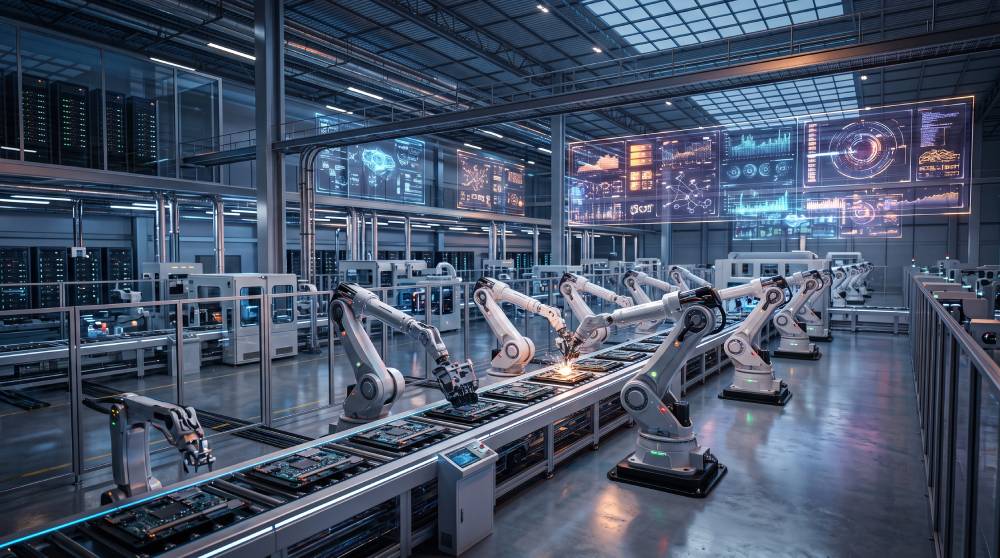
The global production landscape is undergoing a massive transformation. For decades, traditional factories relied heavily on rigid automation and manual intervention. However, the future of manufacturing technology is actively rewriting the rules of how goods are designed, produced, and distributed. We are moving past the baseline of simple mechanization and entering an era of hyper connected, cognitive, and deeply integrated ecosystem design.
This shift is not just about installing faster machinery or substituting traditional tools with digital variants. It represents a fundamental restructuring of operational workflows. Modern factories are transitioning into smart environments where data flows seamlessly between production floors and management teams, drastically reducing decision latency and cutting operational waste.
Understanding the future of manufacturing technology is essential for looking ahead at how global supply networks will survive disruptions. This comprehensive exploration details the major technological shifts, structural changes, and operational strategies defining tomorrow’s manufacturing ecosystem.
- Artificial Intelligence and the Future of Manufacturing Technology
- Intelligent Automation and the Future of Manufacturing Technology
- Human Machine Collaboration and the Future of Manufacturing Technology
- Digital Twins and the Future of Manufacturing Technology
- Sustainable Practices and the Future of Manufacturing Technology
- Frequently Asked Questions
Artificial Intelligence and the Future of Manufacturing Technology
Artificial intelligence acts as the primary brain driving modern industrial setups. While previous iterations of factory automation relied on static code to perform repetitive movements, advanced machine learning models can now interpret chaotic environments and make real-time decisions.
Proactive Machine Maintenance
Unplanned downtime can stall entire operations and stall logistics networks. Through AI driven predictive maintenance, sensor networks attached to heavy machinery continuously stream vibration, thermal, and performance data to centralized cloud systems. Advanced algorithms analyze these signals to discover minute anomalies that precede physical failures. identifying these patterns early, maintenance crews can service equipment during scheduled windows, extending asset lifespans and ensuring steady production output.
Intelligent Quality Control
Traditional quality assurance often depends on manual spot checks or basic post production testing, which can lead to late defect detection and high scrap rates. Modern vision systems powered by deep learning inspect items directly on the assembly line at exceptional speeds. These systems identify microscopic surface fractures, dimensional deviations, or structural flaws instantly. The system can automatically flag or isolate defective parts within the exact shift the issue occurs, keeping final product quality high and material waste low.
Overcoming Data Silos
Industrial environments often generate massive volumes of unorganized data spread across legacy enterprise resource planning platforms, warehouse management software, and physical machine logs. Modern AI engines act as universal translators across these disjointed architectures. mapping different naming conventions and data schemas automatically, these cognitive tools compress data processing timelines, helping operational leaders quickly pinpoint the root causes of systemic processing bottlenecks.
Intelligent Automation and the Future of Manufacturing Technology
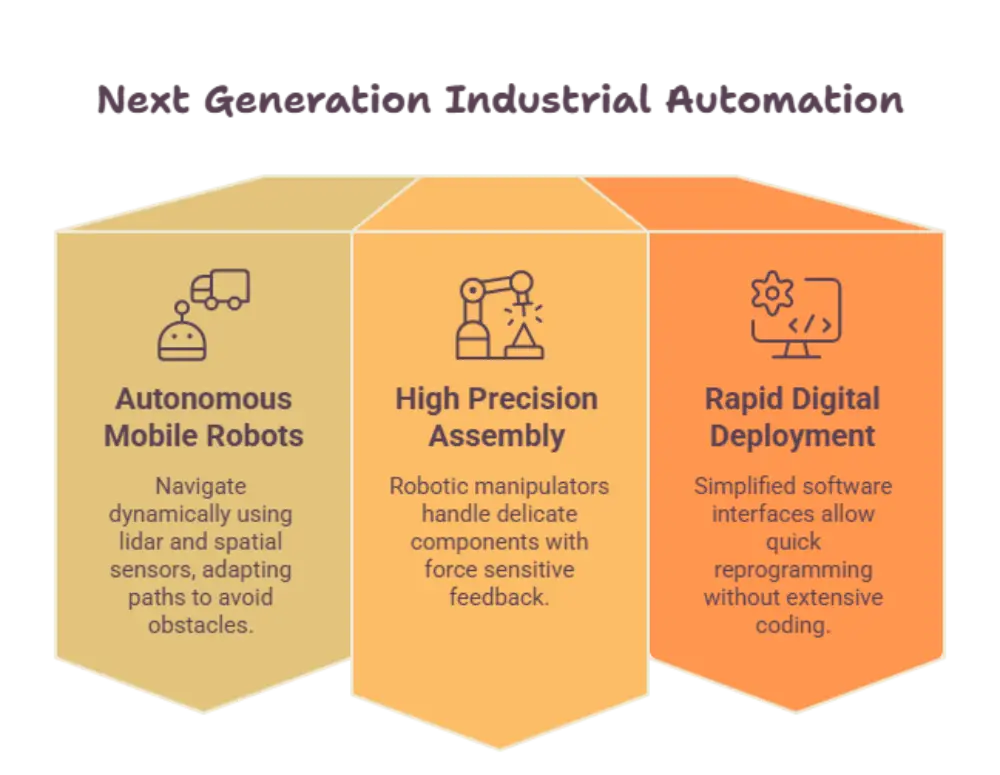
Automation is shifting away from isolated, dangerous robotic cells toward agile, interconnected robotic networks. The physical layout of the factory floor is evolving to become modular and highly adaptable to changing consumer demands.
Key points regarding next generation industrial automation include:
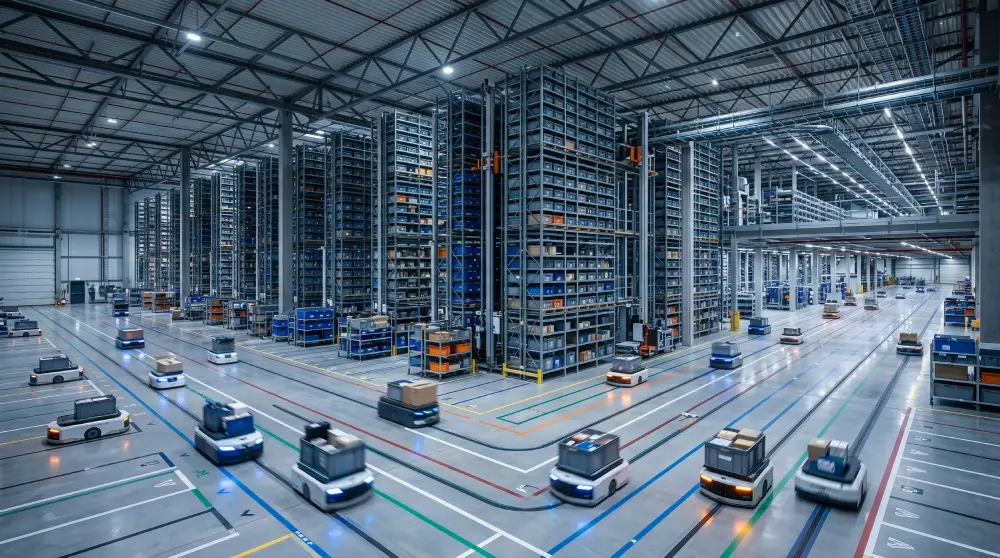
- Autonomous Mobile Robots: Unlike traditional automated guided vehicles that require physical floor tracks or magnetic tape, autonomous mobile robots navigate dynamically using onboard lidar and spatial sensors. They safely transport raw materials and finished goods across busy factory floors, adapting their paths to avoid unexpected obstacles.
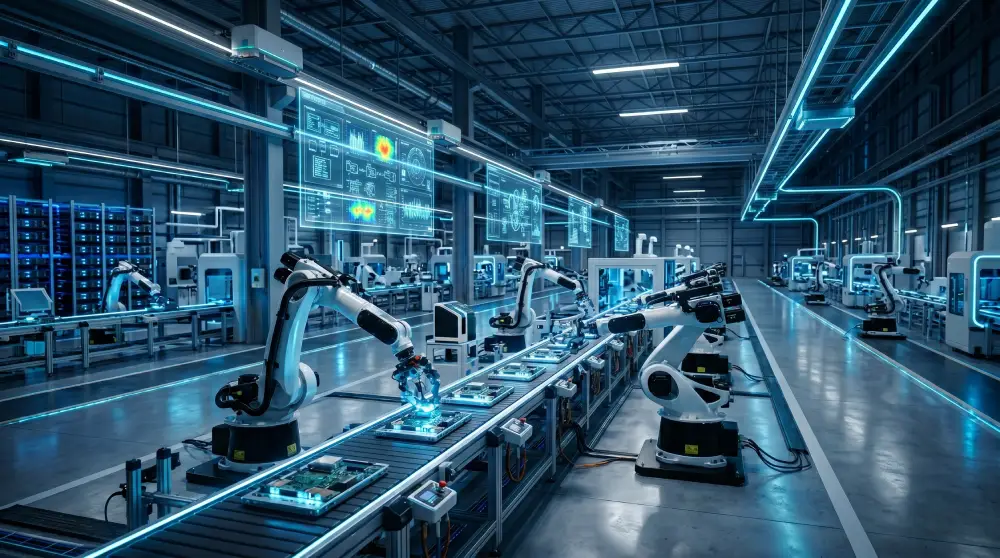
- High Precision Assembly: Advanced robotic manipulators equipped with force sensitive feedback mechanisms handle incredibly delicate components, such as microprocessors and fragile medical instruments, with minimal human intervention.
- Rapid Digital Deployment: Modern robotic platforms feature simplified software interfaces, allowing operational teams to reprogram mechanical paths and tasks quickly without requiring extensive custom coding.
This flexible automation model allows facilities to switch production setups rapidly, enabling small batch customization without sacrificing overall operational efficiency.
Human Machine Collaboration and the Future of Manufacturing Technology
A common misconception is that complete automation will remove the need for human personnel entirely. The emerging industrial paradigm proves that human insight remains vital. The focus is moving toward a cooperative model where advanced machines expand human capabilities.
The Integration of Collaborative Robots
Collaborative robots, or cobots, are engineered specifically to operate alongside human workers without protective physical barriers. Outfitted with advanced proximity sensors, force limiting technology, and soft edges, cobots automatically slow down or stop completely if a human colleague steps into their operational zone. These systems handle strenuous, repetitive, or hazardous tasks, such as lifting heavy components or applying toxic adhesives, while human workers focus on intricate assembly, complex troubleshooting, and final validation.
Cognitive Enhancement and Workforce Upskilling
As physical machinery becomes smarter, the daily responsibilities of factory operators are changing. Workers are moving away from manual execution and transitioning into analytical, supervisory roles. Frontline staff use intuitive dashboards, predictive insights, and digital assistance tools to oversee multiple automated lines simultaneously. This collaborative shift improves workplace safety while accelerating onboarding speeds, allowing new hires to manage sophisticated systems confidently.
Digital Twins and the Future of Manufacturing Technology
Creating a bridge between physical operations and virtual software models is a major milestone for modern industrial development. Digital twin technology provides a real-time virtual replica of an entire production facility, including individual components, complex assembly lines, and supply chain networks.
Safe Operational Testing
Altering parameters on an active production line carries significant risks of downtime or mechanical failure. Digital twins solve this by providing an isolated, risk free sandbox environment. Engineers can simulate changes to conveyor speeds, modify robotic paths, or introduce entirely new product variations digitally. This lets teams discover hidden bottlenecks or structural stresses before implementing any physical changes on the factory floor.
Real Time System Visualization
Digital twins continuously ingest data from thousands of Internet of Things sensors embedded across physical operations. This continuous data stream gives operations managers full visibility into asset health, material flow constraints, and energy consumption metrics. Instead of waiting for end of day reports, management teams can monitor live performance and optimize workflow allocations instantly.
Sustainable Practices and the Future of Manufacturing Technology
Modern manufacturing strategies must balance high volume productivity with environmental responsibility. Driven by resource scarcity and evolving global compliance mandates, sustainability has become a core metric for operational performance.
Optimization of Energy Resources
Smart production facilities employ intelligent energy monitoring systems to track power consumption across every sector of the plant. AI driven algorithms cross reference production schedules with local utility rates and machine idle times to distribute power loads efficiently. Heavy power usage tasks can be scheduled automatically during off peak hours, lowering overall energy expenses and decreasing the facility’s carbon footprint.
Material Conservation and Circular Design
Advanced production methodologies prioritize waste minimization at the source. Precise additive manufacturing techniques deposit material exactly where needed, reducing raw material scraps compared to traditional subtractive machining methods. Furthermore, smart material tracking systems monitor the lifecycles of production components, helping facilities recapture, melt down, or reuse scrap metals and polymers within a closed loop circular economy model.
Frequently Asked Questions
What is the difference between Industry 4.0 and Industry 5.0?
Industry 4.0 focuses heavily on digital connectivity, automated data collection, machine learning, and creating highly autonomous smart factories. Industry 5.0 builds directly upon this digital foundation but places human collaboration, environmental sustainability, and workforce well-being at the absolute center of production design.
How does predictive maintenance save money for manufacturers?
Predictive maintenance uses internet connected sensors to monitor machine health continuously. finding minor abnormalities early, maintenance teams can fix equipment during planned downtime, preventing catastrophic mechanical failures, reducing expensive emergency repair costs, and avoiding unexpected assembly line stoppages.
Will automated technology completely replace human factory workers?
No, the evolution of industrial technology shifts human responsibilities rather than eliminating them. Repetitive, strenuous, and hazardous tasks are increasingly automated, which allows human workers to upskill into higher value positions focused on system programming, data analysis, creative design, and strategic oversight.
What role do collaborative robots play on the production floor?
Collaborative robots, or cobots, are designed with advanced sensors and safety features that allow them to work safely alongside humans without protective cages. They handle the physically taxing or repetitive parts of a task, while the human worker manages the complex or adaptive portions of the assembly process.
How do digital twins improve manufacturing efficiency?
A digital twin is a live virtual replica of a physical factory or system. It allows operations managers to monitor performance in real time and run complex simulations to test process changes safely without disrupting active production lines.