You’re a local service business owner. Think about it. You’re woven into the fabric of your community. You’ve built something with your hands, your mind, and your heart, serving the people who live and work alongside you. But as you gaze out at the horizon, you can’t help but notice the winds of change. The future isn’t a distant whisper; it’s a palpable force, reshaping how customers find you, what they expect from you, and how you operate. Embracing this future isn’t just a good idea; it’s the essential strategy for your continued success and relevance.
For years, your physical presence, your word-of-mouth reputation, and perhaps a well-placed advertisement in the local paper were your primary avenues for attracting customers. But the world has shifted. Your potential customers are no longer solely relying on chance encounters or printed flyers. They are online. They are searching. They are comparing. And if you’re not there, you’re essentially invisible.
Beyond the Business Card: Crafting Your Online Identity
Your website is no longer an optional extra; it’s your digital storefront. It’s the first impression many will have of your business, a virtual handshake that can pre-empt a physical one. You need a website that is not only professional and visually appealing but also functional and informative.
The Foundation: A User-Friendly and Informative Website
Consider your website as the digital ambassador for your business. It needs to clearly communicate what you do, who you serve, and what makes you unique. This means:
- Clear Service Descriptions: Don’t make your customers play detective. Detail the services you offer with clarity and conciseness. Use language that resonates with your target audience, avoiding jargon where possible. Highlight the benefits you provide, not just the features.
- Contact Information Front and Center: Make it ridiculously easy for people to get in touch. Your phone number, email address, and physical address (if applicable) should be prominently displayed on every page.
- “About Us” with Personality: Share your story. Let your passion shine through. People connect with people, and a genuine “about us” section can build trust and rapport. Introduce your team, highlight your values, and explain why you’re committed to your community.
- Mobile Responsiveness: This is non-negotiable. A staggering percentage of internet searches happen on mobile devices. If your website looks clunky or is difficult to navigate on a smartphone, you’re losing customers before they even get a chance to consider your services.
- High-Quality Imagery: Invest in professional photos or videos of your work, your team, or your location. Visuals are powerful and can significantly enhance the perception of your business.
Search Engine Optimization (SEO): Getting Found Online
Having a great website is only half the battle. You need to ensure people can find it when they’re looking for your services. This is where Search Engine Optimization (SEO) comes in. Think of it as making your website speak the language of search engines like Google.
- Keyword Research: Understand what terms your potential customers are using to find businesses like yours. Are they searching for “emergency plumber near me,” “best local bakery,” or “affordable house cleaning services”?
- On-Page Optimization: Incorporate these keywords naturally within your website’s content, including page titles, headings, and body text.
- Local SEO: This is crucial for service businesses. Ensure your Google Business Profile is complete and accurate. Encourage customer reviews, as these are a significant ranking factor. Make sure your Name, Address, and Phone Number (NAP) are consistent across all online platforms.
- Content Creation: Regularly publishing relevant content, such as blog posts or guides related to your services, can further improve your SEO and establish you as an authority in your field. For example, a roofer might write about “Signs you need a new roof,” or a landscaper about “Spring lawn care tips.”
The Power of Social Proof: Reviews and Testimonials
In the digital age, your reputation isn’t just built on what you say about yourself; it’s built on what others say about you. Online reviews are the modern-day equivalent of customer testimonials, and they carry immense weight.
Cultivating a Culture of Feedback
- Encourage Reviews: Don’t be shy about asking satisfied customers to leave a review. Make it easy for them by providing direct links to your review profiles (Google, Yelp, Facebook, etc.).
- Respond Promptly and Professionally: Engage with both positive and negative feedback. Thank customers for their positive comments. Address negative reviews constructively and empathetically, offering solutions where possible. This shows you care about customer satisfaction and are willing to improve.
- Showcase Your Best: Feature glowing testimonials prominently on your website and social media channels. This reinforces trust and highlights your strengths.
The Evolving Customer Expectation: Convenience and Personalization
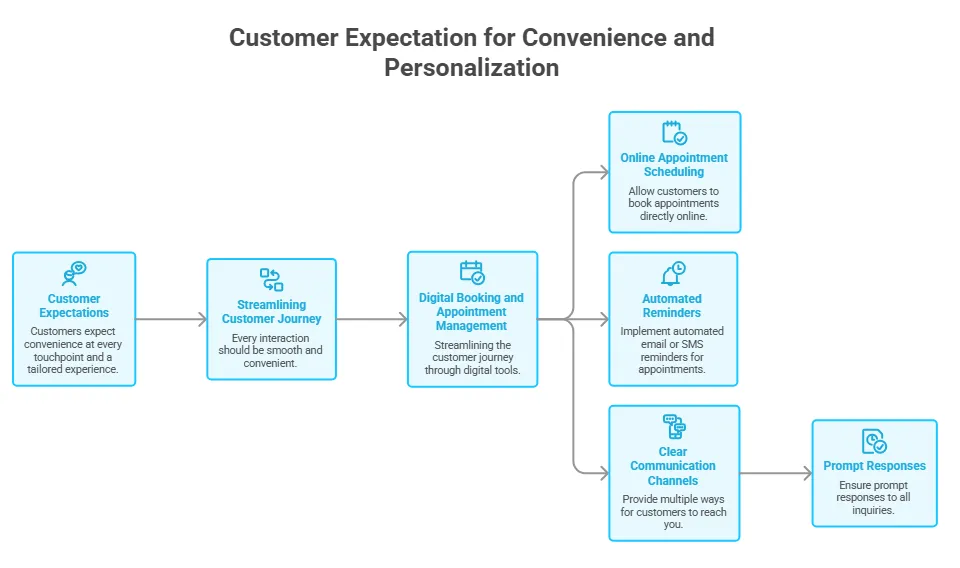
Gone are the days when customers were willing to wait indefinitely or settle for a one-size-fits-all solution. Today’s consumers expect convenience at every touchpoint and a tailored experience that makes them feel valued.
Streamlining the Customer Journey: Making it Effortless
From initial contact to service completion and beyond, every interaction with your business should be as smooth and convenient as possible.
Digital Booking and Appointment Management
- Online Appointment Scheduling: Offer the ability for customers to book appointments directly through your website or a dedicated booking platform. This saves them time and provides them with instant confirmation.
- Automated Reminders: Implement automated email or SMS reminders for appointments. This reduces no-shows and keeps customers informed.
- Clear Communication Channels: Provide multiple ways for customers to reach you, whether it’s phone, email, live chat on your website, or direct messaging on social media. Ensure prompt responses to all inquiries.
Personalization at Scale: Making Customers Feel Seen
While you might be a local business with a personal touch, you can leverage technology to personalize the experience for a larger customer base without losing that authenticity.
Understanding Your Clientele Through Data
- Customer Relationship Management (CRM) Systems: Implement a CRM to track customer interactions, preferences, and service history. This allows you to personalize offers, recommendations, and communication.
- Targeted Marketing: Use insights from your CRM to send targeted email campaigns or social media advertisements to specific customer segments with offers relevant to their needs. For example, you might send a special offer for interior painting to customers whose homes you previously serviced for exterior repairs.
- Loyalty Programs: Reward repeat customers with exclusive discounts, early access to new services, or special perks. This fosters loyalty and encourages continued business.
Technology as an Enabler: Efficiency and Innovation
The future of local service businesses hinges on your willingness to embrace technology not as a replacement for human connection, but as a powerful enabler that enhances your capabilities and efficiency.
Embracing Digital Tools for Enhanced Operations
Technology can automate repetitive tasks, improve accuracy, and free up your valuable time to focus on what you do best.
From Paperwork to Productivity: Digital Transformation
- Cloud-Based Invoicing and Payment Systems: Move away from manual invoicing. Utilize cloud-based software that allows for easy invoice creation, sending, and online payment processing. This speeds up cash flow and reduces administrative burden.
- Project Management Software: For businesses with multiple projects or teams, project management tools can help you organize tasks, track progress, communicate with your team, and ensure deadlines are met.
- Inventory Management: If you deal with physical goods, implement an inventory management system to track stock levels, reorder efficiently, and prevent stockouts or overstocking.
Leveraging Data for Smarter Decision-Making
The information generated by your business operations can be a goldmine for making informed decisions and driving growth.
Insights That Drive Growth
- Analyzing Service Performance: Track which services are most popular, profitable, and in-demand. Use this data to refine your offerings and marketing strategies.
- Customer Behavior Analysis: Understand peak booking times, common service requests, and customer acquisition channels. This helps you allocate resources effectively.
- Financial Reporting and Forecasting: Utilize digital tools to generate financial reports that provide a clear overview of your business’s health. This enables you to forecast future revenue and expenses more accurately.
Empowering Your Workforce: Training and Digital Skills
Your team is your greatest asset. As you embrace new technologies and evolving customer expectations, you must ensure your employees are equipped with the skills and knowledge to thrive in this new landscape.
Investing in Your People for a Future-Ready Team
- Digital Literacy Training: Provide essential training on using new software, online platforms, and digital communication tools. This isn’t just about operating a new app; it’s about empowering them to be more efficient and effective in their roles.
- Customer Service in a Digital World: Train your staff on how to handle online inquiries, manage customer feedback on social media, and maintain a consistent brand voice across all touchpoints.
- Continuous Learning Culture: Foster an environment where learning and development are encouraged. The technological landscape is constantly evolving, and staying ahead requires a commitment to ongoing education. For example, a mechanic might benefit from training on electric vehicle diagnostics, or a caterer on how to promote their services through online food delivery platforms.
Beyond the Transaction: Building Lasting Relationships in the Digital Age
| Metrics | Data |
|---|---|
| Online Presence | 80% of local service businesses are expected to have an online presence by 2025 |
| Customer Reviews | 90% of consumers read online reviews before visiting a local business |
| Mobile Searches | 50% of mobile users are more likely to visit a local business after conducting a local search |
| Technology Adoption | 60% of local service businesses plan to invest in technology to improve customer experience |
While efficiency and convenience are paramount, the heart of any local service business lies in the relationships you build with your customers. Technology can actually help you deepen these connections, not erode them.
Cultivating Loyalty Through Authentic Engagement
- Personalized Communication: Use the data you gather to send personalized thank-you notes, birthday greetings, or follow-up messages after a service. These small gestures can go a long way in making customers feel appreciated.
- Community Involvement (Online and Offline): Leverage social media to share updates about your involvement in local events, charitable initiatives, or community news. This reinforces your connection to the area and builds goodwill.
- Proactive Problem Solving: Use technology to anticipate potential issues. For example, if you’re a roofing company and a storm is forecast, you could send out proactive messages to your clients offering inspections or advice.
Understanding the Future-Proof Business
Embracing the future isn’t about discarding your past; it’s about building upon your strengths and adapting to the evolving needs of your customers and the marketplace. investing in your digital presence, streamlining customer experiences, leveraging technology for efficiency, empowering your team, and focusing on building lasting relationships, your local service business can not only survive but thrive in the years to come. The future is here, and it’s an opportunity you can seize.
FAQs
What are local service businesses?
Local service businesses are businesses that provide services to customers within a specific geographic area. These businesses can include a wide range of services such as plumbing, landscaping, cleaning, and home repair.
What is the future of local service businesses?
The future of local service businesses is expected to be influenced by technology, customer preferences, and market trends. Advancements in digital marketing, online booking systems, and customer review platforms are likely to play a significant role in shaping the future of these businesses.
How will technology impact local service businesses?
Technology is expected to have a significant impact on local service businesses by enabling them to streamline operations, improve customer communication, and reach a wider audience through online platforms. This can include the use of mobile apps, online scheduling systems, and digital marketing strategies.
What are some challenges facing local service businesses in the future?
Some challenges facing local service businesses in the future may include increased competition, changing customer expectations, and the need to adapt to new technologies. Additionally, economic factors and regulatory changes can also present challenges for these businesses.
What opportunities are there for local service businesses in the future?
Despite the challenges, there are also opportunities for local service businesses in the future. These can include the ability to leverage technology for efficiency and growth, the potential to expand services to new markets, and the opportunity to differentiate themselves through exceptional customer service and quality work.