

Human Resources Technology is transforming how companies manage their workforce, from hiring and onboarding to performance tracking and employee engagement. As organizations grow and workplaces evolve, relying on manual processes is no longer practical. This is why more businesses are turning to digital tools that simplify HR tasks, improve accuracy, and free up time for strategic decision making.
In this guide, we will explore what Human Resources Technology means, why it matters, its key components, emerging trends, and how businesses can choose the right tools for their needs.
- What Is Human Resources Technology
- Why Human Resources Technology Matters Today
- Key Components of Human Resources Technology
- Benefits of Adopting Human Resources Technology
- Emerging Trends in Human Resources Technology
- Challenges in Implementing Human Resources Technology
- Best Practices for Choosing Human Resources Technology
- Conclusion
- FAQs
What Is Human Resources Technology
Human Resources Technology refers to the software, platforms, and digital tools used to manage various HR functions. These functions include recruitment, employee records, payroll processing, performance evaluation, training, and communication.
Instead of relying on spreadsheets and paper files, HR teams now use integrated systems that centralize data and automate repetitive tasks. This shift allows HR professionals to focus more on people and culture rather than administrative work.
Why Human Resources Technology Matters Today
Workplaces are becoming more complex, with remote teams, hybrid schedules, and diverse workforce needs. Human Resources Technology helps organizations keep up with these changes by offering tools that are flexible, accessible, and efficient.
Improved Efficiency
Automation reduces the time spent on manual tasks such as data entry, scheduling, and document management. This allows HR teams to handle more responsibilities without added stress.
Better Employee Experience
Modern HR tools often include self service portals where employees can access information, request time off, or update personal details without waiting on HR staff.
Data Driven Decisions
With built in reporting and analytics, HR leaders can make informed decisions based on real workforce data rather than assumptions.
Key Components of Human Resources Technology
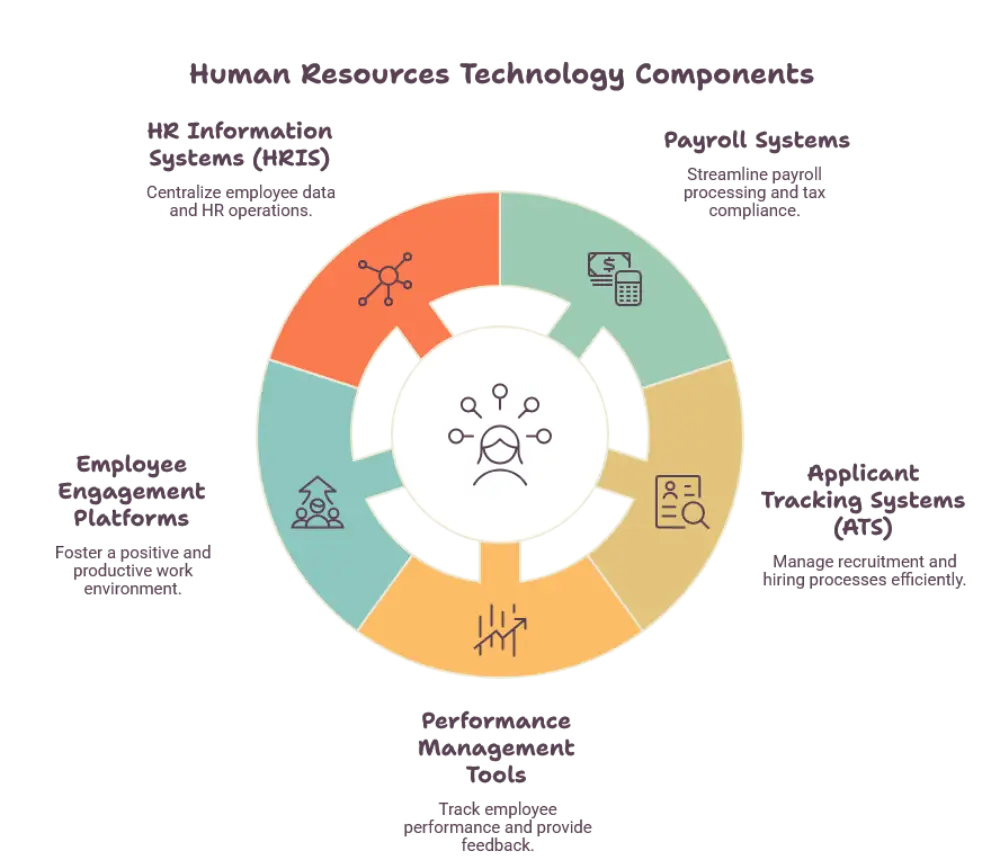
Human Resources Technology is not a single tool but a collection of systems that work together to support different HR functions.
Applicant Tracking Systems
These platforms help HR teams manage job postings, track candidates, and streamline the hiring process from application to offer letter.
Payroll and Benefits Platforms
Payroll software ensures employees are paid accurately and on time while also managing tax calculations and benefits enrollment.
Performance Management Tools
These systems allow managers to set goals, track progress, and conduct performance reviews in a structured and consistent way.
Employee Engagement Software
Engagement tools gather feedback through surveys and pulse checks, helping organizations understand employee satisfaction and morale.
Learning and Development Platforms
These platforms support employee growth by offering training modules, certifications, and skill building resources.
Benefits of Adopting Human Resources Technology
Organizations that invest in Human Resources Technology often see improvements across several areas of their operations.
Human Resources Technology helps reduce human error in repetitive tasks like payroll calculations and record keeping. It also improves compliance by keeping documentation organized and easily accessible during audits.
Another major benefit is scalability. As companies grow, HR technology systems can expand to accommodate more employees without requiring a complete overhaul of existing processes.
Additionally, centralized data storage improves collaboration between departments, since information is easily shared and updated in real time.
Emerging Trends in Human Resources Technology
The HR technology space continues to evolve, driven by innovation and changing workplace expectations.
Artificial Intelligence in HR
AI is being used to screen resumes, predict employee turnover, and personalize learning recommendations. This helps HR teams work smarter and identify patterns that would be difficult to spot manually.
People Analytics
People analytics tools analyze workforce data to uncover insights about productivity, engagement, and retention. These insights help leaders make proactive decisions rather than reactive ones.
Remote Work Enablement
As remote and hybrid work models become more common, HR technology now includes tools for virtual onboarding, digital collaboration, and remote performance tracking.
Mobile Accessibility
Employees increasingly expect to access HR services from their phones. Mobile friendly platforms allow staff to check schedules, request leave, or complete training on the go.
Challenges in Implementing Human Resources Technology
While the benefits are clear, adopting new HR technology can come with challenges.
Change management is often one of the biggest hurdles, as employees and managers need time to adjust to new systems. Data security is another important consideration, since HR systems store sensitive personal information that must be protected.
Integration with existing systems can also be complex, especially for organizations using multiple tools that need to work together smoothly.
Best Practices for Choosing Human Resources Technology
Selecting the right HR technology requires careful planning and a clear understanding of organizational needs.
Identify Core Needs First
Before exploring tools, HR teams should outline the specific problems they want to solve, whether that is hiring, engagement, or performance tracking.
Prioritize Ease of Use
A platform that is difficult to navigate can slow adoption. Choosing intuitive tools ensures both HR staff and employees can use them effectively.
Ensure Data Security
Look for systems that follow strong security protocols to protect sensitive employee information.
Plan for Integration
Choose technology that can connect with existing systems to avoid data silos and duplicate work.
Involve Employees in the Process
Gathering feedback from employees during the selection process increases the likelihood of successful adoption.
Conclusion
Human Resources Technology has become an essential part of running an efficient and people focused organization. From recruitment to performance management, these tools help HR teams reduce manual work, improve accuracy, and create better experiences for employees. As trends like artificial intelligence and people analytics continue to shape the industry, businesses that embrace the right technology will be better positioned to support their workforce and adapt to future changes.
FAQs
What is Human Resources Technology?
Human Resources Technology refers to digital tools and software used to manage HR functions such as recruitment, payroll, performance tracking, and employee engagement.
Why is Human Resources Technology important for businesses?
It improves efficiency, reduces manual errors, supports better decision making, and enhances the overall employee experience.
What are the main types of Human Resources Technology?
Common types include applicant tracking systems, payroll platforms, performance management tools, engagement software, and learning platforms.
How is artificial intelligence used in Human Resources Technology?
AI is used to screen candidates, predict employee turnover, personalize training, and identify workforce trends through data analysis.
What challenges do companies face when adopting Human Resources Technology?
Common challenges include managing organizational change, ensuring data security, and integrating new tools with existing systems.