Key Highlights: A restaurant cleaning checklist is crucial for organizing daily, weekly, and monthly cleaning tasks. Consistent cleaning routines are essential for food safety and preventing cross-contamination. Deep cleaning targets hidden grime in areas like grease traps and ventilation systems. A commercial kitchen cleaning checklist helps staff maintain hygiene standards and pass health inspections. Proper cleaning directly impacts customer satisfaction and encourages repeat business. Partnering with a professional service can handle specialized deep cleaning jobs effectively.
Introduction
Welcome to your ultimate guide to restaurant cleaning! For restaurant owners, maintaining a clean restaurant is about more than just appearances; it’s fundamental to food safety, passing health inspectors’ checks, and creating a positive customer experience. A sparkling establishment tells your guests that you care about their well-being and pay attention to detail. This guide will walk you through everything you need to know to keep your restaurant pristine, from daily tasks to deep cleaning schedules, ensuring your business shines.
The Essentials of Restaurant Cleaning
Maintaining a spotless restaurant requires a systematic approach. Using a detailed checklist helps organize all cleaning tasks, from wiping down dining tables to deep cleaning the commercial kitchen. This ensures no area is overlooked, preventing contamination and upholding food safety standards. Without a structured plan, it’s easy for crucial tasks to be missed, putting both your customers and your reputation at risk.
A consistent cleaning schedule is the backbone of a hygienic environment. It helps your staff manage their time effectively and ensures that every corner, from the front door to the back-of-house, meets health regulations. Let’s look at the key areas that need constant attention and what a standard checklist includes.
Key Areas Requiring Regular Attention
Certain parts of your restaurant are magnets for germs and grime and demand frequent cleaning. High-touch surfaces, in particular, need constant sanitizing to prevent the spread of bacteria. Think about all the spots customers and staff touch throughout the day; these are your top priorities.
Food prep areas and food contact surfaces are non-negotiable. This includes everything from cutting boards to kitchen equipment. Restrooms also require diligent upkeep, as a dirty bathroom can quickly turn customers away. Don’t forget about the less obvious spots where germs can accumulate.
To keep things simple, focus on these areas daily:
- High-Touch Points: Door handles, menus, and countertops.
- Restrooms: Toilets, sinks, and floors.
- Dining Area: Tables, chairs, and condiment dispensers.
- Kitchen: Food prep surfaces, kitchen equipment, and trash cans.
What’s Included in a Standard Restaurant Cleaning Checklist
A comprehensive restaurant cleaning checklist breaks down tasks by area and frequency. This tool is essential for ensuring that everything from wiping surfaces to deep cleaning equipment is handled correctly and on schedule. It serves as a guide for your staff, creating consistency and accountability in your cleaning protocols.
The checklist should cover the front-of-house, back-of-house, restrooms, and storage areas. Daily tasks might include sanitizing utensils and refilling paper towels, while weekly or monthly tasks involve more intensive cleaning. A well-organized kitchen cleaning checklist is especially important for food safety.
Here is a sample breakdown of what a standard restaurant cleaning checklist could look like:
| Area | Daily Tasks | Weekly Tasks |
|---|---|---|
| Kitchen | Sanitize food prep surfaces, clean grills, mop floors. | Deep clean ovens, sanitize ice machine, clean drains. |
| Dining Area | Wipe tables and chairs, sweep/vacuum floors, clean menus. | Dust light fixtures, clean windows and doors. |
| Restrooms | Clean toilets and sinks, restock supplies, mop floors. | Scrub floors and grout, deep clean all surfaces. |
Daily, Weekly, and Monthly Cleaning Schedules
Organizing your cleaning efforts into daily, weekly, and monthly schedules is the key to maintaining a consistently clean environment. Daily cleaning tasks are the foundation, addressing immediate hygiene needs that impact food safety and customer perception. A well-structured cleaning checklist ensures these routine jobs are never missed.
On the other hand, weekly and monthly tasks involve more intensive deep cleaning tasks that tackle built-up grime and hard-to-reach areas. Creating a commercial kitchen cleaning checklist with these different frequencies helps spread out the workload and ensures every part of your restaurant receives the attention it needs. Let’s explore what each schedule typically involves.
Daily Restaurant Cleaning Tasks for Staff
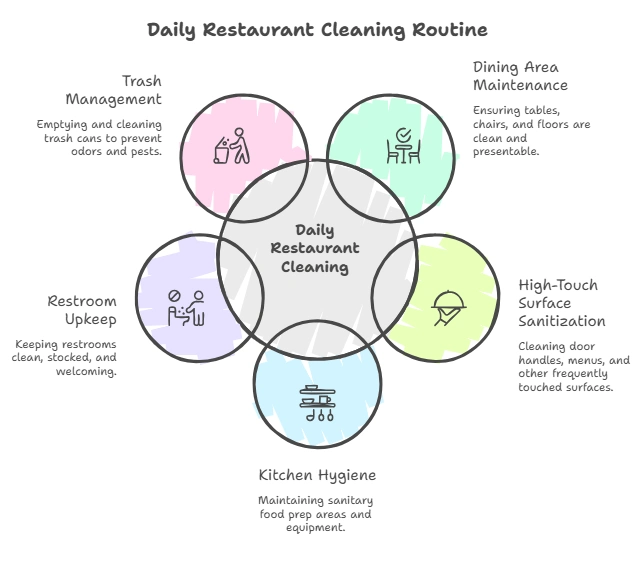
Daily cleaning tasks are essential for the minute-to-minute upkeep of your establishment. These are the non-negotiable cleaning tasks that your staff should perform every shift to ensure a safe and welcoming environment for guests. This routine focuses on high-traffic and high-touch areas that accumulate dirt and germs quickly.
From the moment you open until you close, these duties help maintain cleanliness. This includes everything from ensuring food prep areas are sanitary to keeping the dining room presentable. A consistent daily routine prevents grime from building up and makes deeper cleaning easier down the line.
Here are some key daily cleaning tasks:
- Wipe and sanitize all dining tables and chairs.
- Clean and sanitize high-touch surfaces like door handles and menus.
- Sweep and mop floors in the kitchen and dining areas.
- Sanitize all food prep areas and surfaces.
- Empty and clean all trash cans.
- Clean and restock restrooms.
- Wipe down kitchen equipment like grills and stovetops.
Weekly and Monthly Deep Cleaning Routines
While daily cleaning maintains surface hygiene, weekly and monthly deep cleaning routines are crucial for tackling the grime that accumulates over time. These tasks go beyond the surface to ensure your restaurant is truly clean from top to bottom. This level of cleaning often requires more time and specialized attention.
Think of these routines as a reset for your restaurant. This is when your team will address areas that aren’t part of the daily rush, such as cleaning behind heavy appliances or scrubbing grout lines. A deep cleaning checklist helps organize these less frequent but vital jobs.
Key weekly and monthly deep cleaning tasks include:
- Deep clean the fryer and boil it out.
- Clean and delime sinks, faucets, and dishwashers.
- Scrub floor drains and grout lines.
- Clean behind and under heavy kitchen appliances.
- Inspect and clean ventilation systems and exhaust hoods.
Cleaning High-Priority Areas in Restaurants
Some areas in your restaurant carry a higher risk for contamination and have a greater impact on customer satisfaction. Focusing your cleaning efforts on these high-priority zones is essential for upholding food safety standards and ensuring guests have a positive experience. The kitchen and dining areas are at the top of this list.
Properly cleaning kitchen equipment and food prep surfaces is non-negotiable to prevent foodborne illnesses. Similarly, a clean dining area and front-of-house directly influence how customers perceive your establishment. Let’s look at the best practices for keeping these critical areas spotless.
Kitchen Equipment and Food Prep Surfaces
The heart of your restaurant, the kitchen, demands the highest standards of cleanliness. Kitchen equipment and food prep areas are ground zero for preventing cross-contamination and ensuring food safety. Every surface that comes into contact with food must be cleaned and sanitized regularly throughout the day.
This includes obvious items like cutting boards and countertops, but also the nooks and crannies of your equipment where food waste can hide. Grills, stovetops, slicers, and mixers must be wiped down after use to remove food particles and prevent stains. Utensils should be thoroughly washed in a high-temperature dishwasher or by hand using the proper three-sink method.
A clean kitchen isn’t just about passing inspections; it’s about respecting the food you serve and the customers who eat it. Consistent cleaning of all food prep areas and equipment helps maintain the quality of your dishes and protects your patrons from potential health risks.
Dining Area and Front-of-House Best Practices
The dining area is where your customers form their first and lasting impressions. A clean and inviting front-of-house signals professionalism and care, directly impacting the overall customer experience. From the moment a guest walks in, they are subconsciously evaluating the cleanliness of their surroundings.
Maintaining this area involves more than just wiping down dining tables between guests. Attention must be paid to floors, chairs, windows, and even the menus. It’s also crucial to mop restroom floors and keep them consistently stocked and sanitary. These details contribute to a comfortable and positive atmosphere for your diners.
Follow these best practices for a sparkling front-of-house:
- Sanitize tables, chairs, and high chairs after every use.
- Regularly clean and inspect upholstery for stains or damage.
- Keep floors free of debris and spills.
- Implement procedures to manage allergen risks in the dining area.
- Ensure restrooms are impeccable at all times.
Importance of Grease Trap and Ventilation Cleaning
Beyond the visible surfaces, two critical systems require regular attention: the grease trap and ventilation system. Neglecting these areas can lead to serious problems, including fire hazards, foul odors, poor air quality, and even mold buildup. Proper maintenance is not just a cleaning task; it’s a safety requirement.
Regular grease trap cleaning prevents blockages and backups, while professional hood cleaning keeps your kitchen’s air fresh and reduces fire risks. Both are essential for a safe, compliant, and pleasant restaurant environment. Let’s examine why these two tasks are so important.
Why Grease Trap Maintenance Matters
Your restaurant’s grease trap plays a vital role in managing food waste and preventing plumbing nightmares. It’s designed to intercept fats, oils, and grease from wastewater before they enter the municipal sewer system. When this device isn’t cleaned regularly, it can lead to a host of problems that are both costly and hazardous.
A full or clogged grease trap can cause foul odors to back up into your kitchen and dining areas, creating an unpleasant experience for everyone. Worse, it can lead to sewer blockages, which may result in raw sewage backing up into your restaurant—a major health code violation and a surefire way to fail health inspections.
The buildup of grime and old food waste also creates a breeding ground for bacteria, increasing the risk of contamination. Regular maintenance is the only way to ensure your grease trap functions correctly, keeping your restaurant safe, sanitary, and compliant with local regulations.
Maintaining Air Quality Through Vent and Hood Cleaning
Clean air is a crucial component of a healthy kitchen environment. Your kitchen’s ventilation system, including the exhaust hoods and vents, works hard to remove smoke, steam, and airborne grease. Over time, a sticky buildup of grease and grime accumulates within the system, posing significant risks.
This buildup is highly flammable and is a leading cause of restaurant fires. Regular, professional hood cleaning is essential to mitigate this danger. Furthermore, a clogged ventilation system cannot effectively filter the air, leading to poor indoor air quality, lingering odors, and an uncomfortable working environment for your kitchen staff.
Including vent and hood cleaning in your comprehensive kitchen cleaning checklist is a critical step for safety and operational efficiency. It ensures your system runs effectively, protects your property from fire, and provides a healthier atmosphere for both your employees and your guests.
Choosing Safe and Effective Restaurant Cleaning Products
Using the right cleaning products is just as important as the cleaning process itself. Not all cleaning agents are created equal, and using the wrong ones can be ineffective or even dangerous in a food service environment. Selecting products that are both effective against grime and stains and safe for use in a commercial kitchen is key.
You need to ensure your chosen supplies meet safety compliance standards, especially for surfaces that come into contact with food. From degreasers to disinfectants and even basic supplies like paper towels, making informed choices protects your staff, customers, and equipment. Let’s discuss how to select and use these products correctly.
Selecting Approved Cleaning Agents and Chemicals
When it comes to a restaurant, you can’t just grab any cleaner off the shelf. Cleaning agents used in a commercial kitchen must be approved for food service use to ensure they don’t leave harmful residues behind. It’s crucial to select products specifically formulated for their intended purpose, whether it’s degreasing a grill or sanitizing food contact surfaces.
Always check product labels to confirm they are food-safe and follow the dilution instructions carefully. Using a chemical at the wrong concentration can render it ineffective or, conversely, make it hazardous. Your restaurant cleaning checklist should specify which cleaning agents to use for each task to avoid confusion.
Here are a few tips for selecting the right products:
- Choose sanitizers (like quaternary ammonium or chlorine solutions) approved for food contact surfaces.
- Use a powerful degreaser for kitchen equipment and floors.
- Select a neutral pH floor cleaner to mop floors without damaging the finish.
- Have a glass cleaner on hand for windows and mirrors.
- Ensure all products are compliant with local health department regulations.
Proper Usage and Storage for Safety Compliance
Once you’ve selected the right cleaning products, using and storing them properly is the next critical step for safety compliance. All staff members who handle chemicals should be trained on their correct application, including appropriate dilution rates and required personal protective equipment (PPE), such as gloves or eye protection.
Never mix different cleaning products, as this can create toxic fumes. For example, mixing bleach and ammonia produces a dangerous gas. Label all spray bottles clearly to prevent accidental misuse. This simple step can prevent chemical burns or accidental ingestion, ensuring a safer workplace for your team.
Proper storage is also a key part of safety compliance. Cleaning products must be stored in designated storage areas, away from food and food prep zones, to prevent any risk of chemical contamination. Keep chemicals in their original containers and ensure storage areas are well-ventilated and secure.
Partnering With Professional Restaurant Cleaning Services
While your staff can handle daily cleaning, some deep cleaning tasks are best left to the experts. Partnering with professional restaurant cleaning services ensures that challenging jobs like commercial kitchen cleaning, hood degreasing, and floor waxing are done correctly and efficiently. This can save you time and ensure a higher level of cleanliness.
Choosing a company with proven reliability is key to getting the results you need. A professional service can elevate your restaurant’s hygiene, contributing to better health scores and greater customer satisfaction. For those in Texas and beyond, finding the right partner makes all the difference.
How to Select a Reliable Local Cleaning Provider
Choosing the right partner for your restaurant cleaning services is a decision that impacts your daily operations and reputation. You need a provider that understands the unique demands of the food service industry and has a track record of reliability. A great cleaning service works as an extension of your team, helping you stay prepared for surprise visits from health inspectors.
When vetting potential cleaning services, look beyond the price. Ask for references from other restaurants and inquire about their experience with commercial kitchen cleaning. A reliable company will be transparent about its processes, the products it uses, and the training its staff receives.
Consider these factors when making your choice:
- Experience in the restaurant industry.
- Positive reviews and references.
- Proof of insurance and bonding.
- Knowledge of local health codes.
- Flexibility to work around your operating hours.
- A clear and detailed service agreement.
The Benefits of Working With Naomi’s Cleaning Services
When it comes to professional restaurant cleaning services, you need a partner you can count on. Naomi’s Cleaning offers the reliability and expertise your restaurant deserves. With extensive experience in the industry, our team understands the high standards required for a food establishment to not only meet but exceed health and safety regulations.
We pride ourselves on our meticulous approach to every job, from deep kitchen cleaning to maintaining a pristine dining area. entrusting your cleaning needs to us, you free up your staff to focus on what they do best: creating an exceptional customer experience. Our goal is to ensure your restaurant is always inspection-ready and welcoming to guests.
Choosing Naomi’s Cleaning Services means investing in peace of mind. We use industry-approved products and methods to deliver a consistently high-quality clean. Let us handle the tough jobs, so you can focus on running your business with confidence, knowing your restaurant’s cleanliness is in expert hands.
Training Restaurant Staff for Optimal Cleanliness
A clean restaurant is a team effort. Even with the best cleaning schedule, achieving optimal cleanliness depends on your staff’s commitment and knowledge. Proper training is essential to ensure everyone understands their role in maintaining hygiene, from front-of-house servers to back-of-house kitchen crew.
Effective training establishes consistency and accountability, embedding best practices into your restaurant’s culture. When your team knows the “what, why, and how” of your cleaning procedures, they become your first line of defense in upholding food safety standards. Let’s look at how to create clear procedures and foster a sense of ownership.
Creating Clear Restaurant Cleaning Procedures
Clarity is the key to consistency. To ensure every staff member is on the same page, you must create and document clear cleaning procedures. This goes beyond simply handing them a cleaning checklist; it involves showing them exactly how each task should be performed to meet your standards.
Develop detailed, step-by-step instructions for all cleaning tasks, from sanitizing a tabletop to deep cleaning a fryer. Visual aids, such as posters with pictures or short videos, can be incredibly effective training tools. Your cleaning schedule should be easy to access and understand, with responsibilities clearly assigned.
To build a strong foundation for your cleaning program, be sure to:
- Provide hands-on demonstrations during onboarding.
- Use a detailed cleaning checklist for daily, weekly, and monthly tasks.
- Post visual guides in relevant areas (e.g., handwashing instructions by sinks).
- Create a master cleaning schedule that assigns specific duties to roles or shifts.
Encouraging Accountability and Consistency Among Employees
Creating procedures is one thing; ensuring they are followed is another. Encouraging accountability and consistency among your staff is crucial for the long-term success of your cleaning program. This starts with setting clear expectations from day one and leading by example.
Managers should regularly inspect completed work to ensure it meets the required standards. When a staff member does an excellent job, acknowledge their effort. This positive reinforcement fosters a sense of pride and ownership. Conversely, if tasks are missed or done poorly, address it constructively and provide retraining if necessary.
Ultimately, building a culture of cleanliness means every team member understands that their contribution matters. Whether it’s the person who mops the floors at closing or the server who sanitizes a table, everyone plays a part in keeping the restaurant safe and ready for health inspections. This shared responsibility is the cornerstone of consistency.
Best Practices and Tips for Maintaining Restaurant Cleanliness
Maintaining a clean restaurant is an ongoing commitment that requires more than just a one-time effort. Adopting a set of best practices will help integrate cleanliness into your daily operations seamlessly. These practices revolve around proactive planning, consistent execution of cleaning tasks, and a deep understanding of food safety.
Using a detailed restaurant cleaning checklist is a great start, but true mastery comes from building habits that prevent contamination before it happens. From establishing effective schedules to training staff on preventing the spread of germs, these tips will help you keep your restaurant spotless.
Establishing Effective Cleaning Schedules
An effective cleaning schedule is the roadmap to a consistently clean restaurant. It breaks down an overwhelming list of tasks into manageable daily, weekly, and monthly duties. This structured approach ensures that regular cleaning happens on time and that nothing falls through the cracks, keeping you prepared for unexpected health inspections.
Your schedule should be tailored to your restaurant’s specific needs, considering its size, traffic, and menu. A busy diner will have different cleaning demands than a quiet fine-dining establishment. The key is to create a realistic and sustainable plan that your team can follow.
Here’s how to establish an effective cleaning schedule:
- Use a deep cleaning checklist to identify all necessary tasks.
- Assign tasks to specific shifts or roles to ensure accountability.
- Incorporate both daily routines and less frequent monthly tasks.
- Schedule deep cleaning during off-peak hours or closure to minimize disruption.
- Regularly review and adjust the schedule as needed.
Preventing Cross-Contamination and Upholding Food Safety
One of the most critical aspects of restaurant cleanliness is preventing cross-contamination. This occurs when harmful germs are transferred from one surface or food to another, and it is a leading cause of foodborne illness. Upholding food safety is your primary responsibility, and it relies on strict cleaning and handling protocols.
A key practice is using separate equipment, like cutting boards and utensils, for raw and cooked foods. Color-coding these items can provide a simple visual cue for staff. Regular handwashing is also non-negotiable to prevent the spread of bacteria. Your team must be trained to wash their hands frequently, especially after handling raw meat or switching tasks.
Furthermore, proper cleaning and sanitizing of all food contact surfaces are essential to eliminate pathogens. This includes being mindful of allergens and having procedures in place to prevent their transfer to other foods. A vigilant approach to preventing contamination is the backbone of a safe kitchen.
Conclusion
In conclusion, maintaining a clean and sanitary restaurant environment is not just about aesthetics; it’s vital for the health and safety of your customers and staff. implementing a comprehensive cleaning strategy that includes daily, weekly, and monthly tasks, you can ensure that every corner of your establishment is spotless and welcoming. Working with a professional service like Naomi’s Cleaning Services can provide you with the expertise and reliability needed to uphold these standards. Remember, a clean restaurant not only enhances your reputation but also contributes to a positive dining experience, encouraging repeat business and customer loyalty. If you’re ready to elevate your restaurant’s cleanliness, consider partnering with us today!
Frequently Asked Questions
How much does professional restaurant cleaning typically cost?
The cost of professional restaurant cleaning services varies based on the restaurant’s size, the frequency of cleaning, and the specific services required. Hourly rates can range from $20 to $150. For a reliable quote tailored to your needs in Texas, it’s best to contact a provider like Naomi’s Cleaning Services for a detailed estimate.
How often should a restaurant schedule deep cleaning?
A restaurant should schedule full deep cleaning monthly. This includes tasks from your kitchen cleaning checklist like cleaning behind equipment and scrubbing drains. Some items, like exhaust hoods, may require professional cleaning every three to six months, depending on usage and local codes, to ensure consistency and safety.
What cleaning products are safe and effective for restaurants?
Safe and effective cleaning products for restaurants include food-grade sanitizers (like quaternary ammonium), powerful degreasers, and neutral-pH floor cleaners. Always choose cleaning agents that meet safety compliance standards and are approved for use on food contact surfaces to prevent contamination and ensure food safety. Look for labels that explicitly state they are safe for food service environments.