Key Highlights: A toilet plunger is your first and most effective tool for a clogged toilet. For a simple clog, a mix of hot water and dish soap can break up the blockage. Baking soda and vinegar create a fizzing reaction that can dissolve organic waste in your toilet drain. Avoid using harsh chemical drain cleaners, as they can cause major plumbing problems. For stubborn clogs, a toilet auger can reach deeper into the pipes. If DIY methods fail, it’s time to call a professional plumber for help.
Introduction
A clogged toilet is one of the most common and frustrating household issues you can face. When the water in the toilet bowl rises instead of draining, it can cause a moment of panic. The good news is that you don’t always need to call for professional help right away. Many blockages in your toilet drain can be cleared with a few simple tools and techniques. This guide will walk you through quick solutions to get your toilet back in working order.
Understanding Toilet Drain Blockages
Toilet clogs happen when something obstructs the toilet drain, preventing waste and water from flowing through your plumbing system. These blockages can range from simple buildups of toilet paper to more serious obstructions caused by foreign objects.
Understanding what causes these issues is the first step to fixing them and preventing them in the future. Knowing the signs of a blockage helps you act quickly before the problem gets worse. Let’s look at the common causes and signs of a clogged toilet drain.
Common Causes of Toilet Clogs
What causes toilets to become blocked and stop draining? Most toilet clogs are preventable and happen because of what goes into the toilet bowl. Flushing items that don’t break down easily is a primary culprit. Your toilet is only designed to handle human waste and toilet paper.
Certain items are notorious for causing blockages in the toilet drain. These include:
- Using too much toilet paper at once
- Flushing “flushable” wet wipes, which don’t dissolve like toilet paper
- Disposing of paper towels, diapers, or feminine hygiene products in the toilet
In some cases, the problem can be more complex. Older plumbing systems can accumulate mineral deposits that narrow the pipes over time. In severe instances, invasive tree roots can grow into your main sewer line, causing persistent backups.
Signs Your Toilet Drain is Blocked
How can you tell if your toilet drain is clogged? The signs are usually obvious and require immediate attention. A key indicator is a slow-draining toilet bowl. After you flush, you might notice the toilet water taking a long time to recede or not draining at all.
Other common signs that point to a clogged toilet include:
- The water level in the bowl rises higher than usual after flushing.
- Gurgling sounds coming from your pipes or drain hole.
- Water backing up into your shower or tub when you flush the toilet.
If you see these signs, it’s a clear signal that there’s an obstruction somewhere in your plumbing. A running toilet might also indicate a partial clog that is affecting the water flow. Addressing it early can prevent a messy overflow.
What You’ll Need to Unblock a Toilet Drain
Before you tackle a clog, it’s a good idea to gather your supplies. Having the right tools on hand makes the job easier and more effective. For most minor clogs, a good toilet plunger and some basic household items like dish soap are all you need.
For more stubborn blockages, you might need a drain snake or a closet auger. We’ll cover the essential tools and materials you should have ready, as well as important safety steps to take before you begin.
Essential Tools and Materials
What are the most effective ways to unblock a toilet drain at home? Success often comes down to using the right tool for the job. A flange toilet plunger is designed specifically for toilets and creates a better seal than a standard cup plunger. For deeper clogs, a toilet auger, also known as a closet auger or plumbing snake, is essential.
You will also want some basic protective gear and cleaning supplies. A pair of rubber gloves will keep your hands clean and protected. Having old towels or paper towels nearby is smart in case of any splashes. Some household items like dish soap can also be very helpful.
Here is a quick list of tools and materials:
| Tool/Material | Purpose |
|---|---|
| Flange Plunger | Creates a tight seal to dislodge clogs |
| Rubber Gloves | Protects your hands from germs and water |
| Toilet Auger/Plumbing Snake | Breaks up or pulls out stubborn, deep clogs |
| Dish Soap & Hot Water | Helps lubricate and dissolve organic blockages |
| Bucket | To add or remove water from the bowl |
Safety Precautions Before Getting Started
Your safety should always come first when dealing with plumbing issues. Before you start, put on a pair of sturdy rubber gloves. This protects you from splashing toilet water and any germs. It’s also wise to lay down old towels around the base of the toilet to catch any spills and make cleanup easier.
One of the most important safety tips is to avoid using a chemical drain cleaner. Is it safe to use chemical drain cleaners like Drano in toilets? The answer is generally no. These products contain harmful chemicals that can damage your pipes, leading to corrosion and major plumbing problems down the road. They can also cause serious burns if they splash on your skin.
Stick to safer, mechanical methods or household solutions. Keep these points in mind:
- Always wear rubber gloves and eye protection.
- Never mix different cleaning products, especially chemical ones.
- If a clog is too difficult, it’s safer to call a professional Plumber than to risk damaging your plumbing.
Step-by-Step Guide to Unblocking a Toilet Drain (Beginner’s Guide)
Now that you have your tools and have taken safety precautions, you’re ready to tackle that clog. This beginner’s guide provides easy steps for clearing most toilet clogs. We will start with the simplest methods, like using a toilet plunger to create a good seal, before moving on to household remedies.
Whether you’re using a plunger, hot water and dish soap, or baking soda and vinegar, these instructions will help you clear your toilet drain effectively. Follow along to find the best solution for your situation.
Step 1: Assess the Severity of the Clog
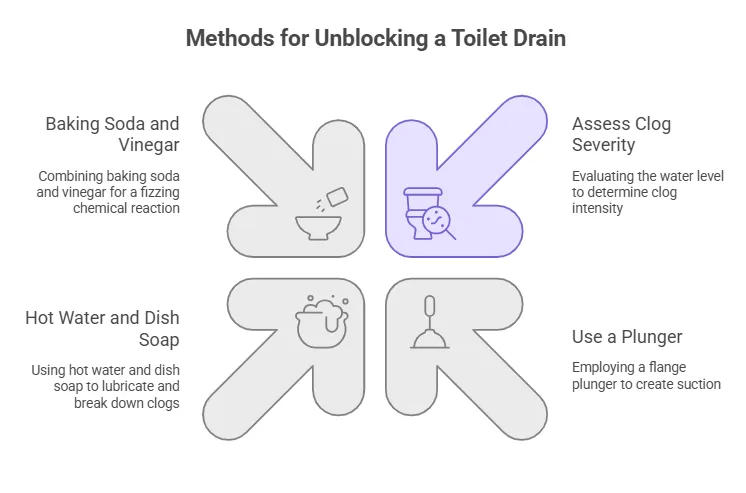
The first step is to look inside the toilet bowl. The water level can tell you a lot about the clog. If the bowl is full to the brim, do not flush it again, as it will likely overflow. If the toilet water has drained slowly, you may have a partial clog.
Before trying any method, you might want to wait a bit. How long should you wait? Sometimes, if the clog is just excess toilet paper, giving it 30 minutes to an hour allows the water to break it down naturally. If the water level drops on its own, the clog may be clearing itself.
If the water level remains high or doesn’t move at all, you have a more solid blockage. In this case, you’ll need to remove some water from the bowl with a small cup or container before proceeding. This will prevent splashing when you start working on the clog.
Step 2: Use a Plunger Effectively
What is the quickest way to unclog a toilet with a plunger? It’s all about technique. Start with a flange plunger, which has an extra lip of rubber designed to create a tight seal in the toilet’s drain hole. Make sure there is enough water in the bowl to cover the plunger’s rubber cup. If not, add some from the sink.
Place the plunger over the drain hole, ensuring the flange is inside the opening. The first push should be gentle to release any trapped air. This prevents a messy splash. Now you’re ready to plunge with force.
Follow these steps for the best results:
- Push and pull with a firm, steady up-and-down motion for about 20-30 seconds.
- The goal is to use water pressure to dislodge the clog, not just push air.
- After plunging, break the seal and see if the water starts to drain. You may need to repeat the process a few times for stubborn clogs.
Step 3: Try Hot Water and Dish Soap
How can you unclog a toilet without using a plunger? A simple but effective method involves hot water and dish soap. This combination is great for toilet clogs caused by grease or organic materials, as it helps lubricate the blockage and break it down.
Start by pouring a generous amount, about half a cup of liquid dish soap, into the toilet bowl. Let it sit for a few minutes to allow the soap to sink down and coat the clog. While you wait, heat about a gallon of water on the stove. The water should be very hot, like for tea, but not boiling. Pouring boiling water into a cold porcelain bowl can crack it.
After the dish soap has settled, follow these steps:
- Carefully pour the hot water into the toilet bowl from about waist height. The force of the pour helps push the clog through.
- Let the mixture sit for 20-30 minutes. The heat and soap will work together to dissolve and clear clogs. Then, try flushing.
Step 4: Explore Baking Soda and Vinegar Methods
Are there eco-friendly methods to unblock a toilet drain? Absolutely. A mixture of baking soda and white vinegar is a classic, non-toxic solution. This method creates a powerful fizzing chemical reaction that can break down stubborn clogs without harming your pipes.
To begin, make sure the water in the toilet bowl is at its normal level. If it’s too high, remove some. If it’s too low, add a little warm water. First, pour one cup of baking soda directly into the bowl. Let it settle around the drain opening.
Next, slowly pour two cups of vinegar into the bowl. The mixture will start to bubble and fizz immediately as it releases carbon dioxide.
- Let the solution work for at least 30 minutes. For tougher clogs, you can let it sit for an hour or even overnight.
- Once the fizzing stops and the time is up, flush the toilet to see if the clog has cleared.
Additional Methods for Stubborn Toilet Clogs
Sometimes, a plunger or a home remedy isn’t enough to clear stubborn clogs. If you’ve tried the basic steps and your toilet is still blocked, it’s time to consider more powerful alternative methods. These situations may require specialized tools designed to handle deeper or more solid obstructions.
A toilet auger, also called a plumbing snake or closet auger, is the next tool to try. If even that doesn’t work, the clog may be deep in your plumbing system, which could signal major plumbing problems that require a professional plumber.
Using a Toilet Auger or Plumbing Snake
A toilet auger, or closet auger, is a special type of plumbing snake designed to navigate the curves of a toilet without scratching the porcelain. It is one of the most effective ways to clear stubborn clogs that are just beyond the reach of a plunger. The tool consists of a long, flexible cable with a crank handle.
To use it, carefully feed the end of the auger cable into the toilet drain. The protective rubber sleeve on the auger will prevent any damage to the bowl. Once you feel resistance, you’ve reached the clog.
Start turning the crank handle clockwise. This will either break up the obstruction or hook onto it so you can pull it out. Continue cranking and pushing gently until the clog is cleared and you feel less resistance. Retract the cable, remove the auger, and flush the toilet to check the water flow.
When to Avoid Chemical Drain Cleaners
It can be tempting to reach for a chemical drain cleaner when faced with a tough clog, but it’s best to avoid them. These harsh chemical drain cleaners contain powerful, corrosive substances that can do more harm than good. They can eat away at your pipes, especially if you have an older plumbing system, leading to leaks and other major plumbing problems.
Furthermore, if the drain cleaner fails to clear the clog, you’ll be left with a toilet bowl full of toxic chemicals. This creates a dangerous situation for anyone who tries to plunge or snake the drain afterward. The harmful chemicals can splash, causing skin and eye injuries.
Here’s why you should choose alternative methods:
- Chemicals can permanently damage PVC, galvanized steel, and cast iron pipes.
- They are harmful to the environment and can contaminate groundwater. If you have a clog that requires more than a plunger or auger, calling a professional is a much safer and more effective solution.
Conclusion
In conclusion, unblocking a toilet drain can be a straightforward task if you approach it with the right tools and techniques. Understanding the common causes of blockages and recognizing the signs of a clogged toilet will empower you to tackle the problem efficiently. Whether you choose to utilize a plunger, hot water and dish soap, or explore natural methods like baking soda and vinegar, having a step-by-step guide can make all the difference. Remember that prevention is key—by being mindful of what goes down your toilet and implementing regular maintenance, you can minimize future issues. If you need further assistance or professional help, don’t hesitate to reach out to our team at Principled Plumbing for reliable solutions.
Frequently Asked Questions
Can household items be used to unclog a toilet drain?
Yes, common household items can be very effective for minor toilet clogs. A mixture of hot water and dish soap can help lubricate and break down blockages in the toilet drain. Similarly, a combination of baking soda and vinegar creates a fizzing action that can dissolve organic waste.
Are eco-friendly solutions safe for my plumbing?
Eco-friendly solutions like baking soda and white vinegar are completely safe for your plumbing system. Unlike a harsh chemical drain cleaner, they won’t corrode your pipes or damage the porcelain of your toilet bowl. They are a gentle yet effective option for breaking down common clogs.
What should I do if my toilet won’t drain after trying these methods?
If your clogged toilet won’t drain after several attempts with DIY methods, it’s time to call a professional plumber. A persistent clog may indicate major plumbing problems deeper in your drain line. Seeking professional help will ensure the issue is fixed correctly without causing further damage.
How can I prevent future toilet drain blockages?
To prevent future clogs, only flush human waste and a reasonable amount of toilet paper down your toilet bowl. Avoid flushing items like paper towels, wet wipes, or diapers, as these do not break down in the plumbing system and are a common cause of blockages.