Many homeowners get stressed when they have plumbing problems that keep coming back. If you feel fed up with trying to fix issues like low water pressure or water that looks odd, you might want to think about replacing your whole plumbing system. Repipe plumbing means you put in new pipes through your home. This fixes problems with your plumbing and gives you more value for your house. It stops bigger problems later. With new pipes, you get good water pressure and clean water for many years.
Key Highlights
Here are the key takeaways from our guide to repipe plumbing:
- Repipe plumbing is a complete replacement of the hot and cold water supply pipes in your home.
- This process resolves persistent plumbing issues like low water pressure, leaks, and discolored water.
- The repiping process involves installing new piping, often alongside the old system, to ensure minimal disruption.
- Key materials for new piping include durable copper and flexible, cost-effective PEX tubing.
- While a significant investment, repiping provides long-term cost savings by preventing future damage.
Understanding Repipe Plumbing and When It’s Needed
Repiping means taking out old pipes from your plumbing system and putting in new ones. If the pipes in your home keep leaking or have a lot of damage, it is often better and saves money to do a repipe instead of fixing each small problem. This repiping is a very important change that helps guard your house against the potential damage from a burst pipe.
Choosing to repipe your home is not a small decision, but sometimes it is needed when your entire system is showing trouble. If there are problems in your plumbing that do not go away, it means more leaks could show up soon. It is good to know what repiping is and to watch for signs of trouble. Doing this will help you decide what is best for your property and your plumbing.
What Is Repipe Plumbing?
So, what is repipe plumbing? It means replacing all the hot and cold water pipes inside your house. This type of plumbing work does more than fix leaks. It puts in new pipes for the whole house, starting from the water meter. New pipes are put in everywhere water goes in your home. This is not the same as working on the drainage pipes, which carry water away.
You can think about your plumbing system like you think about the human body. The pipes are like blood vessels. They help clean water get in and take waste out. Over time, the pipes can start to wear out or get blocked. They may even rust inside. Repiping is like giving the home a new set of blood vessels. With new pipes, your plumbing system can work well again and help avoid big problems.
Getting new plumbing like this becomes needed when the current pipes are old or breaking down. If you keep getting leaks, have low water pressure, or notice rusty water, your system is likely too old for simple fixes. That is when repiping is a good, long-term answer. It can give you clean water again and solve lasting plumbing issues.
Common Signs Your Home Needs Repiping
How can you know if it’s time to upgrade the plumbing in your home? The signs are clear if you look. Changing out your old pipes before there is a big problem, like a burst pipe, can save you from lots of trouble and damage from water.
A good way to start is to check the age of your house. Is your home 50 years or older? If you still have the original pipes, they may be close to wearing out. Pipes get old over time. When there is rust and corrosion, the problems get worse—especially with pipes made from galvanized steel. The U.S. Environmental Protection Agency says that lead pipes, put into homes before the 1980s, are risky for health and need to be changed.
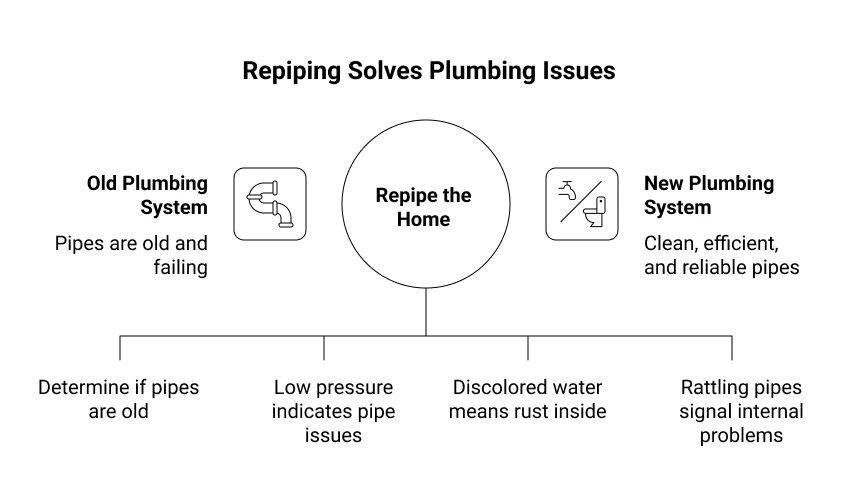
Here are some things in your plumbing system that mean you should think about repiping:
- Low water pressure: Water flow gets slower over time. This comes from rust and bits of minerals piling up inside your pipes.
- Discolored water: Water may look reddish or brown. That is because of rust and corrosion in the pipes.
- Frequent leaks: If you see drips or have pinhole leaks often, your pipes are breaking down inside.
- Noisy pipes: Hearing sounds like rattles, clangs, or clacks means something is wrong deep in your plumbing system.
Exploring Repiping Materials: PEX, Copper, and More
When you are ready to repipe your home, picking the right material for the new plumbing pipes is key. Most people use copper piping or PEX tubing now. Your choice often depends on your budget, how easy the installation is, and what you want for long-term water supply performance.
Old piping like lead pipes and polybutylene piping are not good to keep. They have health risks and fail often, so they need to be replaced. Learning about the pros and cons of copper piping and PEX tubing helps you know what is best for your home’s new plumbing. This is important for the water supply system and your family’s safety.
Pros and Cons of Different Repiping Materials
Your choice of piping for new plumbing sets the price and how long it will last. Copper piping has been the top pick for water systems for years. It’s strong, fights off corrosion, and lasts a long time. But copper is more costly, and you need skilled work to put it in. The joints should be soldered by a professional.
PEX tubing is now used in many new homes. This piping is made from flexible plastic. It’s cheaper than copper piping, lighter, and quicker to fit. It bends around corners easily. This means there’s fewer fittings used, so there are less places where leaks could start. It’s very tough too. Still, there are people who like copper for its good history.
Here is a quick comparison:
- Copper Piping: This lasts long and does not rust, but it costs more for both materials and labor.
- PEX Tubing: It’s not as pricey, is flexible, and gets installed fast. Many choose it today for new plumbing.
- Galvanized Steel: It can rust and get corrosion, which slowly makes water move slower in the pipes.
- Lead Pipes: These are bad for health. If you to see them, you need to take them out and put in new piping right away.
How to Choose the Right Material for Your Home
Choosing the right material for your new piping is important. You have to think about your budget and how your home is set up. The best thing you can do is talk with a plumbing expert. A plumber will look over your current piping and help you pick the best material for what you need.
If saving money is what you care about most, PEX is a good way to go. PEX costs less than copper and is simpler to put in, which helps you pay less for the whole job. It can be used for hot water pipes and cold ones too. PEX bends easily, so it works well where there are tight spots, like in old homes, and you do not have to break down many walls.
But, if you want your new piping to last as long as possible and you can pay more in the beginning, copper is a great choice. Copper has been used for many years. People trust it for being reliable. Copper is one of the best materials you can pick for your hot water pipes and for your whole plumbing system if you want the highest quality. In the end, a plumber can show you the good and bad sides of both PEX and copper to help you choose what works best for you.
The Repiping Process: What Homeowners Should Expect
Starting a repipe project may feel a bit scary at first, but knowing how the repiping process works can help you worry less. When a skilled plumber does the plumbing work, they try to keep any trouble to your day-to-day life as small as possible. The repiping job is not simple. It needs planning and careful work.
This is not the time for a do-it-yourself fix. A full repipe calls for breaking into some walls, having special plumbing skills, and following the rules in your area. hiring a licensed plumber, you can be sure the repiping will be safe and done right. The next few parts will talk about each step in the repiping process and show you, in detail, how long a whole-house repipe will usually take.
Steps Involved in Repiping a House
The repiping process has a clear plan. This is done to make the change from your old plumbing system to the new one easy. First, a plumber will come and check your current system. He will talk with you about what materials to use. The plumber will also give you an estimate for how much it will cost to repipe your whole house.
After you say yes to start, the plumber might need to get permits from your local government. Before the work starts, the team protects your floors and your furniture. They want to keep your things safe. To add the new pipes, small and exact cuts are made in the drywall. The new pipes are usually put in while the old system is still there. This way, you have water for most of the time.
At the end, the new pipes are joined with your plumbing fixtures and the main water supply line. Below is a simple step-by-step list of the repiping process:
- Initial inspection and free estimate.
- Preparation of the work area to protect your home.
- Installation of the new pipe network.
- Final switchover from the old system to the new one.
- Testing the system for leaks and pressure, followed by drywall repair.
Timeline and Disruption: How Long It Takes and How to Prepare
A lot of homeowners worry about how long the repiping process will take and if it will mess up their routine. If you have a smaller home, the whole repipe might take only two or three days. For bigger homes with lots of bathrooms, it can take about a week. The plumber will let you know the real timeline after looking at the size and layout of your house.
The good thing is, you probably won’t have to go stay somewhere else while the plumbers work. The plumbing team plans out the repiping process to cause minimal disruption to you and your family. Most of the time, the plumber will make sure you can still use at least one bathroom during the repipe. The only time you may not have running water is when they switch everything over from the old to the new piping, and that won’t take long.
It’s smart to help by moving any personal things out of the work areas before the plumber arrives. Make sure there is a clear walkway for them to carry out the repiping without problems. Talking with the plumbers about the repiping work schedule can help you figure out how to plan your daily routine. Taking these steps means the plumbing team can finish their work faster and get your home back to normal with as little disruption as possible.
Costs and Savings: Breaking Down Your Investment
It is important to know what you get when you spend money on a full repipe job. At first, the repipe cost can look high. But this is something you do for your home’s future. When you put in new pipes, you stop the problems that can come with burst pipes, possible damage, mold contamination, and having to do lots of repairs over time. Doing this can help you save a lot of money later.
Getting a new plumbing system will also make your water supply better and more steady. You can get good pressure and cleaner water this way. If you only have one small issue, you may think about doing a simple repair. But if your pipes are old, a complete repipe is better than fixing them little by little because it costs less in the long run. Now, let’s look at what can change how much a repipe job will cost.
Typical Costs by Home Size and Material Used
The cost to repipe a house can vary significantly, typically ranging from $5,000 to $15,000 or more. The final price depends on several factors, including the size of your home, the number of bathrooms and plumbing fixtures, and the accessibility of the pipes. Homes built on a slab foundation, for example, may require more extensive plumbing work than those with a crawl space.
The material you choose is one of the biggest factors affecting the overall costs. PEX is generally the more budget-friendly option due to lower material prices and faster installation time. Copper is a premium material that costs more for both the pipes themselves and the skilled labor required to install them.
For a typical 3-bedroom house, the cost can vary widely based on these factors. The table below provides a general estimate of costs based on home size and material. Keep in mind these are approximations, and you should always get a detailed quote from a professional plumber.
| Home Size (sq. ft.) | Estimated Cost with PEX | Estimated Cost with Copper |
|---|---|---|
| Under 1,500 | $4,500 – $7,000 | $6,000 – $10,000 |
| 1,500 – 2,500 | $6,000 – $9,500 | $8,000 – $13,000 |
| Over 2,500 | $8,500 – $15,000+ | $12,000 – $20,000+ |
Conclusion
To sum up, it’s important for you to know about repipe plumbing if there are old pipes or if you deal with leaks often. You should keep an eye out for signs that it is time to think about repiping. Picking the right materials is also key. This helps you make the best choices for your plumbing system, and it can save you money as the years go by. The repiping process might look hard at first. With the right steps and some good facts, you get less work or trouble in your home, and you stay calm from start to finish. If you might need repipe work done, you can ask for a free talk about your options. You can get tips from people who know plumbing and the repiping process so you get help that’s just right for your home and situation.