Web3 Explained simply, is the idea of a new version of the internet built on decentralization, where users control their own data instead of relying on big tech companies. If you have heard people talk about blockchain, cryptocurrency, or decentralized apps and felt confused, you are not alone. This guide breaks down what Web3 really means, how it works, and why so many people believe it could change the internet forever.
What Is Web3?
Web3 refers to the third generation of the internet. It moves away from centralized platforms owned by a handful of companies and shifts power toward users and communities.
In simple terms, Web3 uses blockchain technology to create an internet where information is stored across many computers instead of one central server. This makes it harder for a single company or government to control or shut down.
A Quick Look Back: Web1 and Web2
To understand Web3, it helps to know what came before it.
Web1 was the early internet. It was mostly static pages that people could only read, not interact with.
Web2 is the internet most of us use today. It introduced social media, video sharing, and interactive platforms. The catch is that a few large companies control most of the data and decide how it gets used.
Web3 aims to fix this by giving control back to individual users through decentralized networks.
How Does Web3 Work?
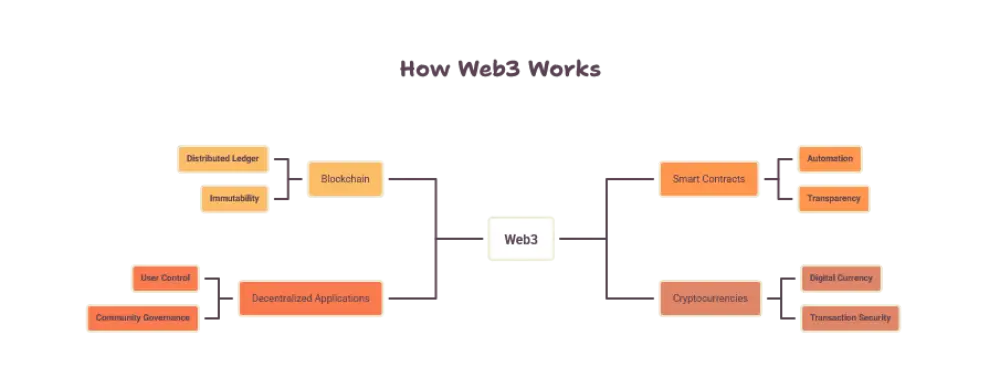
Web3 runs on blockchain technology. A blockchain is like a digital record book that many computers share and update together. No single person or company owns it.
Decentralization
Instead of storing data on one company’s servers, Web3 spreads it across a network of computers around the world. This reduces the risk of data being lost, censored, or controlled by one entity.
Smart Contracts
Smart contracts are self executing agreements written in code. They automatically carry out actions when certain conditions are met, without needing a middleman like a bank or lawyer.
Tokens and Digital Ownership
Web3 introduces the idea of digital ownership through tokens. These tokens can represent everything from currency to artwork to voting rights within an online community.
Key Features of Web3
Understanding the core features of Web3 makes it much easier to see why people are excited about it.
User Owned Data
In Web2, companies collect and profit from your personal data. Web3 flips this model so users own and control their own information.
Transparency
Because blockchain records are public and shared across many computers, transactions and activities become easier to verify and harder to manipulate secretly.
Permissionless Access
Anyone with an internet connection can generally access Web3 applications without needing approval from a central authority.
Interoperability
Many Web3 applications are designed to work together smoothly, allowing users to move assets and identities across different platforms more easily than in Web2.
Real World Examples of Web3
Web3 is not just a theory. It already powers real applications that people use every day.
Decentralized Finance
Often called DeFi, this allows people to lend, borrow, and trade financial assets without traditional banks acting as middlemen.
NFTs
Non fungible tokens represent unique digital items such as art, music, or collectibles, allowing verifiable ownership on the blockchain.
Decentralized Autonomous Organizations
Known as DAOs, these are community run organizations where decisions are made collectively by members instead of a central leadership team.
Why Web3 Matters
Web3 matters because it challenges the current internet structure where a small number of companies control most online activity and data.
It gives creators more direct control over their work. It allows communities to govern themselves through shared decision making. It also opens the door to new types of digital ownership that were not possible before.
While Web3 is still developing and faces real challenges around usability and adoption, its core idea, putting control back into the hands of users, is reshaping how people think about the future of the internet.
Challenges Facing Web3
No honest explanation of Web3 would be complete without mentioning its hurdles.
Complexity
Many Web3 tools and platforms are still difficult for everyday users to understand and navigate.
Scalability
Blockchain networks can struggle to handle large amounts of activity at once, which affects speed and reliability.
Regulation
Governments around the world are still figuring out how to regulate decentralized technologies, which creates uncertainty for developers and users alike.
The Future of Web3
As technology improves, Web3 is expected to become more user friendly and accessible. Developers are working on making blockchain interactions feel as simple as using any regular app.
Industries like gaming, finance, healthcare, and social media are already experimenting with Web3 concepts to give users more ownership and transparency.
Whether Web3 becomes the dominant version of the internet or simply influences how future platforms are built, its impact on how we think about data, ownership, and online communities is already significant.
Conclusion
Web3 explained in simple terms is really about one core idea: giving control of the internet back to its users. Through decentralization, blockchain technology, smart contracts, and digital ownership, Web3 is reshaping how people interact online.
It is not without challenges, and it is still evolving, but understanding the basics of Web3 puts you ahead of the curve as this technology continues to grow and shape the future of the digital world.
Frequently Asked Questions
What is Web3 in simple terms?
Web3 is a new version of the internet that uses blockchain technology to give users more control over their data and digital identity, instead of relying on centralized companies.
Is Web3 the same as cryptocurrency?
No. Cryptocurrency is just one part of Web3. Web3 also includes smart contracts, decentralized apps, NFTs, and decentralized organizations.
How is Web3 different from Web2?
Web2 is controlled mostly by large companies that store and manage user data. Web3 spreads data across decentralized networks, giving users more ownership and control.
Do I need technical skills to use Web3?
Not necessarily. While some Web3 tools can feel complex at first, many platforms are becoming more user friendly for everyday users.
Is Web3 safe to use?
Web3 can be secure due to blockchain transparency, but users should still practice caution, use trusted platforms, and protect their digital credentials carefully.