Supply Chain Management is the process of overseeing the flow of goods, information, and resources from raw materials to the final customer. It connects suppliers, manufacturers, warehouses, and retailers into one coordinated system. When done well, it keeps products moving smoothly while reducing waste and delays.
Every business that makes or sells a physical product depends on some form of supply chain. Understanding how it works can help companies stay resilient, meet customer expectations, and adapt to change quickly.
- What Is Supply Chain Management?
- Key Components of Supply Chain Management
- Benefits of Effective Supply Chain Management
- Common Challenges in Supply Chain Management
- Technology's Role in Supply Chain Management
- Best Practices for Strong Supply Chain Management
- The Future of Supply Chain Management
- Conclusion
- FAQs
What Is Supply Chain Management?
At its core, Supply Chain Management refers to the coordination of every step involved in turning raw materials into a finished product that reaches the customer. This includes sourcing, production, storage, transportation, and delivery.
The Main Goal
The purpose of supply chain management is to ensure that the right product reaches the right place at the right time. It aims to balance supply with demand while keeping operations efficient and reliable.
Why It Matters Today
Global markets are more connected than ever. A disruption in one country can affect production halfway across the world. Strong supply chain management helps businesses anticipate problems and respond before they escalate.
Key Components of Supply Chain Management
A supply chain is made up of several moving parts that must work together seamlessly.
Sourcing and Procurement
This stage involves identifying and working with suppliers who provide raw materials or components. Reliable sourcing ensures consistent quality and steady availability of inputs.
Production and Manufacturing
Once materials are sourced, they move into the production phase. This is where raw inputs are transformed into finished goods through manufacturing processes.
Inventory and Warehousing
Products need to be stored safely and efficiently before they reach customers. Proper warehousing reduces damage, spoilage, and unnecessary handling.
Transportation and Logistics
Getting goods from one point to another is a critical part of the chain. Logistics teams coordinate shipping routes, delivery schedules, and carrier partnerships to keep products moving.
Distribution and Delivery
The final stage connects the product to the customer, whether through retail stores, e commerce platforms, or direct delivery services.
Benefits of Effective Supply Chain Management
When a supply chain runs smoothly, the impact is felt across the entire organization.
Improved Efficiency
Streamlined processes reduce bottlenecks and help teams work with fewer delays. This leads to smoother day to day operations.
Better Customer Satisfaction
Customers expect fast and accurate deliveries. A well managed supply chain helps businesses meet those expectations consistently.
Stronger Risk Management
Companies with visibility into their supply chain can spot potential disruptions early. This allows them to adjust plans before issues grow bigger.
Sustainable Operations
Efficient supply chains often use fewer resources and generate less waste, supporting long term sustainability goals.
Common Challenges in Supply Chain Management
Even well structured supply chains face obstacles that require constant attention.
Demand Fluctuations
Predicting customer demand is never perfectly accurate. Sudden spikes or drops can strain inventory and production planning.
Supplier Reliability
A single unreliable supplier can slow down the entire chain. Businesses often need backup plans to avoid dependency on one source.
Transportation Delays
Weather, fuel shortages, and route disruptions can all affect delivery timelines. Logistics teams must stay flexible to manage these delays.
Data Visibility
Many companies struggle to get a clear, real time view of their supply chain. Without accurate data, decision making becomes reactive instead of proactive.
Technology’s Role in Supply Chain Management
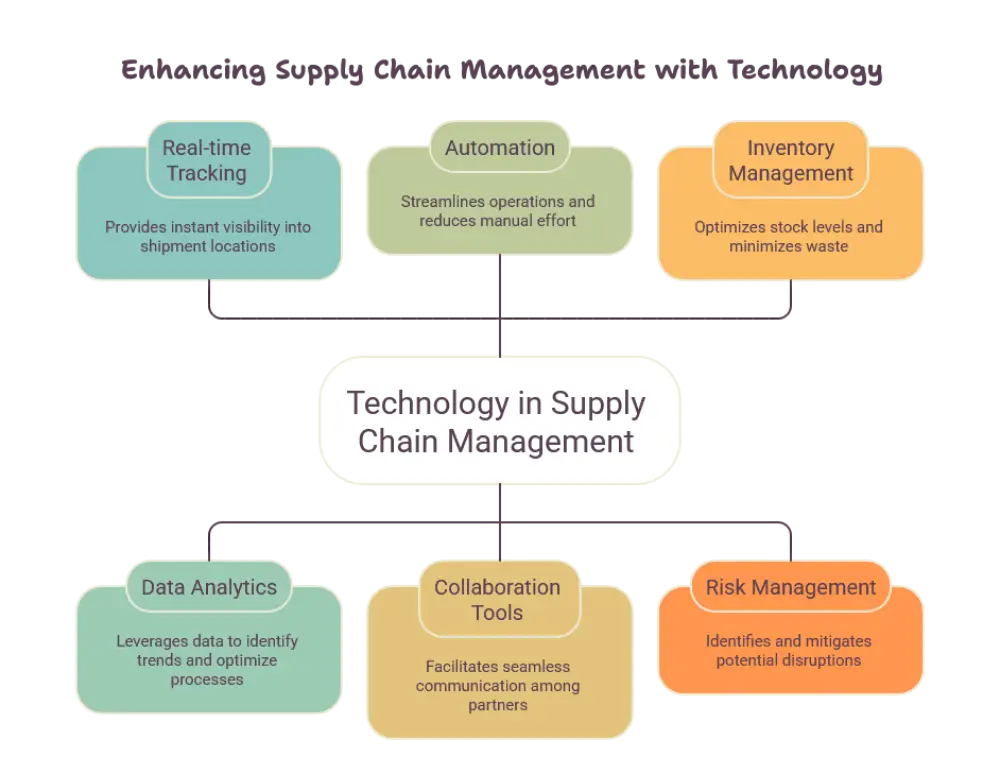
Modern supply chains rely heavily on digital tools to stay efficient and transparent.
Automation
Automated systems handle repetitive tasks such as order processing and inventory tracking, freeing up teams for strategic work.
Real Time Tracking
Tracking technology allows businesses to monitor shipments and inventory levels as they move through the chain, improving accuracy and response time.
Data Analytics
Analytics tools help companies forecast demand, identify patterns, and make informed decisions based on historical and live data.
Cloud Based Platforms
Cloud systems connect suppliers, manufacturers, and retailers on a single platform, improving communication and reducing errors caused by disconnected systems.
Best Practices for Strong Supply Chain Management
Building a resilient supply chain takes ongoing effort and a few consistent habits.
Build Strong Supplier Relationships
Open communication with suppliers helps prevent misunderstandings and encourages long term collaboration.
Diversify Sourcing Options
Relying on multiple suppliers or regions reduces the risk of a single disruption halting operations.
Invest in Visibility Tools
Systems that provide end to end visibility make it easier to spot issues early and respond quickly.
Plan for Disruptions
Having contingency plans in place ensures the business can adapt when unexpected events occur.
Focus on Continuous Improvement
Regularly reviewing processes helps identify inefficiencies and opportunities for smoother operations.
The Future of Supply Chain Management
Supply chains are becoming more interconnected and data driven. Businesses are shifting toward smarter systems that predict issues before they happen rather than reacting after the fact.
Sustainability is also becoming a bigger focus, with companies looking for ways to reduce environmental impact throughout the supply chain. As technology continues to evolve, supply chains will likely become faster, more transparent, and more adaptive to change.
Conclusion
Supply Chain Management plays a vital role in how products move from raw materials to the hands of customers. It touches every part of a business, from sourcing and production to delivery and customer satisfaction. Companies that invest in strong supply chain practices are better equipped to handle disruptions, meet customer needs, and operate efficiently.
Understanding the fundamentals of supply chain management gives businesses a clearer path toward long term stability and growth.
FAQs
What is Supply Chain Management?
Supply Chain Management is the coordination of all steps involved in moving a product from raw materials to the final customer, including sourcing, production, storage, and delivery.
Why is Supply Chain Management important for businesses?
It helps businesses stay efficient, meet customer expectations, manage risks, and adapt quickly to disruptions in the market.
What are the main components of a supply chain?
The main components include sourcing, production, inventory management, transportation, and final distribution to customers.
How does technology improve Supply Chain Management?
Technology improves supply chains through automation, real time tracking, data analytics, and cloud based platforms that increase visibility and accuracy.
What challenges do companies face in Supply Chain Management?
Common challenges include demand fluctuations, unreliable suppliers, transportation delays, and limited visibility into real time data.