Key Takeaways: Direct Support Professionals (DSPs) play a vital role in helping individuals with developmental disabilities live independently and participate in their communities. Unlike social workers, who handle broader issues like mental health, homelessness, and family challenges, DSPs focus on direct, day-to-day support in homes, group residences, and job sites. Though both aim to improve lives, their roles, training, and certification paths are quite different, each shaped by specific professional standards.
Introduction
The roles of direct support professionals (DSPs) and social workers often intersect, but they serve distinct functions within the realm of social services. While both professions aim to empower individuals, particularly those with developmental disabilities, their approaches and responsibilities differ significantly. DSPs provide hands-on support, facilitating activities of daily living and fostering community integration, whereas social workers tend to focus on broader mental health issues and resource advocacy. Understanding these nuances is crucial for anyone exploring a career in this rewarding field.
Understanding the Role of a Direct Support Professional (DSP)
Direct support professionals (DSPs) play a crucial role in enhancing the quality of life for individuals with developmental disabilities and mental health issues. providing personalized assistance and empowering those they support, DSPs help individuals achieve their full potential while fostering their independence. Daily responsibilities may include assisting with activities of daily living, medication administration, and facilitating community integration. Utilizing strong communication skills, they adapt their approach based on the unique needs and preferences of each person, ensuring high-quality support aligned with professional standards.
Key Responsibilities and Day-to-Day Duties of DSPs
Direct Support Professionals (DSPs) play a vital role in enhancing the daily lives of individuals with developmental disabilities. Responsibilities encompass assisting with activities of daily living, such as personal hygiene, meal preparation, and medication administration, while also fostering meaningful community engagement. DSPs implement individualized service plans (ISPs), promote new skills, and support behavioral assessments. Strong communication skills are essential for building rapport with clients and collaborating with occupational therapists and social workers, ensuring high-quality support tailored to each individual’s unique needs.
Types of Individuals Supported by DSPs
Individuals supported by direct support professionals (DSPs) often encompass a wide array of unique needs. These include people with developmental disabilities, mental health issues, and those requiring assistance in activities of daily living. DSPs play a crucial role in community living settings, such as residential group homes and individual homes. They empower clients to reach their full potential, providing high-quality support tailored to the preferences of each individual. engaging in behavioral assessments, DSPs foster a nurturing environment that promotes growth and independence.
Social Workers: Scope and Core Functions
Focused on promoting well-being, social workers engage in diverse practices to support individuals facing challenges like mental health issues, homelessness, and family crises. They leverage strong communication skills to assess unique needs and develop intervention strategies aligned with clients’ preferences. Core functions encompass advocacy, community resource navigation, and offering emotional support, all grounded in a code of ethics. collaborating with occupational therapists and other agencies, social workers ensure holistic health treatment and high-quality support for members of their communities.
Primary Roles within Social Work Practice
Supporting individuals and communities, social workers play pivotal roles in various settings. They utilize their strong communication skills to assess mental health issues, formulate individualized service plans (ISPs), and provide crisis prevention strategies. Social workers engage with families and collaborate with other professionals, such as occupational therapists, to ensure high-quality support tailored to the unique needs of their clients. championing resources and advocating for access to necessary services, they help individuals achieve their full potential in community living environments.
Who Social Workers Typically Help
Social workers provide support to a diverse range of individuals facing various challenges. Their clients often include those dealing with mental health issues, homelessness, and substance abuse. Additionally, they assist vulnerable populations such as children in foster care, individuals with developmental disabilities, and families experiencing crises. addressing unique needs and preferences, social workers facilitate access to essential social services and coordinate health treatment. This holistic support empowers clients to navigate life’s challenges and improve their overall well-being.
Comparing DSPs and Social Workers: Similarities and Differences
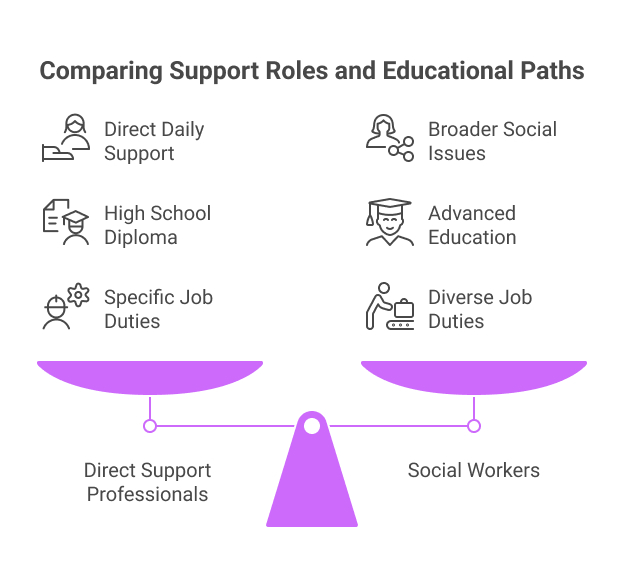
Both direct support professionals (DSPs) and social workers play crucial roles in enhancing the quality of life for individuals, yet they operate within distinct realms. While DSPs focus on providing direct support to individuals with developmental disabilities and assisting with activities of daily living, social workers tackle broader social issues, addressing mental health challenges and providing community resources. Both professions require strong communication skills and adhere to a code of ethics, but their educational pathways and specific job duties differ significantly.
Education, Training, and Licensing Requirements
A high school diploma or GED is typically the minimum educational requirement for individuals pursuing a career as a direct support professional (DSP). Essential training often includes certifications in first aid, CPR, and crisis prevention strategies. Although licensing isn’t universal across states, many employers encourage or mandate additional education in areas like mental health or developmental disabilities. Continuous professional development and adherence to ethical standards are crucial, ensuring DSPs provide high-quality support tailored to the unique needs of the individuals they serve.
Career Pathways, Advancement, and Transitioning Between Roles
Exploring career pathways for direct support professionals reveals opportunities for advancement and specialization. Many DSPS start with high school diplomas or GEDs, gaining foundational skills through training programs and certifications. With experience, they may transition to roles with greater responsibilities, such as supervisory positions or specialized support for individuals with developmental disabilities. Professional development enhances their ability to provide high-quality support and opens pathways into social work, where they can further address mental health issues and community needs.
Conclusion
In summary, both Direct Support Professionals (DSPs) and social workers play vital roles in enhancing the quality of life for individuals with unique needs. While their functions and training diverge, the shared commitment to empowering those they support unites them. Understanding their distinct yet complementary roles fosters collaboration in the social services sector, ultimately benefiting the individuals and communities they serve. appreciating the nuances of each profession, we can better advocate for high-quality support systems that address the diverse needs of all individuals.
Frequently Asked Questions
Is direct support work considered a form of social work?
Direct support work shares similarities with social work, focusing on assisting individuals in need. However, direct support professionals (DSPs) primarily provide hands-on support and daily assistance, while social workers address broader systemic issues and offer therapeutic services. Thus, they are distinct yet complementary roles.
Can a DSP become a social worker in the United States?
Yes, a Direct Support Professional (DSP) can transition to a social worker career in the United States. They can build on their experience by pursuing relevant education, meeting licensing requirements, and gaining necessary skills to effectively support individuals in various social work settings.
Are DSPs recognized as social service professionals?
Direct Support Professionals (DSPs) play a crucial role in providing essential support to individuals with disabilities and special needs. While not always officially classified as social service professionals, their work aligns closely with the principles of social work, emphasizing care, support, and advocacy for vulnerable populations.