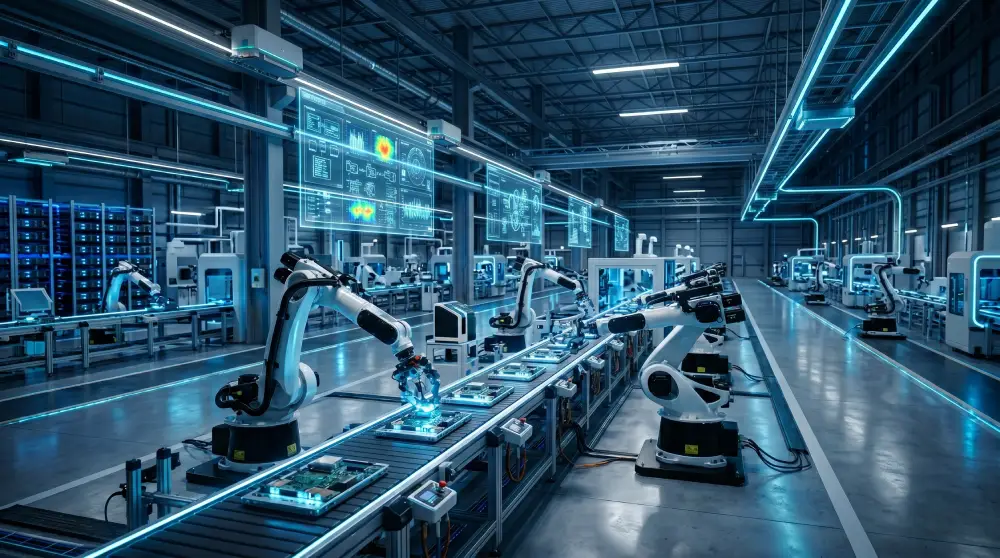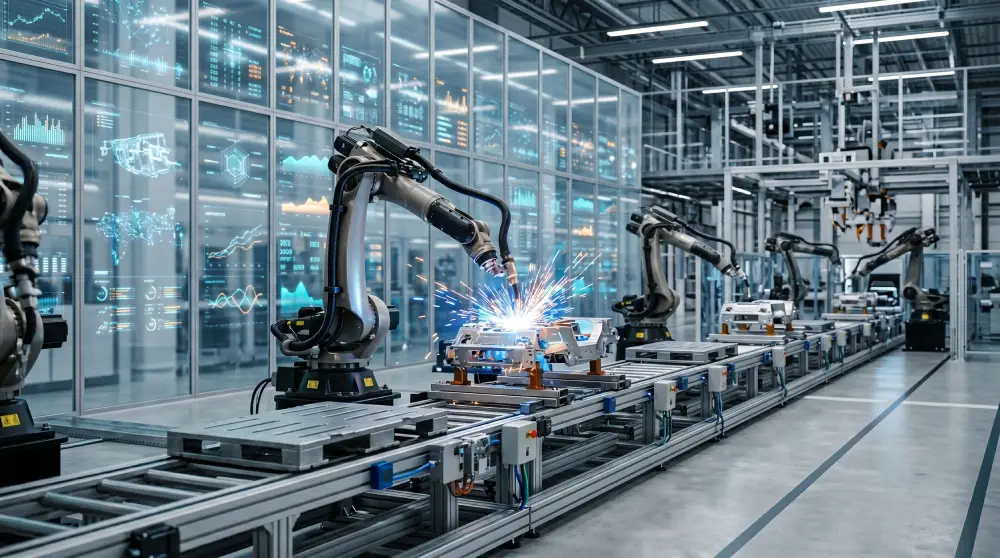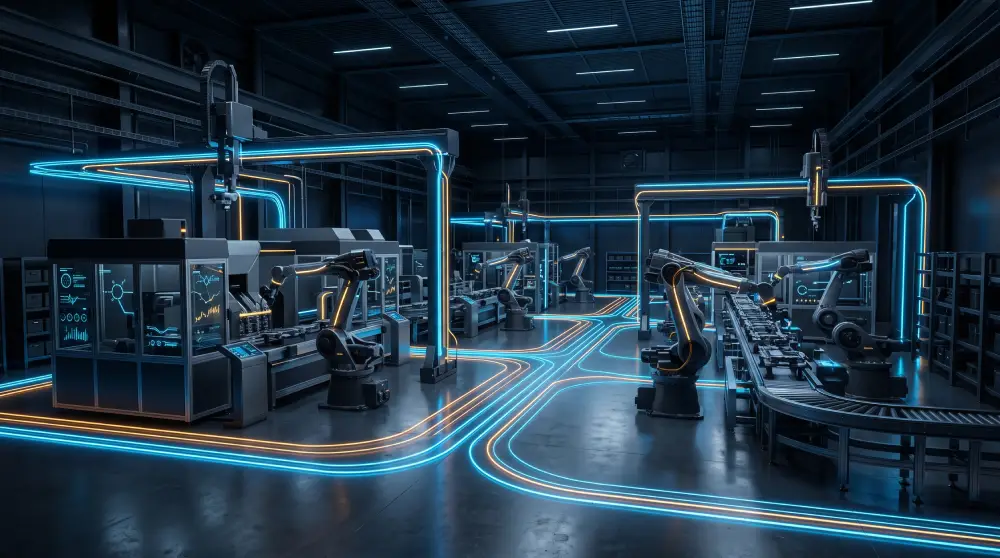
The industrial landscape is undergoing its most profound transformation since the invention of the assembly line. Driven by a convergence of physical machinery and digital intelligence, the era of smart manufacturing is rewriting the rules of production, logistics, and operational efficiency. The collective name for this technological leap centers heavily on groundbreaking Industry 4.0 innovations.
As industrial organizations face mounting pressure to increase yield, minimize waste, and strengthen supply chain resilience, advanced factory ecosystems have transitioned from experimental concepts to essential business strategies. Today, companies must modernize or risk obsolescence.
This deep dive explores the core pillars of the current industrial revolution, highlighting the major technical milestones, operational shifts, and future trajectories defining the ecosystem.
- Understanding the Foundation of Smart Manufacturing
- Core Technologies Driving Industry 4.0 Innovations
- Operational and Economic Benefits of Industry 4.0 Innovations
- Technical Challenges of Integrating Industry 4.0 Innovations
- The Next Frontier: Beyond Industry 4.0 Innovations
- Summarizing the Technological Functions
- Frequently Asked Questions
Understanding the Foundation of Smart Manufacturing
At its core, the current paradigm shift relies on the seamless fusion of information technology and operational technology. In traditional factories, production machinery functioned in complete isolation. Siloed systems required human intervention for every adjustment, maintenance schedule, and quality check.
The current wave of industrial advancement removes these communication barriers. embedding intelligence directly into production environments, organizations establish cyber physical systems. These systems form interconnected frameworks where physical machinery communicates with cloud environments, enabling automated operations to execute independently based on real-time data inputs.
This connectivity creates an agile manufacturing environment capable of responding to market shifts instantaneously. Production lines no longer operate on rigid, pre programmed schedules. Instead, they function as dynamic ecosystems that optimize energy usage, adjust throughput based on inventory levels, and self correct when manufacturing deviations occur.
Core Technologies Driving Industry 4.0 Innovations
Several overlapping technological breakthroughs fuel this modern transition. Each innovation targets a distinct operational challenge, but their true value emerges when they are combined into a singular, unified network.
1. The Industrial Internet of Things (IIoT)
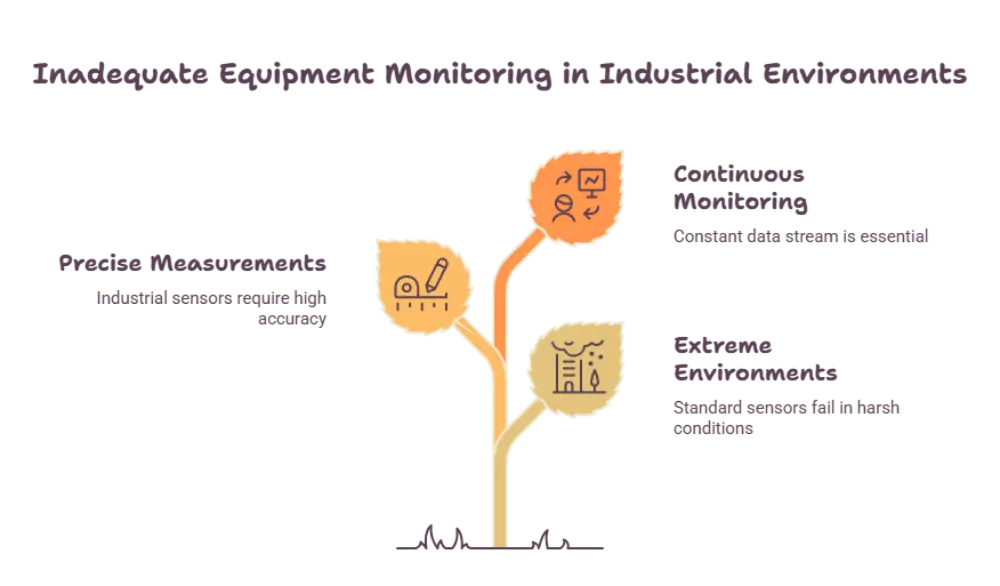
The Industrial Internet of Things serves as the central nervous system of any modern production facility. Industrial environments utilize vast networks of smart sensors, high frequency radio frequency identification tags, and connected telemetry devices to monitor equipment performance continuously.
Unlike standard consumer connected devices, industrial smart sensors operate in extreme environments, measuring precise variables such as:
- Micro vibrations in high speed rotators
- Exact thermal fluctuations in chemical processing units
- Acoustic variations that indicate mechanical wear
- Real time pressure differentials in hydraulic lines
capturing thousands of data points every second, these sensors turn silent machinery into highly vocal assets. This massive stream of telemetry provides operators with unprecedented visibility, allowing teams to monitor the health of an entire global infrastructure from a single centralized dashboard.
2. Big Data Analytics and Artificial Intelligence
The massive influx of data generated by connected machinery is useless without advanced systems to interpret it. Artificial intelligence and machine learning algorithms act as the analytical brain of the smart factory, processing complex data sets at speeds no human team could match.
AI tools look for subtle correlations within the operational data. For example, an algorithm might discover that a subtle 2% drop in ambient humidity, combined with a specific conveyor belt speed, leads to microscopic defects in a polymer product. identifying these patterns instantly, the system automatically recalibrates processing variables to maintain peak quality without stopping production.
Furthermore, artificial intelligence enables the shift toward agentic automation. These are advanced systems capable of analyzing an unexpected disruption, evaluating alternative operating paths, and executing corrective actions autonomously.
3. Digital Twin Technology
A digital twin is a highly detailed virtual replica of a physical object, manufacturing line, or entire factory floor. Built using precise spatial data and continuously updated via connected sensor networks, these digital models precisely mirror the behavioral traits of their real world counterparts.
Engineers utilize digital twins to run complex simulations without interrupting active operations. If a facility needs to introduce a new product line, technicians can simulate the entire rollout virtually. This testing phase allows teams to identify potential spatial bottlenecks, optimize robotic movement paths, and calculate energy requirements before touching a single piece of physical equipment.
4. Advanced Robotics and Automation
The modern robotic workforce has evolved far beyond the massive, fixed safety cages of the past. Today, industrial facilities utilize autonomous mobile robots and collaborative robots, often called cobots.
Traditional robots were fixed in stationary locations, completely isolated behind safety cages, and programmed for single rigid tasks because they were blind to human presence. In stark contrast, modern collaborative and mobile automation utilizes dynamic navigation paths, built in proximity sensors, and rapidly reprogrammable software. This allowing them to safely work alongside human crews.
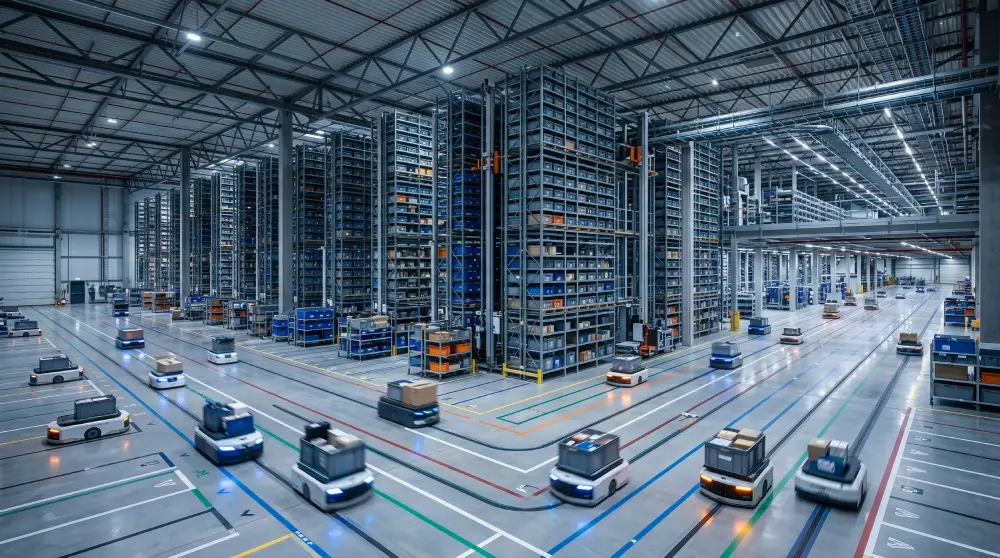
Equipped with sophisticated computer vision and spatial awareness algorithms, autonomous mobile robots navigate complex warehouse environments independently. They safely avoid unexpected debris, recalculate transit routes instantly, and transport heavy raw materials to production bays exactly when needed. Cobots work alongside human technicians, taking over highly repetitive, physically taxing, or dangerous tasks, which significantly reduces workplace injuries while boosting precision.
5. Cloud and Edge Computing Architecture
Managing data across global manufacturing empires requires an optimal computing architecture. Modern ecosystems use a hybrid approach that balances cloud computing with edge computing.
Cloud platforms provide massive storage capacity and vast processing power. This makes them ideal for training complex machine learning models, storing historical compliance records, and analyzing long term operational trends across multiple geographic locations.
However, certain critical factory decisions require sub millisecond response times. If a high speed cutting tool experiences a sudden structural fracture, sending that data to a distant cloud server and waiting for a response takes too long. Edge computing solves this problem by processing data locally, right at the machine level. This proximity allows the local system to execute an emergency shutdown instantly, protecting expensive assets and ensuring employee safety.
6. Augmented Reality in Maintenance and Training
Augmented reality overlays crucial digital information directly onto a technician’s real world view. Using specialized smart glasses or mobile display units, industrial workers view live operational metrics, wiring schematics, and step by step repair guides while looking at physical machinery.
When a complex asset requires service, augmented reality systems guide the technician through the exact maintenance sequence, highlighting specific bolts to remove or valves to turn. If an unexpected issue arises, the field worker can share their live optical view with a remote specialist anywhere in the world, enabling collaborative troubleshooting in real time.
Operational and Economic Benefits of Industry 4.0 Innovations
Implementing these advanced digital tools yields clear operational advantages. Organizations that successfully transition to connected models experience rapid improvements across every core business metric.
Maximizing Asset Lifecycle with Predictive Maintenance
Unplanned downtime is one of the most expensive challenges in global manufacturing. Traditional maintenance strategies rely on rigid calendars or waiting until a catastrophic failure occurs.
Predictive maintenance shifts the strategy entirely. continuously evaluating sensor data against historical failure profiles, artificial intelligence accurately forecasts when a component will degrade. Maintenance teams receive automated alerts weeks before a part fails, allowing them to schedule repairs during routine, planned operational breaks. This proactive approach extends the lifespan of expensive machinery and prevents sudden production stoppages.
Accelerating Reshoring and Supply Chain Resilience
Recent global shifts have forced many organizations to reconsider their reliance on lengthy, fragmented international supply chains. Smart automation makes reshoring production lines economically viable.
utilizing high precision robotics, automated material handlers, and advanced AI oversight, modern factories operate with minimal waste and maximum efficiency. This high productivity offsets traditional regional labor cost differences, allowing businesses to establish agile, localized manufacturing hubs closer to their primary consumer markets.
Advancing Toward Sustainable, Green Manufacturing
Energy efficiency has become an operational necessity. Smart factories integrate energy monitoring directly into their primary control loops.
AI systems track power consumption across every assembly zone, automatically placing idle machinery into low energy states. Furthermore, real time process optimization reduces material scrap by ensuring production runs are executed perfectly the first time, minimizing the environmental footprint of the enterprise.
Technical Challenges of Integrating Industry 4.0 Innovations
While the advantages of intelligent automation are undeniable, integrating these advanced systems requires navigating distinct challenges.
Cybersecurity for Operational Technology
As physical assets connect to wider corporate networks and cloud environments, they become potential targets for malicious digital activity. Securing operational technology requires an entirely different approach than protecting standard corporate IT infrastructures. Organizations must implement rigid zero trust architectures, continuous network monitoring, and robust encryption protocols to shield connected factory floors from external disruptions.
Managing Legacy Infrastructure with Retrofitting
Most manufacturing companies cannot afford to scrap their entire multi million dollar inventory of existing machinery to purchase smart equipment. Therefore, the immediate focus is on retrofitting.
Engineers install external smart sensors, communication modules, and modern programmable logic controllers onto legacy machines. This bridge technology allows older, reliable hardware to communicate with modern cloud analytics platforms, providing an affordable path toward comprehensive digital transformation.
The Next Frontier: Beyond Industry 4.0 Innovations
As the current wave of technological adoption reaches global maturity, the foundational elements of the next industrial phase are already appearing. Industry 5.0 shifts the focus from pure automation and efficiency to a harmonious partnership between human creativity and robotic precision.
The future layout positions the human worker back at the center of the production environment, armed with intelligent tools, predictive insights, and collaborative robotic assistants. This evolution combines the speed, consistency, and tireless nature of automation with the critical thinking, adaptability, and custom problem solving skills of human professionals.
Summarizing the Technological Functions
To understand how these systems interact, we can look at their primary roles on the factory floor:
- Industrial IoT acts as the foundation by ensuring continuous data collection via smart sensors.
- AI and Machine Learning provide pattern recognition and autonomous process optimization.
- Digital Twins allow for virtual simulation and risk free testing of new ideas.
- Autonomous Robotics handle safe material transport and execute high precision mechanical tasks.
- Edge Computing delivers localized data processing for instant safety shutdowns.
- Augmented Reality assists frontline staff with guided maintenance and interactive instruction.
Embracing these core changes is no longer an optional path for forward thinking corporations. It is the defining standard for global competitiveness. turning data into actionable operational control, the modern smart factory ensures that the global manufacturing sector remains resilient, sustainable, and prepared for future demands.
Frequently Asked Questions
What is the primary difference between Industry 3.0 and Industry 4.0?
Industry 3.0 focused on introducing computers and basic automation into single, isolated production lines. Industry 4.0 takes that automation further by connecting those systems into an integrated network where machines communicate, analyze data, and make decentralized decisions through cloud and IoT networks.
How does predictive maintenance reduce overall operating costs?
Predictive maintenance uses real time sensor data to spot mechanical wear before a breakdown happens. This allows companies to fix machinery during scheduled downtime, avoiding catastrophic equipment damage, preventing expensive production halts, and eliminating unnecessary routine maintenance tasks.
Can small and mid sized manufacturers adopt these innovations?
Yes. Thanks to modular cloud platforms and affordable retrofitting options, smaller businesses can implement smart technologies incrementally. Adding external sensors to existing machinery allows smaller facilities to collect valuable data without investing in entirely new production equipment.
What role does edge computing play on a smart factory floor?
Edge computing processes critical operational data locally, right on the machine or factory floor, instead of sending it to a distant cloud server. This eliminates processing delays, allowing automated systems to respond instantly to safety issues or sudden equipment anomalies.
How do digital twins improve product development?
A digital twin provides a complete virtual replica of a production system. This allows engineering teams to simulate changes, test new manufacturing processes, and spot potential assembly bottlenecks in a safe virtual environment before altering physical factory configurations.