

Watching your child discover the joy of movement is a special experience. Enrolling them in dance training can be a fantastic way to nurture their passion, but with so many options, how do you choose the right one? Whether your child dreams of ballet elegance, the energy of a hip hop routine, or simply loves to move to music, finding the perfect dance class is key. This guide will walk you through everything you need to know to make the best choice for your young dancer.
Key Highlights
- Begin your child’s dance education by identifying their interests and age-appropriate styles.
- For young children, classes like creative movement or pre-ballet build a strong foundation.
- Evaluate a studio’s reputation, instructors, and safety standards before enrolling in a dance class.
- Understand the full costs, including monthly fees, attire, and potential musical theater performance fees.
- Many studios offer trial classes, allowing your child to experience the environment first-hand.
- Supporting your child’s journey involves consistent attendance and celebrating their progress.
Understanding Dance Training Options for Kids
The world of dance education is vast and exciting, offering everything from playful creative movement classes for toddlers to more structured programs for older kids, including styles like jazz and musical theater. The best dance classes are those that align with your child’s developmental stage, ensuring they learn in a fun, supportive, and age-appropriate setting.
Understanding these different options is the first step toward finding a program where your child can thrive. Below, we explore specific programs suited for various age groups and the wonderful benefits that dance training provides.
Age-Appropriate Dance Programs and Styles
Choosing the right dance style is crucial for keeping your child engaged and excited about their dance education. For the youngest dancers, the focus should be on fun and exploration. Programs centered on creative movement allow toddlers to discover what their bodies can do in a playful setting.
As children get a little older, typically between ages 3 and 7, they are ready for more structure. Classes introduce fundamental techniques in an accessible way. This is a great age to explore a variety of styles to see what captures their interest.
Consider these popular options for this age group:
- Pre-Ballet/Tap: Combination classes introduce basic steps and rhythms.
- Funky Monkeys/Tiny Hip Hop: These classes use upbeat music to teach foundational hip hop moves.
- Creative Movement: Ideal for ages 3-5, these classes build motor skills through imaginative play.
- Musical Theater: For kids who love to sing and act, this style combines dancing with storytelling.
Key Benefits of Dance Training for Young Children
Participating in a dance class offers far more than just learning new steps. It provides a wealth of developmental benefits that support your child’s growth in many areas of life. A well-rounded dance education program nurtures both the body and the mind, setting a foundation for lifelong health and confidence.
From the physical improvements to the emotional and social skills gained, dance is a holistic activity. Even a simple creative movement class can have a profound impact on a young child’s development. The benefits of dance, as noted by Dance Expression, extend to improved academic performance and emotional well-being.
Here are some of the key benefits for young children:
- Physical Development: Enhances coordination, balance, flexibility, and gross motor skills.
- Cognitive Growth: Boosts memory and focus as children learn and recall choreography.
- Emotional Expression: Provides a healthy outlet for creativity and self-expression.
- Social Skills: Fosters teamwork, communication, and friendships in a group setting.
What to Consider When Choosing a Dance Studio
Once you have an idea of the right dance class for your child, the next step is finding the right studio. The quality of the studio environment plays a huge role in your child’s experience. A great studio is about more than just dance education; it’s about creating a safe, inspiring, and supportive community for young dancers.
When you begin your search, pay close attention to the studio reputation, the qualifications of the instructors, and the condition of the facilities. These factors will help you select a place where your child will feel comfortable and encouraged to grow.
Safety Measures and Facility Standards
Your child’s safety should be the top priority when choosing a dance studio. A professional studio will have clear policies and high facility standards in place to protect its students. Before enrolling, take a tour of the studio to observe the environment and ask about their safety protocols.
The physical space is very important. Look for clean, well-maintained dance floors that are designed to absorb impact, which can help prevent injuries. The studio should also be spacious enough to allow students to move freely without feeling crowded. Pay attention to details like clear emergency exits and first-aid availability.
Here are some key safety measures to look for:
- Proper flooring designed for dance (e.g., sprung floors).
- Clean and well-lit facilities.
- Instructors trained in first aid and injury prevention.
- A clear policy for drop-off and pick-up to ensure student security.
Evaluating Instructors and Studio Reputation
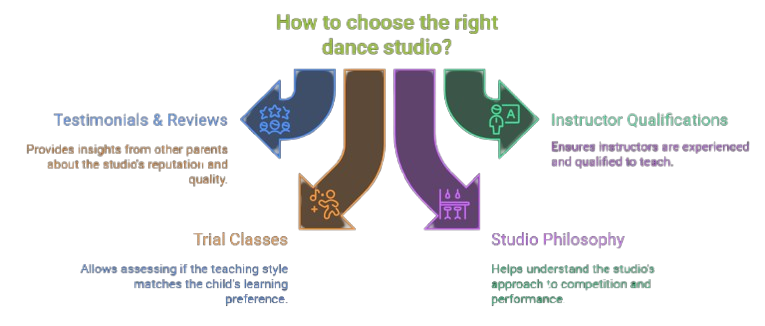
The quality of the instructors and the studio reputation are crucial to your child’s dance education. Great teachers do more than just teach steps; they inspire, mentor, and build confidence. Look for instructors with a strong background in dance and experience teaching children. For example, Jennifer Anderson of Just For Kix has over 15 years of experience in both studio and competitive dance.
A studio with a positive reputation, like Just For Kix with its 40 years of experience, often indicates a history of satisfied families and a commitment to quality. As Director Jennifer Van Dyke says, “My love for dance goes beyond steps and routines; it’s about being a part of the transformative journey of each dancer.” This passion is what you should look for in a studio.
When evaluating a studio, consider these points:
- Read testimonials and reviews from other parents.
- Check the qualifications and experience of the instructors.
- Ask if the studio offers trial classes to see if the teaching style fits your child.
- Inquire about the studio’s philosophy on competition and performance.
Beginner’s Guide: Getting Started with Dance Classes for Kids
Is your child eager to try a dance class but has no prior experience? That’s perfectly fine! Most dance studios welcome beginners and offer introductory classes designed to teach the fundamentals in a fun, low-pressure environment. Whether it’s a pre-ballet class or a beginner hip hop session, the goal is to introduce them to the joys of movement.
High-quality dance education starts with making every child feel comfortable and successful, regardless of their skill level. The following section will cover the practical things you’ll need to get your child registered and ready for their very first class.
What You’ll Need: Equipment, Attire, and Registration
Getting ready for your child’s first dance class is an exciting step. The first thing you’ll need to do is complete the registration process, which can often be done online. From there, you’ll need to get the proper attire and equipment for their specific class.
Most studios have a dress code to ensure students can move safely and comfortably. The required attire varies by dance style. For example, ballet classes typically require ballet shoes, while hip-hop classes may only need comfortable clothes and clean tennis shoes. Check with the studio for their specific requirements before you make any purchases.
Here’s a general list of what your child might need:
- Ballet: Pink ballet shoes and leotard.
- Tap: Black tap shoes.
- Hip Hop: Clean tennis shoes and comfortable clothing.
- Jazz/Lyrical: Specific jazz shoes might be required.
Step-by-Step Guide to Enrolling Your Child in Dance Training
Enrolling your child in dance training is a straightforward process. Most studios offer online registration where you can select a dance class, fill out your information, and pay with a credit card. Be sure to review the policies regarding the purchase price and options for a full refund of your registration.
Some studios offer convenient payment plans, where a monthly amount is charged automatically. If you select an auto approve option, payments are processed on a set date. Understanding the maximum possible purchase price and payment terms upfront helps you plan accordingly. Let’s break it down into simple steps.
Step 1: Identify Your Child’s Interests and Suitable Dance Styles
The best way to start is by paying attention to your child. Do they bop along to every song on the radio? Do they put on shows for the family? Their natural inclinations are your biggest clue. If your child loves imaginative play, a creative movement class might be the perfect fit. If they have a lot of energy and love pop music, a hip hop class could be a big hit.
Talk to your child about the different kinds of dance. You can watch videos online of ballet, tap, hip hop, and even musical theater performances to see what sparks their interest. According to Dance Expression, simply asking your child if they’d like to try a class and getting an excited “YES!” is often the best indicator.
Remember, the goal is to find an activity they genuinely enjoy. Letting them have a say in the decision-making process will make them more excited to attend. Many studios offer classes for various interests, so you are sure to find something that aligns with their personality.
Step 2: Research Local Studios and Compare Offerings
After identifying a few potential dance styles, it’s time to research local studios. Look for a dance studio with a good reputation, experienced instructors, and a welcoming atmosphere. Browse their websites, read parent testimonials, and look at their class schedules and pricing. This will help you narrow down your options.
Comparing what different studios offer is key to finding the best fit for your family’s schedule and budget. Pay attention to the class duration, the number of students per class, and the overall cost, including the purchase price or monthly amount. Some programs may have a higher maximum possible purchase price if they include costumes or performance fees.
Step 3: Assess Class Schedules, Costs, and Trial Options
Logistics are a big part of the decision. Make sure the class schedule works for your family. A convenient class time makes it more likely that you’ll attend consistently, which is key for your child’s progress. Also, clarify the payment structure. Many studios charge a flat monthly amount, often due on the 1st of each month. Ask about policies for unpaid months or missed classes.
When assessing the costs and schedule, be sure to ask:
- What is the total cost for the season, including any performance or costume fees?
- What is the policy for making up missed classes?
- Are there discounts for signing up for multiple classes or enrolling siblings?
- Are there free trial options available?
Step 4: Prepare for the First Class and Support Your Child’s Experience
Once you’ve completed the registration and have the date for the first dance class, it’s time to get your child excited! Talk to them about what to expect and make sure you have all the necessary attire and shoes ready to go. A positive attitude from you can make a huge difference in easing any first-day jitters.
Your support continues long after the first class. Encourage consistent attendance, as this is how children build muscle memory, improve coordination, and increase flexibility. One of the best tips for parents is to simply sit back and enjoy the show. Let your child have fun and be the star.
Here are a few ways to support your child’s experience:
- Arrive a few minutes early for class to help them settle in.
- Celebrate their small achievements, like mastering a new step.
- Pay attention to their attitude—their excitement is the best sign it’s a good fit.
- Understand the studio’s policies, such as the terms for a full refund of your registration.
Conclusion
Choosing the right dance training for your child can be a fulfilling journey that opens doors to creativity, self-expression, and physical fitness. considering age-appropriate programs, safety measures, and the quality of instructors, you are setting a strong foundation for your child’s dancing experience. Remember to assess your child’s interests and communicate openly with them throughout the process. Whether they are twirling in a ballet class or grooving in hip-hop, the right dance training will not only enhance their skills but also boost their confidence and social skills. If you’re ready to embark on this exciting journey, don’t hesitate to reach out for a free consultation to discover the best options available for your little dancer!
Frequently Asked Questions
Which dance styles are best for kids ages 3 to 7?
For children ages 3 to 7, the best dance class styles are those that are fun and engaging. Options like creative movement, pre-ballet, introductory tap, and tiny hip hop are excellent for building foundational skills. This early stage of dance education should focus on exploration and building a love for movement.
How often should kids attend dance classes for effective learning?
For beginners, attending a dance class once a week is typically sufficient for effective learning and progress in their dance education. This allows them to learn new skills without feeling overwhelmed. Many studios offer trial options, so you can test a class before committing to a full session and monthly amount.
Are there beginner-friendly dance classes for kids with no prior experience?
Yes, absolutely! Most dance studios offer beginner-friendly options designed specifically for children with no prior dance training. These classes focus on fundamentals in a welcoming environment. You can typically complete the registration online with a credit card and find a dance class that is perfect for your child’s level.
What is the typical cost of dance training for children in the United States?
The cost of dance training varies, but a typical monthly amount for a weekly class is between $45 and $60. The total purchase price can depend on costume fees and recital costs. Always check the studio’s policies on payments for unpaid months and if they offer a full refund of your registration,


