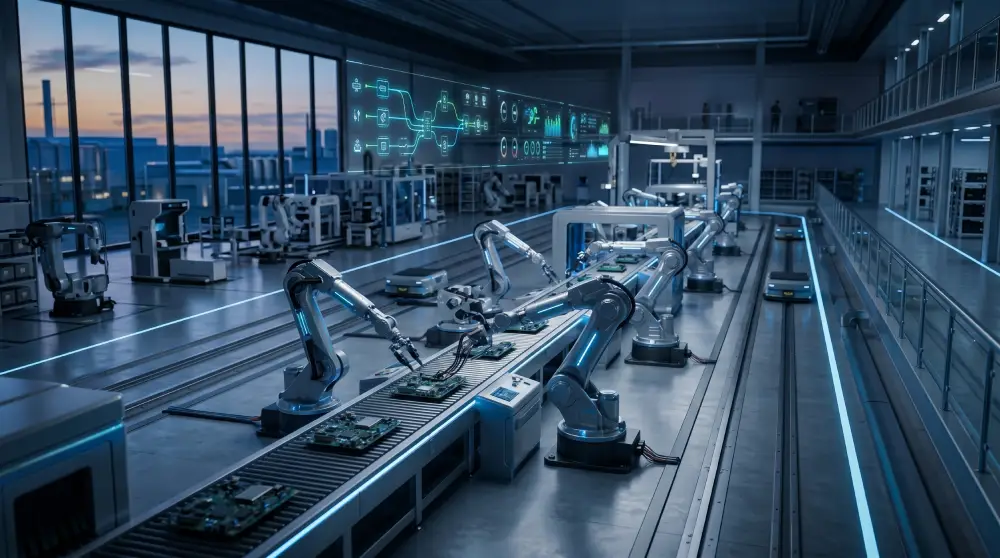
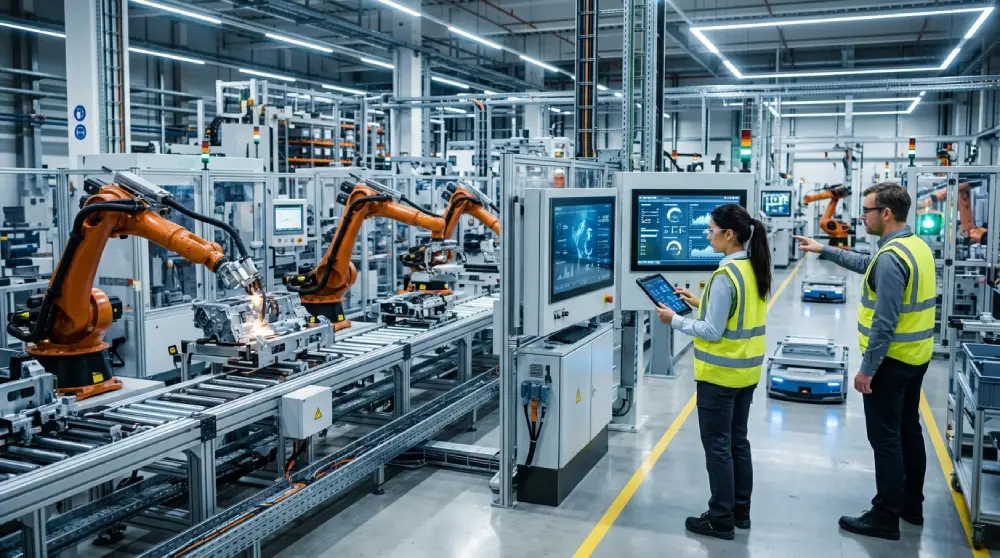
Industrial automation is transforming the way factories and production facilities operate today. It refers to the use of control systems, robotics, and software to run machinery and processes with minimal human intervention. From assembly lines to packaging units, industrial automation helps companies achieve consistent output, better safety, and improved efficiency. As industries continue to grow, understanding this technology has become essential for anyone involved in manufacturing or production management.
What Is Industrial Automation
Industrial automation is the application of technology to monitor and control the production of goods without constant human input. It combines hardware such as sensors and actuators with software that manages workflow and decision making. The goal is simple. Machines handle repetitive or dangerous tasks so people can focus on supervision, planning, and problem solving.
Key Components of Industrial Automation
Industrial automation systems typically rely on a combination of tools working together.
Programmable Logic Controllers (PLCs) These devices act as the brain of many automated systems, executing instructions to control machinery in real time.
Sensors and Actuators Sensors gather information such as temperature, pressure, or motion, while actuators respond by adjusting equipment accordingly.
Human Machine Interfaces (HMIs) Operators use these interfaces to monitor processes, view alerts, and make adjustments when needed.
Industrial Robots Robotic arms and automated guided vehicles handle tasks like welding, painting, and material handling with precision.
Why Industrial Automation Matters
Manufacturers across the globe are adopting automation because it directly impacts productivity and quality. Automated systems can run continuously, reducing downtime caused by fatigue or human error. This consistency leads to fewer defects and more reliable output.
Safety is another major reason companies invest in automation. Hazardous tasks such as handling chemicals or operating heavy machinery can be delegated to machines, protecting workers from harm.
Improved Efficiency and Output
Automated production lines can operate around the clock without breaks. This allows companies to increase their output significantly while maintaining the same level of quality across every unit produced.
Enhanced Accuracy and Consistency
Machines follow programmed instructions precisely, which reduces variation between products. This is especially valuable in industries like pharmaceuticals and electronics where precision is critical.
Better Workplace Safety
automating dangerous or repetitive tasks, companies can lower the risk of workplace injuries and create a safer environment for their employees.
Types of Industrial Automation
There are several approaches to industrial automation, each suited to different production needs.
Fixed Automation
Also known as hard automation, this type is designed for high volume production of a single product. The equipment is built for a specific task and offers limited flexibility, but it delivers exceptional speed and consistency.
Programmable Automation
This approach allows manufacturers to reconfigure equipment for different products through software changes. It is commonly used in batch production where product specifications change periodically.
Flexible Automation
Flexible systems can adapt quickly to different tasks without significant downtime. This makes them ideal for industries that require frequent changes in product design or specification.
Integrated Automation
Integrated automation connects multiple systems and processes into a single network, allowing data to flow seamlessly between machines, software, and human operators.
Industries Benefiting from Industrial Automation
Industrial automation is not limited to one sector. It plays a vital role across many industries.
Automotive Manufacturing
Robots handle welding, painting, and assembly tasks with speed and precision, helping automakers maintain high production standards.
Food and Beverage Production
Automated systems manage packaging, sorting, and quality control to ensure products meet safety and consistency standards.
Pharmaceuticals
Precision automation ensures accurate dosing, packaging, and labeling, which is critical for patient safety and regulatory compliance.
Electronics Manufacturing
Automated assembly lines handle delicate components with a level of precision that would be difficult to achieve manually.
The Role of Data and Connectivity
Modern industrial automation increasingly relies on data collection and connected devices. Sensors gather information continuously, allowing systems to detect issues early and adjust processes automatically. This connectivity, often referred to as the Industrial Internet of Things, helps manufacturers gain visibility into their operations and make informed decisions faster.
Predictive Maintenance
analyzing data from machinery, companies can predict when equipment might fail and schedule maintenance before a breakdown occurs. This reduces unplanned downtime and extends the lifespan of equipment.
Real Time Monitoring
Operators can track performance metrics as they happen, allowing them to respond quickly to any deviations in the production process.
Challenges in Implementing Industrial Automation
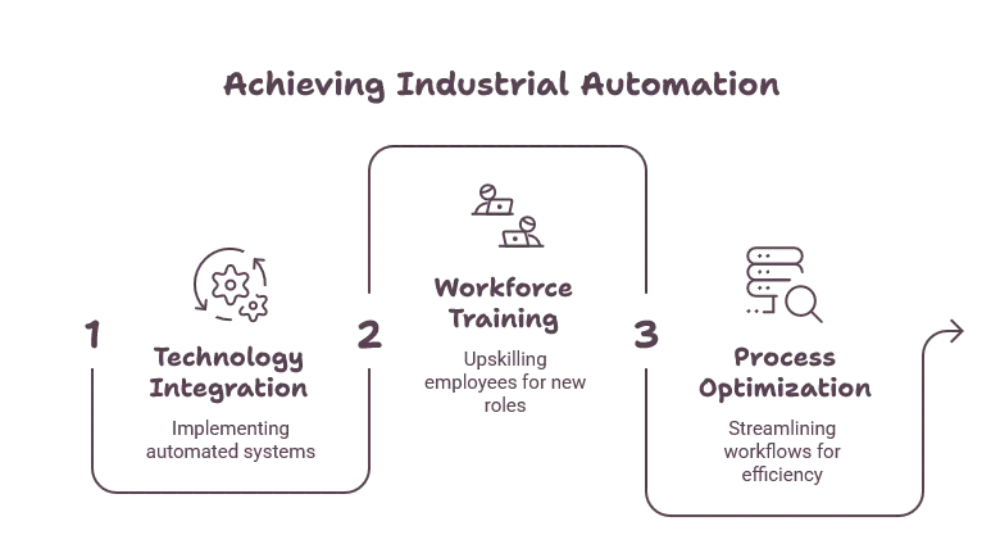
While the benefits are substantial, adopting industrial automation does come with challenges. Integrating new systems with existing infrastructure can require careful planning. Employees may also need training to operate and maintain new equipment effectively. Additionally, cybersecurity becomes an important consideration as more devices become connected to networks.
Workforce Adaptation
As automation takes over repetitive tasks, the workforce must adapt by developing new skills related to system monitoring, programming, and maintenance.
System Integration
Combining new automated equipment with older machinery can be complex, requiring thoughtful design to ensure smooth communication between systems.
The Future of Industrial Automation
The future points toward even greater intelligence within automated systems. Artificial intelligence and machine learning are being integrated into industrial automation to enable smarter decision making, adaptive processes, and self correcting systems. As technology advances, factories will likely become more autonomous, efficient, and responsive to changing demands.
Artificial Intelligence in Automation
AI algorithms can analyze vast amounts of production data to identify patterns and suggest improvements, making automated systems smarter over time.
Collaborative Robots
Cobots are designed to work alongside human employees safely, combining the strength and precision of machines with human judgment and adaptability.
Conclusion
Industrial automation continues to reshape how goods are produced across nearly every industry. combining robotics, sensors, and intelligent software, manufacturers can achieve higher efficiency, better safety, and consistent quality. As technology evolves, automation will only become more integrated into daily operations, helping businesses meet growing demands while protecting their workforce. Companies that embrace this shift position themselves for long term success in an increasingly competitive manufacturing landscape.
Frequently Asked Questions
What is industrial automation used for?
Industrial automation is used to control machinery and production processes with minimal human involvement, improving efficiency, accuracy, and safety in manufacturing environments.
What are the main types of industrial automation?
The main types include fixed automation, programmable automation, flexible automation, and integrated automation, each suited to different production needs.
How does industrial automation improve workplace safety?
It reduces the need for humans to perform dangerous or repetitive tasks, lowering the risk of workplace injuries and creating safer working conditions.
Which industries use industrial automation the most?
Automotive manufacturing, food and beverage production, pharmaceuticals, and electronics manufacturing are among the industries that rely heavily on industrial automation.
What role does artificial intelligence play in industrial automation?
Artificial intelligence helps automated systems analyze data, identify patterns, and make smarter decisions, allowing production processes to become more adaptive and efficient over time.