

You’re standing at the precipice of something dynamic, something that resonates with the pulse of the streets and the echoes of a culture forged in resilience. You’ve likely seen it in music videos, maybe even caught a glimpse of it in a local performance, but what does it truly mean to “Unleash the Power of Hip Hop Dance”? It’s more than just a series of energetic movements; it’s a language, a form of expression, and a powerful tool for individual and communal growth. This isn’t about abstract ideals; it’s about tangible impact, about the ways you can channel that raw energy into something meaningful within your own life and the lives of those around you.
Hip hop dance is not a monolithic entity. It’s a vast ecosystem of styles, each with its own history and distinct characteristics. To truly grasp its power, you need to understand its origins, its evolution, and the principles that underpin its practice. This is your gateway to not just learning steps, but to understanding a movement philosophy that has shaped generations and continues to redefine artistic boundaries.
You might think of hip hop dance as a purely modern phenomenon, but its roots are deeply intertwined with the cultural and social conditions of its birth. Understanding this history is crucial to appreciating the raw power that fuels its expression.
The Bronx Uprising: A Community’s Voice
Block Parties and the Birth of B-Boying
You’ve probably heard of breakdancing, or B-boying and B-girling. This wasn’t a choreographed studio creation; it emerged from the necessity of expression in underserved communities, particularly in the Bronx during the 1970s. Faced with limited resources and a lack of conventional outlets, young people turned to music and dance as a way to communicate, to compete, and to build a sense of identity. The block parties were the crucibles where this nascent art form was forged, providing a soundtrack and a space for creativity to flourish.
DJ Kool Herc and the Breakbeats
The foundational element here was the DJ. Pioneers like DJ Kool Herc recognized the power of isolating and extending the percussive breaks in popular songs. These “breakbeats” were the moments that propelled dancers to unleash their most acrobatic and spontaneous movements. This wasn’t about following a melody; it was about riding the rhythm, about responding directly to the primal energy of the music. You learn to listen not just to the song, but to the spaces within it, the moments where the energy is most concentrated.
The Four Elements: Beyond Just Dancing
It’s important to understand that hip hop culture, from which hip hop dance emerged, is often described as having five core elements. While some debate the exact list, the commonly accepted ones are DJing (turntablism), MCing (rapping), graffiti art, and B-boying/B-girling. You might not be picking up a spray can or a microphone, but understanding these other elements provides context for the mindset and the community from which hip hop dance springs. It’s a holistic culture, and dance is an integral, inseparable part of it.
Diverse Styles: A Spectrum of Expression
Hip hop dance is not a single style, but rather a broad umbrella encompassing a multitude of distinct approaches. To truly unleash its power, you need to acknowledge and explore this diversity.
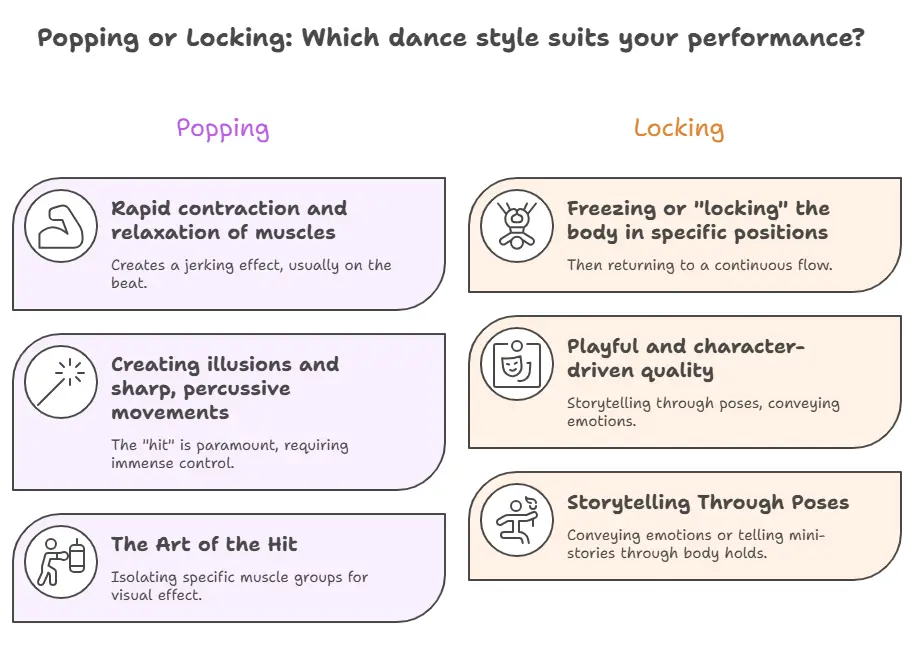
Popping and Locking: Illusion and Isolation
These are two of the earliest and most influential styles to emerge. Popping involves the rapid contraction and relaxation of muscles to create a jerking effect, usually on the beat. It’s about creating illusions and sharp, percussive movements. Locking, on the other hand, involves freezing or “locking” your body in specific positions and then returning to a continuous flow, often with a playful and character-driven quality.
- The Art of the Hit: In popping, the “hit” is paramount. You learn to isolate specific muscle groups and create a sharp, impactful visual effect that syncs with the rhythm. This requires immense control and body awareness.
- Storytelling Through Poses: Locking, with its emphasis on frozen poses, allows for a narrative element. You can convey emotions or tell mini-stories simply through the way you hold your body and transition between movements.
Breaking: The Foundation of Aerobatics and Flow
As mentioned, breaking is perhaps the most globally recognized hip hop dance style. Its power lies in its dynamic combination of athletic prowess and fluid transitions.
- Toprock and Footwork: Before even hitting the ground, breakers demonstrate skill through toprock (standing footwork) and transition into intricate footwork patterns on the floor. This is about building momentum and setting the stage for more complex maneuvers.
- Power Moves and Freezes: This is where the spectacle often resides – windmills, headspins, flares, and the iconic freezes. These are not just tricks; they are expressions of physical mastery and control, executed with precision and style.
- Freestyle and Improvisation: A core tenet of breaking, and indeed much of hip hop dance, is improvisation. You learn to react to the music in the moment, to connect with the audience, and to express your individual personality.
Hip Hop (Commercial/New School): The Modern Fusion
This is the style you’re most likely to encounter in mainstream media. It’s a fusion of various street dance styles, often incorporating elements of jazz, contemporary, and even ballet. The intent here is often to be visually impactful and to align with the aesthetics of popular music.
- Grounded Movement and Isolation: While it can be highly energetic, modern hip hop dance often emphasizes groundedness, using the floor as a point of connection. Isolations remain crucial, but they are often integrated more fluidly into larger movement sequences.
- Performance and Choreography: This style is frequently seen in choreographed routines for music videos, concerts, and competitions. The focus is on creating visually stunning and engaging pieces that communicate the energy of the song.
Unleashing Your Physical Potential: More Than Just Moves
The power of hip hop dance isn’t solely in the aesthetic appeal or the technical execution of steps. It’s in what it does for your body, your mind, and your overall well-being.
Strength, Coordination, and Stamina: The Body as an Instrument
Engaging in hip hop dance is a rigorous physical activity. You’re not just passively moving; you’re actively developing a range of physical attributes.
- Building Core Strength: Many hip hop movements, especially those involving floor work and intricate footwork, demand significant core engagement. This translates to improved posture and stability in everyday life.
- Developing Proprioception: Hip hop dance, with its emphasis on spatial awareness and rapid changes in direction, sharpens your proprioception – your body’s ability to sense its position and movement in space. This can prevent injuries and improve overall motor control.
- Cardiovascular Health: The dynamic and often high-intensity nature of hip hop dance provides an excellent cardiovascular workout, improving your heart health and endurance.
Expressing Emotions: A Liberated Psyche
Beyond the physical, hip hop dance offers a potent avenue for emotional release and self-expression.
- Catharsis Through Movement: Feeling stressed, frustrated, or overwhelmed? Channeling those emotions into powerful, percussive movements can be incredibly cathartic. You learn to externalize your inner state in a healthy and constructive way.
- Building Self-Confidence: As you progress and master new movements, your confidence naturally grows. The ability to execute challenging steps and express yourself creatively fosters a sense of accomplishment and self-assurance.
- Non-Verbal Communication: Hip hop dance allows you to communicate ideas, emotions, and narratives without uttering a single word. It’s a universal language that can transcend barriers and connect you with others on a deeper level.
Fostering Community and Connection: The Social Fabric of Dance
Hip hop dance has always been intrinsically linked to community. The power it generates is amplified when shared, creating bonds and fostering a sense of belonging.
Cyphers and Battles: Collaborative Competition
You might imagine that competitions are solely about individual victory, but in the world of hip hop dance, they often foster a unique form of collaborative competition.
- Respect and Recognition: Even in battles, there’s an underlying respect for skill and creativity. You learn to acknowledge the talent of your opponents, and they, in turn, often offer you feedback or encouragement.
- The Cypher as a Melting Pot: The cypher, a circle formed by dancers, is a prime example of this. It’s a space where dancers of all levels and styles can come together to share their movement, improvise, and inspire each other. It’s about the collective energy, not just individual brilliance.
- Learning from Peers: Observing and interacting with other dancers in cyphers and informal practice sessions is an invaluable learning experience. You absorb new ideas, pick up on different techniques, and develop your own unique style by seeing how others interpret the music.
Social and Educational Impact: Beyond the Studio
The influence of hip hop dance extends far beyond the confines of dance studios and performance spaces and into broader societal contexts.
- Youth Engagement and Empowerment: Hip hop dance programs have been instrumental in engaging young people, providing them with positive outlets for their energy and creativity, and fostering a sense of purpose.
- Cultural Preservation and Evolution: teaching and practicing hip hop dance, you become a participant in the ongoing preservation and evolution of a significant cultural movement. You are carrying on a legacy and contributing to its future.
- Promoting Inclusivity: Hip hop dance, due to its origins and accessibility, has often been a space for individuals from diverse backgrounds to connect and find common ground. It offers a platform for voices that might otherwise go unheard.
The Path Forward: Embracing the Journey
| Metrics | Data |
|---|---|
| Number of hip hop dance styles | Multiple, including breaking, locking, popping, and more |
| Popularity of hip hop dance | Global phenomenon with widespread popularity |
| Influence on popular culture | Significant impact on music, fashion, and entertainment |
| Health benefits | Improves cardiovascular fitness, strength, and flexibility |
| Community and social aspects | Brings people together, fosters creativity and self-expression |
Unleashing the power of hip hop dance is not a destination; it’s an ongoing journey of exploration, learning, and self-discovery. You have the capacity to tap into this energy and make it your own.
Finding Your Instruction: Resources and Guidance
You don’t need to figure this all out on your own. There are numerous avenues to explore.
- Local Dance Studios: Seek out studios that offer classes specifically in hip hop dance, breaking, popping, or locking. Look for instructors who have authentic experience and a passion for teaching.
- Online Tutorials and Workshops: The digital age offers a wealth of resources. Many experienced dancers share their knowledge through online platforms, offering tutorials, technique breakdowns, and even full courses.
- Community Centers and Youth Programs: Many community organizations and youth initiatives offer free or subsidized hip hop dance classes, making it accessible to a wider range of individuals.
Practice and Perseverance: The Key to Mastery
Like any discipline, consistent practice is fundamental to progress.
- Structured Training vs. Free Exploration: You’ll benefit from a balance of structured classes that teach technique and directed practice, alongside unstructured freestyle sessions where you can experiment and develop your own creativity.
- Patience with Progress: There will be moments of frustration, plateaus, and challenges. It’s crucial to cultivate patience with yourself and to celebrate small victories along the way. Every session, every movement practiced, contributes to your growth.
- Developing Your Musicality: Hip hop dance is inextricably linked to music. Focus on developing your ear for rhythm, dynamics, and the nuances of the music. This will elevate your movement and allow you to connect more deeply with the sound.
Integrating Hip Hop Dance into Your Life: A Holistic Approach
Consider how you can weave the principles and practices of hip hop dance into your broader life.
- Mindset and Resilience: The discipline, perseverance, and problem-solving inherent in learning hip hop dance can translate into a more resilient mindset when facing challenges in other areas of your life.
- Creative Problem-Solving: The improvisational nature of hip hop dance encourages creative thinking and finding innovative solutions, skills that are transferable to many professional and personal endeavors.
- A Lifelong Pursuit: Hip hop dance can be a lifelong passion. It’s a way to maintain physical and mental vitality while remaining connected to a vibrant culture and a supportive community.
You stand at the threshold of unlocking a potent force. understanding its roots, exploring its diverse forms, and embracing its physical and social dimensions, you can truly unleash the power of hip hop dance within yourself and contribute to its ongoing, dynamic legacy.
FAQs
What is hip hop dance?
Hip hop dance is a style of dance that originated in the United States in the 1970s, primarily in the Bronx, New York City. It includes a wide range of styles such as breaking, locking, and popping, and is often characterized by its improvisational and freestyle nature.
What are the key elements of hip hop dance?
The key elements of hip hop dance include rhythmic movements, intricate footwork, body isolations, and an emphasis on self-expression and individual style. Hip hop dance also often incorporates elements of other dance styles such as jazz, funk, and street dance.
What are some popular hip hop dance moves?
Some popular hip hop dance moves include the moonwalk, the dougie, the running man, the cabbage patch, the robot, and the Harlem shake. These moves often involve a combination of footwork, body isolations, and rhythmic movements.
What is the cultural significance of hip hop dance?
Hip hop dance has played a significant role in the cultural expression and identity of urban communities, particularly among African American and Latino youth. It has also become a global phenomenon, influencing popular culture, fashion, music, and entertainment worldwide.
Where can I learn hip hop dance?
You can learn hip hop dance at dance studios, community centers, and gyms that offer hip hop dance classes. There are also many online resources, tutorials, and instructional videos available for those who prefer to learn at home.


