

You’ve considered a new activity. Perhaps you’re looking for something that offers more than just a surface-level workout. You’ve heard whispers about ballet, not just as an art form, but as a discipline with tangible benefits. This isn’t about becoming a professional dancer; it’s about yourself, your health, and your well-being.
When you step into a ballet class, you’re not just moving your body; you’re engaging your mind on multiple levels. The intricate steps, the precise timing, the demanding sequences – these elements combined offer a unique cognitive workout.
Boosting Your Brain Function and Learning Capacity
Consider for a moment the complexity of a ballet combination. You’re asked to remember a sequence of movements, execute them in a specific order, and maintain a particular posture, all while adhering to the rhythm of the music. This isn’t rote memorization; it’s active learning. Your brain is simultaneously processing spatial information, rhythmic cues, and kinesthetic feedback. This multi-faceted challenge is documented to activate your brain in ways that enhance memory, improve executive function, and promote mental flexibility. This isn’t conjecture; scientific evidence from over 400 neuroscience studies indicates that ballet training can make you a more effective learner, even in academic contexts. It’s akin to cross-training for your brain, bolstering its capacity for processing and retention. The demands of ballet, requiring both recall and real-time adjustment, sharpen your cognitive tools.
A Potential Shield Against Cognitive Decline
As you mature, maintaining cognitive sharpness becomes a priority. Many activities are suggested to aid in this endeavor, but research presents a compelling case for dance. Among various leisure activities, including reading, playing board games, and swimming, dance emerged as the only one demonstrably linked to a significantly reduced risk of dementia. This suggests that the unique blend of physical, mental, and social engagement inherent in ballet may offer a protective effect that other pursuits do not. It’s not just about keeping active; it’s about the specific neurological pathways stimulated by the coordination, memory, and spatial awareness required in dance. Engaging in these complex motor and cognitive tasks provides a robust workout for brain health.
The Physical Transformation You Can Experience
Ballet isn’t just about grace; it’s about building a strong, resilient body. The disciplined movements and consistent practice contribute to a comprehensive physical workout that often goes underestimated.
A Full-Body Aerobic Workout
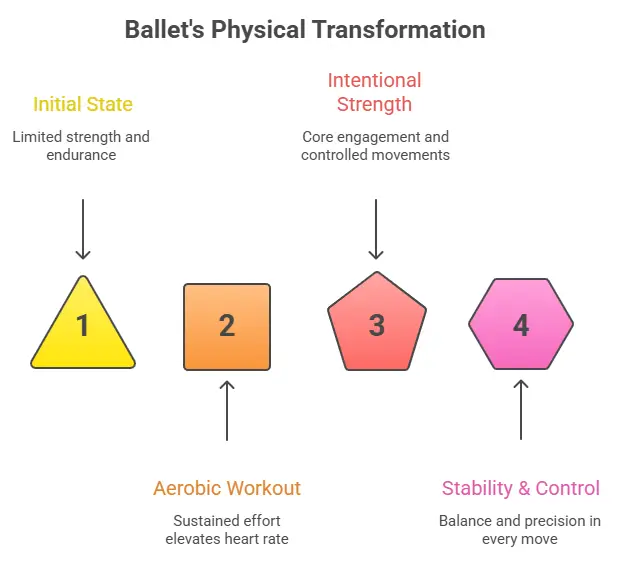
You might initially associate aerobic exercise with running or cycling. However, ballet class provides a vigorous cardiovascular workout that can rival these activities. The sustained effort throughout a class – the pliés, the tendus, the allegro sequences – elevate your heart rate and maintain it within an effective training zone. The energy expenditure is considerable, offering cardiovascular benefits comparable to moderate-to-vigorous intensity exercises like cycling at 9.4 mph. This isn’t just about burning calories; it’s about strengthening your heart and improving your overall endurance. Each session contributes to a healthier cardiovascular system, enhancing your body’s ability to efficiently deliver oxygen to your muscles.
Cultivating Intentional Strength and Stability
In ballet, strength isn’t just about visible muscle; it’s about control, stability, and the ability to execute movements with precision. The constant engagement of core muscles, the controlled lengthening and contracting of limbs, and the demand for balance build a foundational strength that supports your entire body. This intentional strength training, integrated into ballet practice, improves your stability, enhances your control over your movements, and contributes to the longevity of your physical capabilities. It’s a type of strength that doesn’t just look good, but functionally supports your everyday movements and activities, reducing the risk of injury and improving your overall physical efficacy. The specific muscle groups targeted, often overlooked in more conventional workouts, are systematically strengthened, leading to a more balanced and robust physique.
The Emotional Well-being You Can Achieve
Beyond the physical and mental benefits, ballet offers a profound impact on your emotional landscape. The combination of physical exertion, creative expression, and social interaction contributes to a more balanced and positive emotional state.
Reducing Anxiety and Elevating Your Mood
Life presents its share of stressors, and finding effective coping mechanisms is crucial. Research indicates that dance, including ballet, can be particularly effective in reducing anxiety and bolstering mood. The physical exertion releases endorphins, natural mood elevators. Beyond that, the focus required in class, the immersion in movement and music, can serve as a mental break from daily worries. This active engagement offers a form of mindfulness, directing your attention away from ruminative thoughts and towards the present moment. The structured yet expressive nature of ballet provides a healthy outlet for emotional release, strengthening your motivation and contributing to improved emotional health. It’s a constructive way to process stress and cultivate a more positive outlook.
Building Connections and Community
Joining a ballet class means becoming part of a group, a shared endeavor. This social component is not to be underestimated. Engaging in group ballet classes fosters social interaction, which is linked to a lower risk of depression, improved emotional regulation, and even a longer life expectancy. You’re not just attending a class; you’re entering a community. The shared experience, the encouragement among peers, and the collective pursuit of improvement create a supportive environment. This sense of belonging and connection is vital for mental health, combating feelings of isolation that can sometimes accompany modern life. The interactions, however minimal, contribute to a sense of camaraderie and shared purpose, elements crucial for emotional resilience.
Adopting a 2026-Informed Approach to Your Practice
To truly harness the benefits of ballet, particularly as insights evolve, your approach needs to be deliberate and informed. The year 2026 brings with it a refined understanding of what maximizes the positive impact of this art form.
The Power of Consistency Over Sheer Volume
In the past, the emphasis might have been on pushing harder, doing more repetitions, or extending class times. However, current understanding emphasizes consistency as paramount. Regularly attending your ballet classes, even if they are shorter in duration, yields greater returns than sporadic, intense sessions. Your body and mind adapt better to a predictable routine. This consistent engagement allows for gradual progression, reinforcing learned movements and strengthening neural pathways without overtaxing your system. It’s about building a sustainable practice that fosters continuous improvement rather than seeking immediate, often fleeting, results through excessive effort.
Intentionality in Every Movement
Beyond just going through the motions, cultivating intentionality in your practice makes a significant difference. This means consciously thinking about the muscles you are engaging, the alignment of your body, and the quality of your movement. It’s not just about lifting your leg; it’s about how you lift it, the control you exert, and the energy you project through your fingertips and toes. This mental engagement with physical action deepens your understanding of your body and enhances the neurological connections between your brain and muscles. This intentional approach ensures that each movement is purposeful, maximizing the physical and cognitive benefits derived from your efforts.
The Critical Role of Proper Technique
Good technique in ballet isn’t merely about aesthetics; it’s fundamental to injury prevention and long-term progress. Learning and consistently applying proper technique from the outset ensures that you are working your body efficiently and safely. Incorrect alignment or compensatory movements can lead to strain or injury over time. A strong technical foundation allows your body to execute movements with greater ease, stability, and control, enhancing both your physical development and your artistic expression. This commitment to proper form, guided by your instructor, is an investment in your physical well-being and the longevity of your ballet journey.
Integrating Structured Strength Training
While ballet inherently builds strength, a modern and effective approach acknowledges the benefits of supplementary, structured strength training. This doesn’t mean bulking up; it means strategically targeting specific muscle groups that support your ballet practice. Incorporating exercises designed to strengthen your core, hips, and feet, for example, can significantly enhance your stability, control, and power in class. This complementary training helps prevent imbalances, supports your joints, and contributes to the sustained ability to dance without injury. It’s about building foundational strength that allows for greater freedom and longevity in your ballet training, enabling you to progress more effectively and safely.
Conclusion: A Holistic Path to Well-being
| Metrics | Value |
|---|---|
| Number of students | 20 |
| Class duration | 1 hour |
| Frequency | Twice a week |
| Age range | 5-12 years old |
You might have started this exploration simply looking for a new way to stay active. What you’ve discovered, however, is that ballet class offers a comprehensive pathway to enhanced well-being. It’s a pursuit that seamlessly integrates mental stimulation, physical conditioning, and emotional enrichment. The benefits extend far beyond the studio, influencing your cognitive function, your physical resilience, and your emotional stability in everyday life. approaching ballet with consistency, intentionality, proper technique, and a willingness to integrate supplementary strength work, you are not just learning a dance form; you are investing in a more robust, mentally agile, and emotionally balanced version of yourself. This is an opportunity to engage in an activity that offers much more than just a workout; it offers a journey towards holistic self-improvement.
FAQs
What is a ballet class?
A ballet class is a structured dance class that focuses on the techniques and movements of classical ballet. It typically includes exercises at the barre, center work, and across the floor combinations.
What do you wear to a ballet class?
For a ballet class, it is recommended to wear form-fitting dance attire such as a leotard, tights, and ballet slippers. Hair should be secured away from the face in a bun or ponytail.
What are the benefits of taking ballet classes?
Ballet classes can improve posture, flexibility, strength, and coordination. They also promote discipline, focus, and artistic expression.
What age can you start taking ballet classes?
Children can start taking ballet classes as early as 3 years old, with classes tailored to their age and development. Adults of any age can also begin ballet classes, with beginner classes available for those new to the art form.
How long does it take to become proficient in ballet?
The time it takes to become proficient in ballet varies depending on the individual’s natural ability, dedication, and frequency of classes. It can take several years of consistent training to achieve a high level of proficiency in ballet.


